In the remote, unforgiving landscapes of Western Australia, the line between survival and extinction for native wildlife is often razor-thin. Perhaps no animal embodies this precarious balance more than the dingo (Canis dingo), Australia’s apex land predator. Long misunderstood, persecuted, and caught in the crosshairs of ecological and agricultural conflict, the dingo faces systemic threats across the continent. Yet, occasionally, an individual story emerges that distills these complex macro-environmental struggles into a deeply human narrative of empathy, resilience, and scientific dedication.
The rescue and rehabilitation of Yindi—a critically injured, orphaned dingo puppy—serves as a poignant case study in modern wildlife conservation. Discovered alone, emaciated, plagued by parasites, and suffering from a fractured leg, Yindi’s survival was mathematically improbable. Her rescue by renowned marine biologist and conservationist Brinkley Davies, followed by her rehabilitation and eventual placement through Perth Dingo Rescue, highlights the vital network of wildlife carers who bridge the gap between ecological science and hands-on rehabilitation.
Beyond the immediate triumph of saving a single life, Yindi’s journey has catalyzed public interest in the Balu Blue Foundation’s Ningaloo Dingo Project. Launched in 2024, this initiative represents a sophisticated pivot toward non-invasive conservation, utilizing citizen science, photographic identification, and community-based monitoring to protect wild populations. Yindi’s transition from a dying orphan to an ambassador for her species underscores a crucial ecological reality: the survival of Australia’s terrestrial ecosystems is inextricably linked to how we manage, perceive, and protect our native apex predators.
The chronology of Yindi’s rescue begins in a remote pocket of Western Australia, where the pup was discovered entirely isolated from her pack. At her estimated age, a wild dingo puppy is utterly dependent on her mother and the highly structured social hierarchy of the pack for nourishment, defense, and behavioral development.
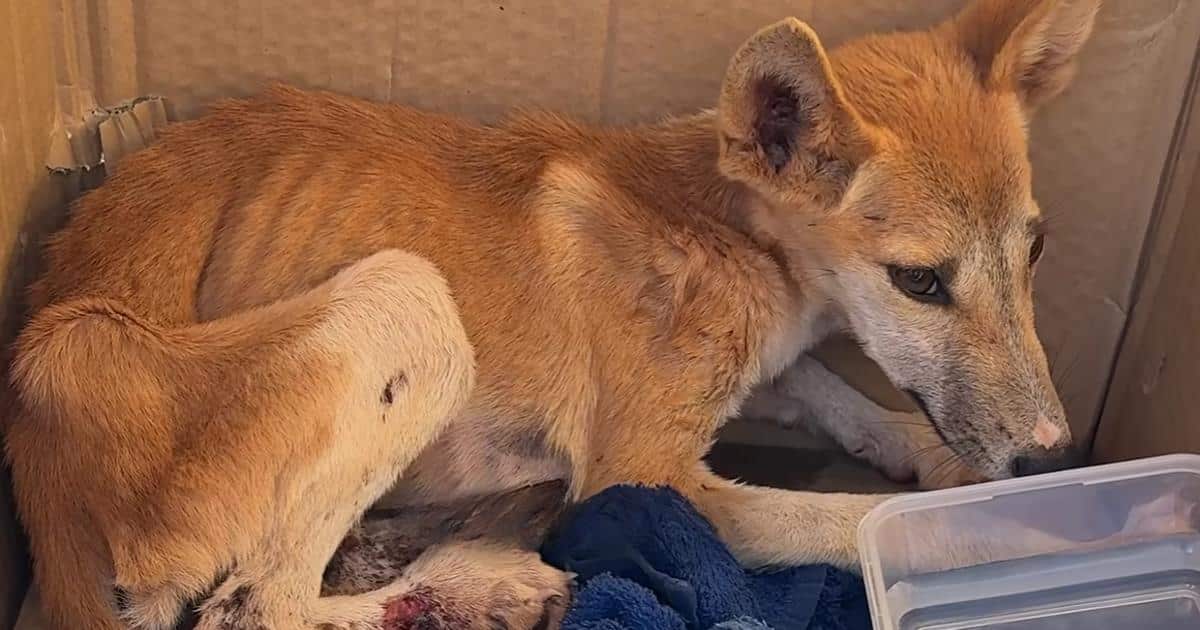
When rescuers first located Yindi, her physical state indicated she had been separated from her family for a prolonged period. She exhibited:
Severe Emaciation: Extreme muscle wasting and structural prominence of the ribs and pelvic bones, indicating advanced starvation.
Acute Orthopedic Trauma: A displaced fracture of the leg, severely limiting her mobility and preventing her from foraging or escaping threats.
High Parasitic Load: Both internal and external parasites that were rapidly depleting her remaining nutritional reserves and compromising her immune system.
Without immediate human intervention, mortality was certain within 24 to 48 hours.
Phase II: Emergency Medical Intervention and Stabilization
Upon being rescued, Yindi was placed under the direct care of Brinkley Davies, a qualified wildlife carer, marine biologist, and founder of the Balu Blue Foundation. The initial 72 hours were critical, focusing on physiological stabilization before any major orthopedic interventions could be safely conducted.
       +-------------------------------------------------------+
       |             EMERGENCY STABILIZATION PHASE             |
       +-------------------------------------------------------+
                                   |
         +-------------------------+-------------------------+
         |                                                   |
         v                                                   v
+------------------+                               +------------------+
|   HYDRATION &    |                               |    PARASITIC     |
|   NUTRITIONAL    |                               |    ERADICATION   |
|   RESTORATION    |                               |                  |
| Gentle fluid     |                               | Careful dosing   |
| therapy to avoid |                               | to prevent toxic |
| refeeding shock  |                               | shock in a       |
|                  |                               | weakened system  |
+------------------+                               +------------------+
         |                                                   |
         +-------------------------+-------------------------+
                                   |
                                   v
                       +-----------------------+
                       |  ORTHOPEDIC ALLIANCE  |
                       |  Immobilization and   |
                       |  splinting of the     |
                       |  fractured leg        |
                       +-----------------------+
Davies established a round-the-clock intensive care regime. The immediate medical priorities included:
Hydration and Nutritional Restoration: Administering gentle fluid therapy and highly digestible, nutrient-dense formula. Due to the severity of her starvation, reintroducing food required precise portion control to avoid Refeeding Syndrome—a potentially fatal metabolic disturbance.
Parasitic Eradication: Administering targeted, low-dose parasiticides to systematically eliminate her parasite load without shocking her fragile liver and kidneys.
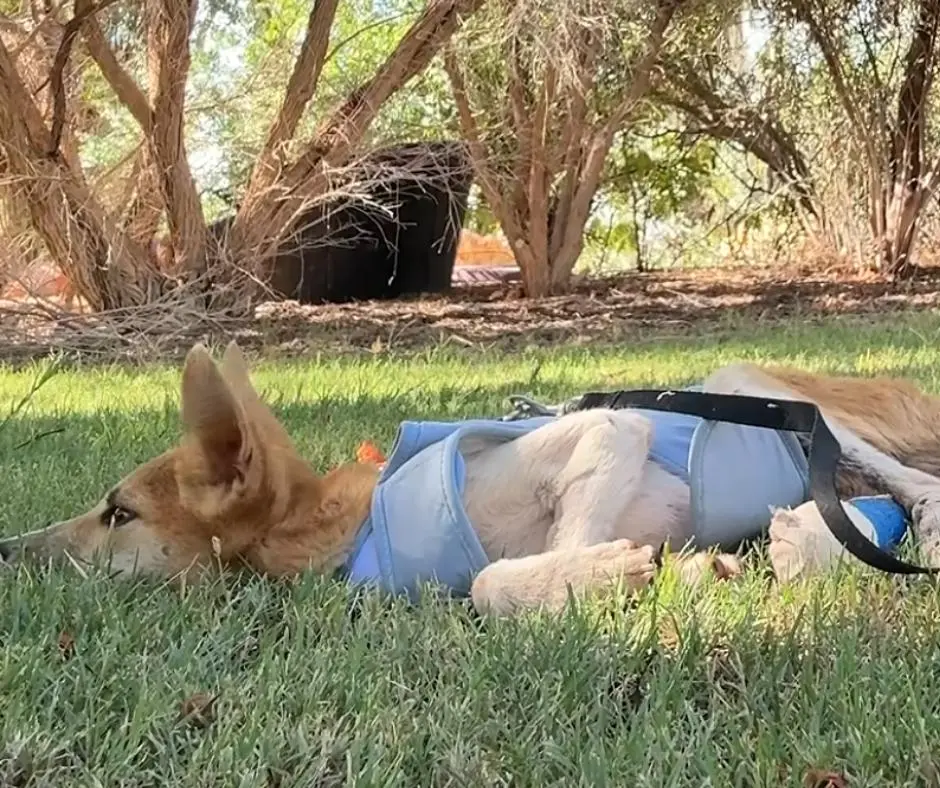
Orthopedic Management: Immobilizing and splinting the fractured leg to alleviate pain and initiate bone alignment, laying the groundwork for long-term skeletal recovery.
Phase III: Cognitive Recovery and Multispecies Integration
Once Yindi’s physiological metrics stabilized, the secondary challenge emerged: psychological trauma and socialization. Dingoes possess highly active cognitive faculties and are naturally wary of humans. To facilitate her mental recovery, Davies introduced Yindi to an unorthodox therapy group consisting of her own rescued domestic dogs and cats.
This multispecies environment served several developmental functions:
Fear Reduction: Observing domestic animals interacting calmly with humans signaled to Yindi that her immediate environment was safe.
Social Play: Engaging in low-impact play with domestic dogs stimulated the release of endorphins, aiding her physical physical therapy and restoring mobility to her healing leg.
Behavioral Modeling: Interaction with stable, domesticated animals helped temper the high-stress cortisol levels common in traumatized wild canids.
Over several weeks, Yindi transitioned from a defensive, terrified animal into a curious, playful pup, revealing a resilient and highly adaptable personality.
Phase IV: The Imprinting Threshold and Long-Term Placement
As Yindi’s physical health reached optimal levels, conservationists faced a critical ethical and ecological decision: could she be released back into the wild?
In wildlife rehabilitation, the ultimate goal is almost always rewilding. However, for dingoes, the window for learning essential wild survival skills—such as pack hunting dynamics, territorial defense, and predator avoidance—is narrow and occurs during early puppyhood. Because Yindi’s critical developmental phase was spent receiving veterinary treatment and human care, she had become behaviorally habituated (imprinted) to humans. Releasing her into the wild would have been equivalent to a death sentence, as she lacked both the fear of human settlements and the practical skills to hunt within a wild pack structure.
Recognizing these limitations, Davies coordinated with Perth Dingo Rescue, a specialized organization dedicated to the welfare, rescue, and rehoming of dingoes. Through their selective placement program, Yindi was matched with a permanent guardian named Melinda. This transition ensured that while Yindi could no longer fulfill her role in the wild ecosystem, she would live out her life in a secure environment tailored to the complex physical and cognitive needs of a captive dingo.
Supporting Context & Metrics
To fully understand the significance of Yindi’s rescue, it must be viewed through the lens of Australia’s broader ecological landscape and the controversial status of the dingo.
The Ecological Significance of the Dingo
Dingoes are Australia’s only terrestrial apex predators, having arrived on the continent approximately 3,500 to 5,000 years ago. Their presence is vital for maintaining ecological equilibrium.
       +-------------------------------------------------------+
       |             APEX PREDATOR: THE WILD DINGO             |
       +-------------------------------------------------------+
                                   |
         +-------------------------+-------------------------+
         |                                                   |
         v                                                   v
+------------------+                               +------------------+
|   SUPPRESSION OF |                               |   PRESERVATION   |
|   MESOPREDATORS  |                               |   OF BIODIVERSITY|
| Controls red fox |                               | Protects small   |
| & feral cat      |                               | marsupials and   |
| populations      |                               | native rodents   |
+------------------+                               +------------------+
         |                                                   |
         +-------------------------+-------------------------+
                                   |
                                   v
                       +-----------------------+
                       |  VEGETATION RECOVERY  |
                       |  Keeps overabundant   |
                       |  herbivores (kangaroos|
                       |  and goats) in check  |
                       +-----------------------+
Trophic Cascades: By preying on large herbivores (such as kangaroos) and invasive species (such as feral goats), dingoes prevent overgrazing, which in turn preserves vegetation cover and protects soil integrity.
Mesopredator Suppression: Dingoes actively suppress populations of introduced mesopredators, specifically red foxes (Vulpes vulpes) and feral cats (Felis catus). By keeping these invasive hunters in check, dingoes indirectly protect vulnerable native species, including small marsupials and ground-nesting birds.
The Legislative and Conservation Paradox
The dingo’s status in Australia is highly polarized, marked by conflicting legal definitions across state and federal levels:
State / Territory
Legal Classification
Conservation Status
Management Actions Allowed
Western Australia
Native Species / Pest
Protected in some areas; declared pest near agricultural zones
Baiting (1080), trapping, and shooting permitted in agricultural protection zones.
Victoria
Threatened Species
Protected under Wildlife Act 1975 (with wild dog dingo unprotection orders in place)
Lethal control permitted on public land boundaries adjacent to livestock properties.
Queensland
Class 3 Pest / Native Wildlife
Protected in National Parks; declared pest on pastoral lands
Lethal baiting and trapping widely practiced outside conservation reserves.
This legislative inconsistency creates immense challenges for conservation groups. In many regions, dingoes are subjected to broad-scale lethal baiting using sodium fluoroacetate (1080), a poison that threatens not only dingoes but also non-target native carnivores.
The Ningaloo Dingo Project
In response to these systemic threats, Brinkley Davies and the Balu Blue Foundation launched the Ningaloo Dingo Project in 2024. Operating in the Ningaloo region of Western Australia, this initiative leverages modern technology and community participation to build a comprehensive dataset on local dingo populations.
                        NINGALOO DINGO PROJECT
                                  |
        +-------------------------+-------------------------+
        |                         |                         |
        v                         v                         v
+---------------+         +---------------+         +---------------+
| CITIZEN DATA  |         | VISUAL IDENT  |         | VET SUPPORT   |
| Community-led |         | Photographic  |         | Medical fund  |
| sightings and |         | and video     |         | for injured   |
| GPS mapping   |         | databases     |         | wild dingoes  |
+---------------+         +---------------+         +---------------+
The project operates on three primary pillars:
Citizen Science and Community Sightings: Encouraging residents, tourists, and pastoralists to log dingo sightings, providing invaluable data on movement patterns, pack sizes, and human-wildlife conflict zones.
Photographic and Video Identification: Utilizing high-resolution trail cameras and community submissions to map individual physical markers (such as coat patterns, scars, and tail-tip colorations), establishing a non-invasive census of the regional population.
Emergency Veterinary Funding: Providing financial and logistical support for veterinary intervention when wild dingoes are found injured due to human activity, vehicle strikes, or pest control measures.
Official Statements
The rescue of Yindi and the launch of the Ningaloo Dingo Project have drawn commentary from various stakeholders in the conservation, scientific, and rescue communities.
Brinkley Davies, Founder of the Balu Blue Foundation and Yindi’s primary rehabilitator, reflected on the profound emotional and physical demands of the rescue:
"When Yindi first arrived, she was a shadow of an animal. Every rib was visible, her leg was compromised, and she was entirely shut down from fear. Caring for an animal like that requires more than just medical knowledge; it demands a quiet, steady patience to show them that the world isn’t entirely hostile.
Yindi’s recovery was a team effort, supported by our domestic rescue animals who taught her how to play and trust again. While we would have loved to see her run free in her ancestral home, her habituation meant that a domestic sanctuary was her only safe option. Her story is a powerful reminder of why we founded the Ningaloo Dingo Project—to ensure that we can protect these animals in the wild before they ever need to be rescued."
A representative from Perth Dingo Rescue emphasized the complexities of rehoming wild-born dingoes into domestic environments:
"Rehoming a dingo is entirely different from placing a domestic dog. Dingoes are highly intelligent, independent, and retain strong wild instincts. They require specialized fencing, continuous cognitive stimulation, and guardians who understand their unique social structures.
Yindi’s match with Melinda was the result of a rigorous screening process. By collaborating with dedicated carers like Brinkley, we can transition these unique animals into homes where they can thrive as ambassadors for their wild counterparts, rather than becoming tragic statistics of a system that often fails to protect them."
Dr. Alistair Glen, an ecological scientist specializing in Australian invasive species and predator dynamics, commented on the broader ecological implications of dingo conservation:
"The science is unequivocal: Australia’s ecosystems function better when apex predators are present. The suppression of feral cats and red foxes by dingoes is one of our most effective natural defenses against the ongoing extinction crisis facing small Australian mammals.
Initiatives like the Ningaloo Dingo Project are crucial because they replace fear and misinformation with hard data. Understanding how dingoes move through the landscape and interact with human infrastructure is the first step toward designing non-lethal coexistence strategies that protect both livestock and our native biodiversity."
Future Outlook
The trajectory of dingo conservation in Australia is approaching a critical juncture. As public awareness grows, supported by grassroots initiatives and high-profile rescues like Yindi’s, the pressure on policymakers to reform wild dog management strategies is intensifying.
       +-------------------------------------------------------+
       |             FUTURE OF DINGO CONSERVATION              |
       +-------------------------------------------------------+
                                   |
         +-------------------------+-------------------------+
         |                                                   |
         v                                                   v
+------------------+                               +------------------+
|   REPLACEMENT OF |                               |  NATIONWIDE JURIS|
|   LETHAL BAITING |                               |  STANDARDIZATION |
| Transition to    |                               | Harmonizing state|
| guardian animals |                               | laws to protect  |
| & smart fencing  |                               | dingo genetics   |
+------------------+                               +------------------+
         |                                                   |
         +-------------------------+-------------------------+
                                   |
                                   v
                       +-----------------------+
                       | EXPANSION OF CITIZEN  |
                       |  SCIENCE INITIATIVES  |
                       | Scaling the Ningaloo  |
                       | model across WA       |
                       +-----------------------+
Transitioning to Non-Lethal Management
The future of dingo conservation relies on replacing broad-scale lethal control programs with sustainable, non-lethal alternatives. In agricultural sectors, progressive pastoralists are increasingly adopting:
Guardian Animals: Utilizing Maremma sheepdogs or donkeys, which naturally protect livestock herds from wild predators without disrupting the surrounding ecosystem.
Smart Fencing: Installing exclusion fencing equipped with auditory and visual deterrents to prevent dingoes from entering sheep and cattle paddocks.
Coexistence Incentives: Developing economic frameworks that reward landholders for maintaining biodiversity and apex predator populations on their properties.
Standardizing Legal Protections
A primary goal for conservationists over the next decade is the harmonization of dingo legislation across Australia. Currently, the genetic integrity of the dingo is threatened by hybridization with domestic dogs, a process accelerated by the disruption of wild pack structures through lethal baiting. Standardizing the dingo’s status as a protected native species nationwide would ensure that conservation funding and habitat protection are uniformly applied, preventing localized extinctions of pure dingo lineages.
Scaling the Ningaloo Dingo Project
The Balu Blue Foundation plans to scale the Ningaloo Dingo Project, expanding its geographical reach and incorporating advanced tracking technologies. Future phases of the project aim to utilize:
AI-Driven Image Recognition: Automating the identification of individual dingoes from trail camera footage based on subtle facial features and body metrics.
Satellite Telemetry: Safely collaring select wild dingoes to gather high-resolution spatial data, mapping how these predators navigate the interface between wilderness, pastoral lands, and urban development.
Yindi’s Legacy
While Yindi’s days are now spent in the safety of her permanent home with Melinda, her impact continues to reverberate through the conservation community. By bridging the gap between clinical wildlife rehabilitation and systemic ecological research, her story has given a face to a highly polarized species. Yindi stands as a powerful symbol of survival, proving that with scientific expertise, community dedication, and a commitment to non-invasive research, Australia can forge a future where its ancient apex predator is no longer hunted, but respected as an essential guardian of the wild.