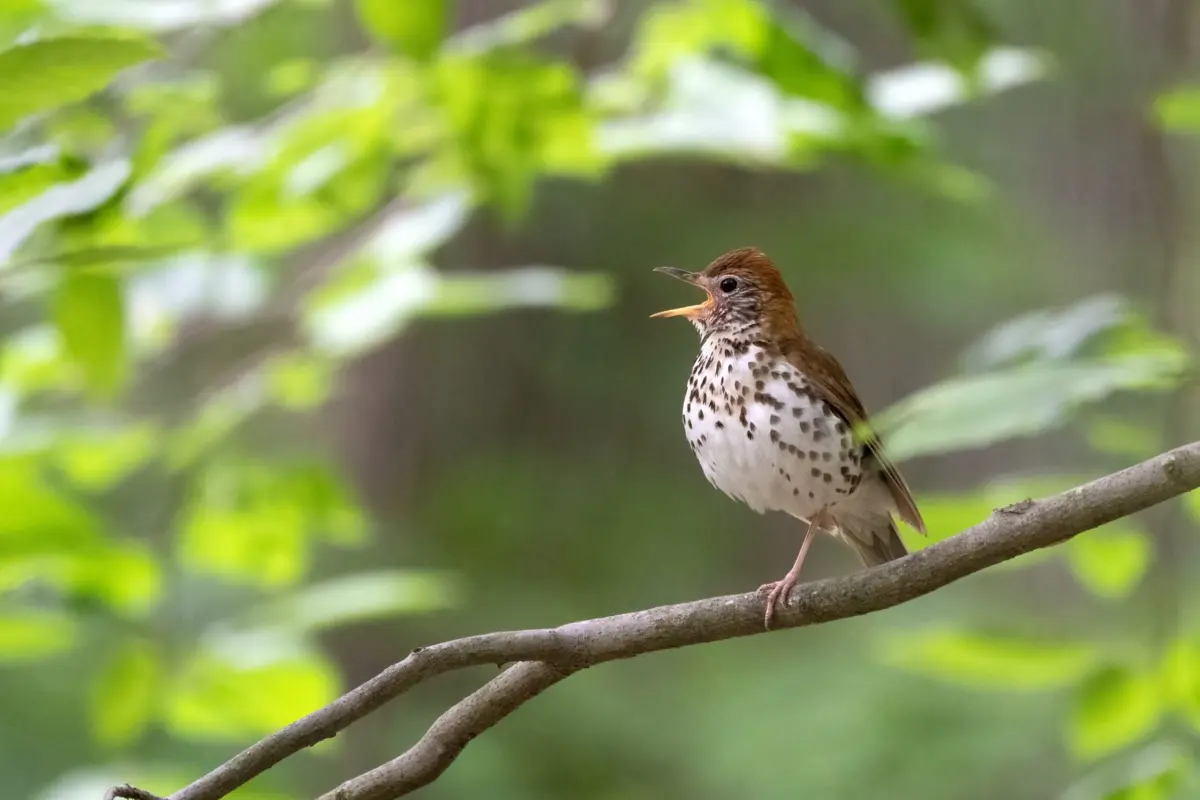

WASHINGTON, D.C. — Across the verdant canopies of Pennsylvania and the sprawling timberlands of Arkansas, a quiet environmental crisis is unfolding out of sight. Nationally, populations of forest-dependent birds have been on a steep and persistent trajectory of decline, with drops recorded across 65% of U.S. states since 1970. Once-abundant species that defined the acoustic and visual landscape of the American outdoors are vanishing from their historic ranges. Most notably, the melodic Wood Thrush has suffered an alarming 60 percent population collapse over the last five decades.
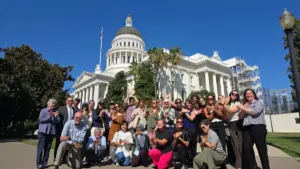
Amid these sobering environmental trends, the National Audubon Society has taken a direct, boots-on-the-ground approach to bridging the gap between conservation science and federal policy. In a concerted legislative outreach effort, Audubon staff and conservation partners recently hosted two key congressional powerhouses: Rep. Glenn Thompson (R-PA), Chairman of the House Committee on Agriculture, and Rep. Bruce Westerman (R-AR), Chairman of the House Committee on Natural Resources.
These high-profile legislative site visits served a vital purpose: to demonstrate firsthand how strategic habitat restoration, invasive species mitigation, and sustainable working forest management can reverse decades of avian decline. More importantly, the tours highlighted the indispensable role that federal lawmakers play in shaping legislation—specifically the upcoming Farm Bill—to support private landowners, fortify rural economies, and protect the shared ecological future of America’s forests.
Executive Overview: The Convergence of Avian Conservation and Federal Policy
The decline of North American forest birds is not merely an isolated ecological metric; it is an indicator of broader forest ecosystem stress. Forests across the United States face unprecedented pressures, ranging from habitat fragmentation and invasive species proliferation to the economic realities that force private landowners to parcel out and sell generational timberlands.
Private landowners are the stewards of the vast majority of America’s forest acreage. Without their active engagement, large-scale conservation is virtually impossible. Recognizing this, Audubon’s recent congressional tours were meticulously designed to showcase the intersection of private enterprise and public stewardship. By bringing the chairs of the House Agriculture and Natural Resources committees directly into the field, Audubon fostered a collaborative dialogue centered on actionable solutions:
- Economic Viability for Private Landowners: Demonstrating that sustainable forestry and wildlife habitat enhancement can—and must—coexist with profitable commercial timber production.
- Targeted Legislative Support: Advocating for critical federal instruments, such as the Forest Landowner Support Program (FLSP) and proposed Forest Conservation Easements, which provide technical and financial assistance to forest stewards.
- Ecosystem Resilience: Highlighting how proactive forest management combats the cascading threats of disease, unmanaged undergrowth, and invasive species while directly benefiting declining neotropical migratory birds and resident species.
Detailed Chronology: Field Notes from Pennsylvania and Arkansas
July: Pennsylvania’s Working Forests Under the Microscope
In early July, the rolling hills of Pennsylvania served as the backdrop for Chairman Glenn Thompson’s immersive field tour. Hosted by Audubon, the excursion brought together a diverse coalition of stakeholders, including private landowner Dr. Shane Sergent, Audubon-endorsed forester Calvin Norman of Blue Ox Forestry, and representatives from the Pennsylvania Department of Conservation and Natural Resources and the Alliance for the Chesapeake Bay.
The tour did not take place in a pristine, untouchable wilderness reserve, but rather within a privately owned, actively managed working forest. This distinction is critical: working forests provide timber products and economic vitality to rural communities while simultaneously serving as complex habitats for wildlife.
Walking the undulating terrain, the congressional delegation and conservationists closely examined active forestry practices designed to foster forest regeneration and structural diversity. The group observed firsthand the meticulous removal of lower-shade constraints and targeted underplanting—interventions that allow sunlight to penetrate the forest floor, stimulating native understory growth. This structural complexity is precisely what species like the Wood Thrush and other interior-forest birds require for nesting and foraging.
Furthermore, the Pennsylvania visit included deep dives into the persistent threat of invasive species. Unchecked invasive flora can choke out native saplings, reduce biodiversity, and degrade the overall health of the forest canopy. The discussions quickly evolved past simple biology, addressing the harsh economic realities faced by private forest owners. Dr. Sergent and other stakeholders candidly shared the financial hurdles of long-term stewardship, emphasizing that sustainable management requires robust on-the-ground technical assistance and viable, stable markets for sustainably harvested timber.
Mid-July: Arkansas’s Timber Heritage and Avian Biodiversity
Shifting the geographic focus southward, Audubon welcomed Chairman Bruce Westerman to the Little Rock Audubon Center later in the month. Arkansas boasts nearly 19 million acres of lush forests, which cover more than half the state and form the backbone of its rural economy and ecological identity.
Joined by Audubon staff and an Arkansas-based board director, Chairman Westerman engaged in high-level discussions regarding the symbiotic relationship between forest management, healthy bird habitats, and thriving local communities. The conversations were grounded in local observations of the Chuck-will’s-widow—a declining forest-dwelling nightjar that breeds extensively in the mature woodlands surrounding the Audubon Center.
The Arkansas tour provided an ideal platform to examine how federal conservation policy can amplify and complement the localized stewardship already taking place across the state. In a heavily forested state like Arkansas, where timber and wood products drive significant economic activity, federal programs must be carefully tailored to encourage active management without placing undue regulatory burdens on private operators. The consensus from the Arkansas delegation was clear: support for private landowners must be proactive, flexible, and financially sound.
Supporting Context & Metrics: The State of America’s Woods and Wings
To fully appreciate the urgency behind Audubon’s legislative outreach, one must examine the broader macro-level data regarding North American bird populations and forest health.
- The 65% Decline: According to comprehensive avian monitoring data, populations of forest-dependent birds have dropped across nearly two-thirds of U.S. states since 1970. This widespread contraction signals systemic environmental degradation across both eastern deciduous systems and western coniferous tracts.
- The Wood Thrush Benchmark: Often referred to as the "flute of the northern woods," the Wood Thrush’s haunting, melodic song is becoming increasingly rare. With a 60% population decline over the last 50 years, this migratory songbird serves as a canary in the coal mine for contiguous forest health. Its precipitous drop is largely attributed to habitat fragmentation on its breeding grounds in North America and deforestation on its wintering grounds in Central America.
- The Private Landowner Reality: Across the United States, private families and individuals own the largest share of America’s forestland—roughly 39% of all U.S. forests. These millions of acres produce the majority of domestic timber while serving as the primary living space for terrestrial wildlife. However, aging landowner demographics, escalating property taxes, and the temptation to subdivide land for real estate development pose a continuous threat of fragmentation.
- Arkansas’s Forest Footprint: Arkansas’s 19 million acres of forest are more than just scenic vistas; they are economic engines. Maintaining these lands as healthy, continuous forest tracts protects watersheds, sequesters monumental amounts of carbon, and provides sustainable livelihoods for thousands of families.
Official Statements and Legislative Solutions
Throughout both congressional visits, Audubon leaders and their partners championed specific, actionable legislative tools currently up for debate in Washington, D.C. Central to these discussions was the reauthorization and shaping of the federal Farm Bill—a massive omnibus legislative package that represents the single largest federal investment in private land conservation.
The Forest Landowner Support Program (FLSP)
A major focal point of the dialogues with Chairmen Thompson and Westerman was the promotion of the Forest Landowner Support Program (FLSP). Audubon advocates view the FLSP as an indispensable lifeline for private forest owners who want to engage in conservation-minded management but lack the capital or specialized knowledge to do so.
The FLSP is designed to provide direct financial and technical assistance to private forest owners. By helping landowners offset the initial costs of implementing science-based management practices—such as selective harvesting, invasive species eradication, and native tree regeneration—the program ensures that forests remain productive, structurally diverse, and ecologically resilient.
Forest Conservation Easements and Preventing Fragmentation
In Pennsylvania, discussions heavily featured the proposed creation of a dedicated Forest Conservation Easement Program. Forest fragmentation—the breaking up of large, continuous tracts of woods into smaller, isolated parcels due to development—is one of the leading drivers of bird population declines. Species that require deep, interior forest canopies cannot survive in small, highly exposed forest patches where predators and edge-dwelling species thrive.
Conservation easements allow landowners to voluntarily place permanent legal restrictions on their property to protect its conservation values while retaining ownership. A targeted federal easement program would help stabilize working forests, ensuring they are never paved over or subdivided, thereby preserving regional ecological corridors.
"For Audubon, these visits are about more than sharing the story of declining forest birds," noted an Audubon conservation strategist following the tours. "They provide a rare opportunity for congressional leaders to witness firsthand the conservation solutions that are already working on the ground and to hear directly from the people putting them into practice. As Congress weighs the future of private land conservation in the Farm Bill, these field-level insights are invaluable."
Future Outlook: A Collaborative Path Forward
The path to reversing a 50-year trend of avian decline is neither quick nor easy, but the framework for success is already taking root in the soil of Pennsylvania, Arkansas, and countless other states. The engagement of high-ranking congressional leaders like Rep. Glenn Thompson and Rep. Bruce Westerman signals a bipartisan recognition that rural economies and robust ecosystems are not mutually exclusive—they are fundamentally interdependent.
As federal lawmakers continue drafting and negotiating the provisions of the Farm Bill and related conservation legislation, the emphasis must remain on voluntary, collaborative conservation. By continuing to invest in private landowners through programs like the FLSP and strategic conservation easements, the federal government can empower local stewards to do what they do best: care for the land.
Ultimately, these legislative site visits remind us that America’s forests are a shared national treasure. Through sustained federal partnership, scientific guidance, and grassroots stewardship, we can ensure that our nation’s woodlands remain vibrant, working landscapes where native birds can thrive, and where rural communities, timber economies, and future generations can prosper alongside them for decades to come.