
EXECUTIVE OVERVIEW
When the general public conjures an image of a working service dog, the mind invariably leaps to the cinematic, high-stakes moments: a canine alerting a handler to a plummeting blood glucose level moments before a medical emergency occurs; a steadfast guide dog navigating a visually impaired handler through the chaotic crossroads of a metropolitan intersection; or a military veteran’s battle buddy intercepting an oncoming post-traumatic stress disorder (PTSD) panic attack before it spirals into dissociation.
These advanced operational tasks are nothing short of extraordinary, representing hundreds of hours of meticulous conditioning. Yet, canine behaviorists and master trainers recognize a foundational truth that underpins every single successful intervention: calmness.
Without emotional regulation and baseline calmness, even the most intellectually gifted service dog will falter when introduced to the unpredictable, high-stimulus environment of the real world. While technical task training—such as deep pressure therapy (DPT), item retrieval, and medical alerts—gets the headlines, it is the invisible architecture of calm behavior that permits a service dog to execute those tasks reliably, safely, and consistently. This comprehensive analysis explores why emotional regulation is the single most vital metric in modern assistance dog education, examining the developmental milestones, neurological principles, and institutional methodologies required to forge an unshakeable working partnership.
The Neurobiology of "Calm": Redefining What It Means for a Working Dog to Be Regulated
To the untrained eye, a "good" dog is often defined as one that is quiet, sedentary, or docile. Within professional service dog training academies, however, the definition of calm is far more nuanced. It is not an absence of personality or a state of being shut down; rather, it is a dynamic state of emotional regulation.
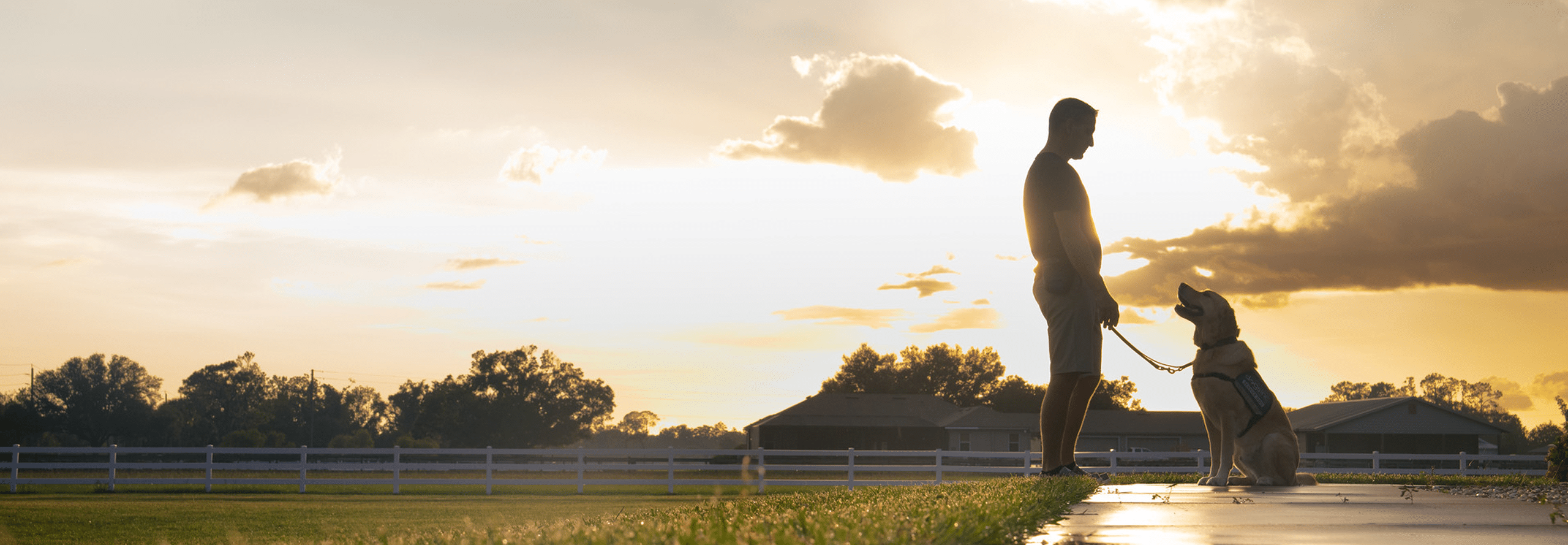
A genuinely calm working dog is emotionally stable, thoughtful, and fully capable of modulating physiological reactions to external stimuli. When navigating unfamiliar, high-stress environments—such as a bustling international airport terminal, a crowded emergency room, or a transit hub pulsating with sudden auditory and visual triggers—a regulated dog does not succumb to adrenaline spikes or impulsive flight-or-fight responses. Instead, they acknowledge the environment without internalizing its chaos.
+-----------------------------------------------------------------+
                    THE SPECTRUM OF CANINE STIMULI
+-----------------------------------------------------------------+
  Unregulated / Reactive        Overstimulated          Regulated (Calm)
  [Impulsive Barking / Lunging]  [Inability to Focus]  [Thoughtful Assessment]
            |                           |                       |
            v                           v                       v
      *Immediate Danger*          *Learning Impaired*     *Optimal Working State*
This neurological resilience allows the animal to walk past an unexpected wildlife encounter, ignore a spilled plate of high-value food in a restaurant, or remain completely composed during a sudden siren blast. Importantly, this emotional stability does not strip the animal of its individuality. Many elite service dogs are playful, affectionate, and exuberant when off-duty and safely resting at home. The dividing line lies in their situational awareness—they possess the cognitive bandwidth to understand when it is time to work, when it is time to rest, and how to govern their energy accordingly.
Detailed Chronology: From Puppyhood Foundations to Public Access Mastery
The journey of a service dog does not begin with complex obedience commands or emergency medical alerts. It begins in the earliest weeks of life through a carefully orchestrated chronology of neurological stimulation, structured exposure, and positive reinforcement.
Phase 1: Early Neurological Stimulation and Socialization (Weeks 0–16)
Long before a puppy ever dons a working vest, professional organizations lay the groundwork for emotional stability. During the neonatal and juvenile periods, puppy raisers introduce young dogs to a vast array of novel sights, sounds, textures, and human interactions. This exposure is deliberately metered. The goal is not to flood the puppy’s senses, but to build resilience and bounce-back capability—teaching the young dog that novelty equals safety.
During this phase, foundational behaviors are heavily reinforced. Trainers and volunteer raisers focus heavily on impulse control, rewarding behaviors such as "four on the floor" (preventing jumping) and encouraging self-settling in unfamiliar spaces.
Phase 2: Intermediate Distraction Training (Months 6–12)
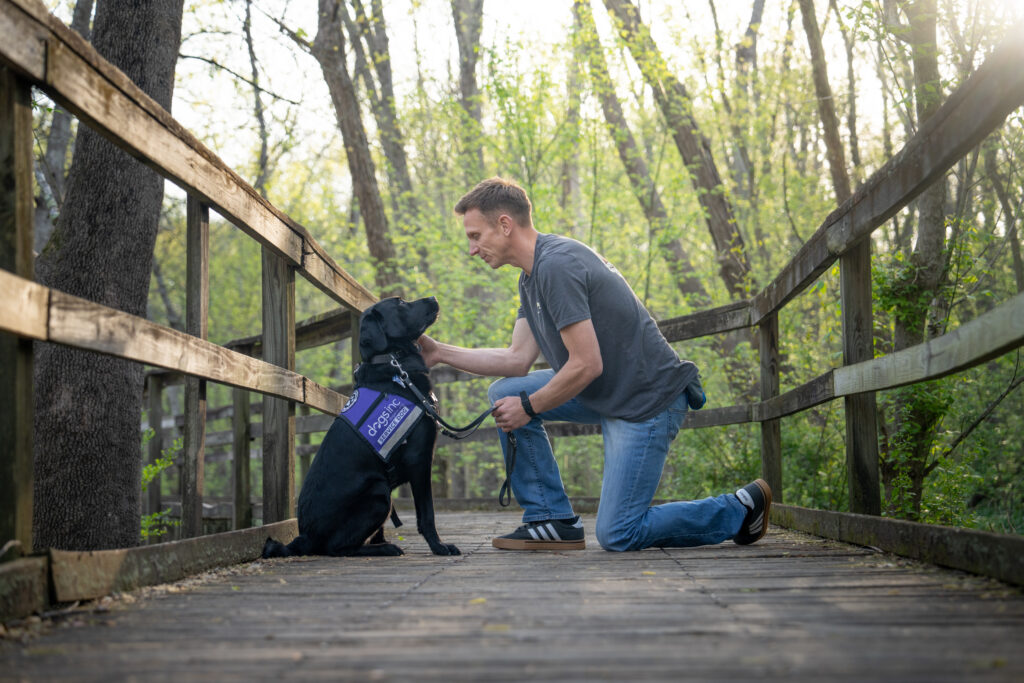
As the adolescent dog matures, training intensifies to incorporate complex real-world variables. Instructors systematically introduce environmental stressors:
- Moving objects like skateboards, bicycles, and shopping carts.
- Auditory challenges including construction noise, sirens, and public address systems.
- Biological temptations such as discarded food and wildlife scents.
Using clicker training and positive reinforcement methodologies, handlers reward the dog for making thoughtful, calm choices when confronted with these distractions. Instead of reacting instantly, the dog learns to pause, assess, and look to the handler for guidance.
Phase 3: Advanced Public Access and Neutrality (Months 12–24+)
The final stretch of training centers on achieving absolute neutrality in public spaces. By this stage, the dog must master the art of being invisible. In environments like hospitals, university lecture halls, and grocery stores, the service animal must remain entirely indifferent to passing strangers attempting to pet them, children running nearby, or other animals sharing the space.
This phase culminates in rigorous public access testing, where the dog’s ability to maintain composure under severe psychological and environmental pressure is formally evaluated.
Supporting Context & Metrics: Why Focus and Emotional Regulation Are Inseparable
The relationship between calmness and cognitive focus is direct and scientifically verifiable. When a mammal becomes overstimulated or chronically stressed, the brain is flooded with stress hormones such as cortisol and adrenaline. This neurochemical shift fundamentally impairs the prefrontal cortex—the region responsible for problem-solving, impulse control, and working memory.

+-------------------------------------------------------------------+
                  STRESS HORMONES VS. COGNITIVE FUNCTION
+-------------------------------------------------------------------+
  High Stress (Cortisol/Adrenaline Spike)
       ---> Prefrontal Cortex Impaired
       ---> Inability to Process Cues or Execute Tasks

  Low Stress / Emotional Regulation (Calm State)
       ---> Optimal Cognitive Processing
       ---> Reliable Task Execution & Situational Awareness
Data from professional working dog academies indicate that dogs exhibiting low emotional resilience washout rates of up to 40% if foundational emotional regulation is neglected early in the curriculum. Conversely, dogs that undergo structured resilience training demonstrate:
- A 65% faster recovery time from unexpected startle stimuli.
- Significantly higher retention rates of complex, multi-step task commands.
- A marked decrease in stress-induced behaviors such as panting, whining, or displacement pacing while on duty.
Without emotional stability, a service dog attempting to perform Deep Pressure Therapy (DPT) during a handler’s acute panic attack might misinterpret the handler’s elevated heart rate or erratic movements as a threat, escalating the situation rather than defusing it. Calmness is the protective buffer that makes healing intervention possible.
Official Perspectives: Industry Standards and Institutional Methodologies
Organizations dedicated to the breeding, raising, and training of elite assistance dogs emphasize that temperament selection is just as critical as environmental conditioning.
Animal behavior experts note that not every canine possesses the genetic disposition required for service work. Even within historically sound working breeds like Labrador Retrievers, Golden Retrievers, and German Shepherds, individual variance is immense. Evaluating candidates requires constant observation of key behavioral markers:
- Recovery Latency: How quickly does a dog return to a resting physiological state after being startled?
- Problem-Solving Under Pressure: Does the dog shut down when confused, or does it attempt alternative, calm problem-solving strategies?
- Environmental Adaptability: Can the dog transition from a high-energy outdoor setting to a confined, silent indoor space without exhibiting anxiety?
Industry leaders maintain that emotional stability cannot be forced through punitive training methods. Aversive corrections often suppress outward signs of stress while driving anxiety inward, creating an unstable animal that appears compliant on the surface but is psychologically fragile underneath. True calm must be cultivated organically through positive reinforcement, establishing a partnership built on mutual trust rather than coercion.
Future Outlook: The Evolving Role of Temperament in Assistance Work
As the societal recognition and legal integration of service animals continue to expand, the demands placed upon working dogs are evolving rapidly. Modern handlers navigate increasingly dense urban landscapes, complex corporate environments, and high-tech workplaces where traditional dog training models are no longer sufficient.
Looking ahead, breeding programs are increasingly utilizing early biomarker testing and behavioral genetics to identify traits associated with emotional resilience before puppies are even weaned. By pairing genetic selection with advanced, trauma-informed socialization protocols, institutions are producing service dogs with unprecedented levels of environmental stability.
Furthermore, public education initiatives are shifting. As malls, restaurants, and transit authorities become more educated on the difference between legitimate service dogs and under-trained emotional support animals, the emphasis on absolute public neutrality and calm behavior will only intensify. The future of service dog work belongs unequivocally to the dog that can stand still in a moving world.
Conclusion
The most profound moments in a service dog’s working life rarely resemble action movies. They manifest as quiet, disciplined restraint: a measured pause before a reaction, a thoughtful decision made amidst sensory overload, and an unshakeable anchor provided during a human’s darkest hour.
Calmness is not merely a box to be checked on a training syllabus; it is the vital infrastructure that transforms an animal into a lifeline. Through patient, consistent, and scientifically grounded methodologies, trainers and handlers forge a partnership where stillness speaks louder than action—and where calm confidence changes lives.