
Executive Overview
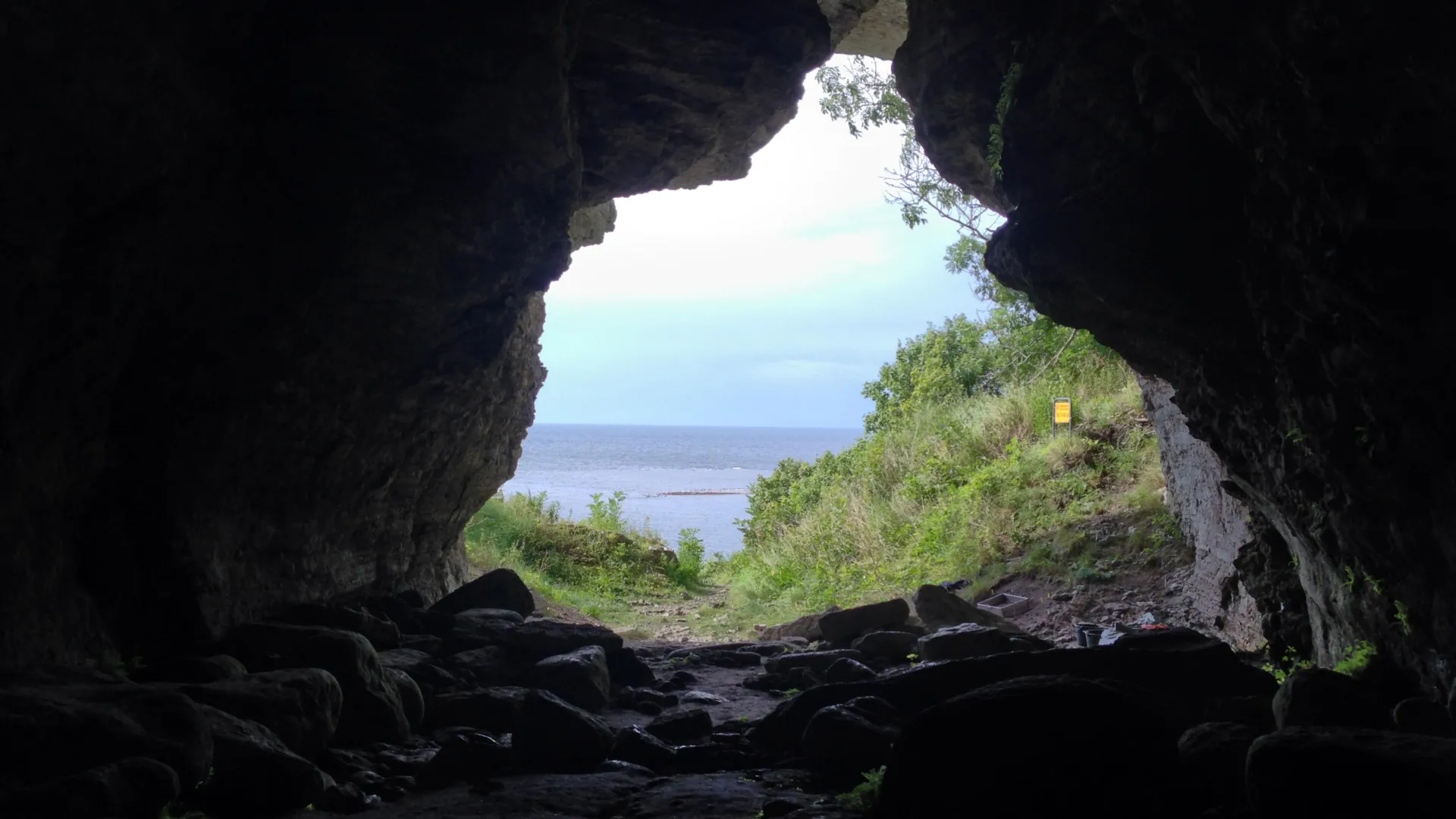
An unexpected and extraordinary archaeological discovery on a remote, windswept island in the Baltic Sea is rewriting the established narrative of human-animal interactions during prehistory. Researchers investigating the Stora Förvar cave on the Swedish island of Stora Karlsö have identified wolf remains dating back roughly 3,000 to 5,000 years—a timeframe spanning the late Stone Age and early Bronze Age.
The finding is remarkable not merely for its antiquity, but for its profound geographical and biological contradictions. Stora Karlsö is a tiny, isolated landmass covering just 2.5 square kilometers, entirely devoid of native terrestrial mammals. Because wolves possess neither the inclination nor the physical capability to cross vast expanses of open sea independently, scientists have reached an inescapable conclusion: prehistoric humans must have captured and transported these apex predators to the island by boat.
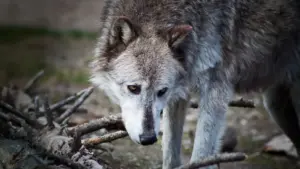
Published in the prestigious Proceedings of the National Academy of Sciences (PNAS), a collaborative study helmed by researchers from the Francis Crick Institute, Stockholm University, the University of Aberdeen, and the University of East Anglia reveals that these island-dwelling canids were genetically pure wolves rather than domesticated dogs. Yet, through a combination of advanced ancient DNA sequencing, osteological analysis, and stable isotope profiling, the research team uncovered startling markers of human coexistence. These wolves shared the dietary habits of local seal hunters, exhibited unusually reduced genetic diversity indicative of human management or population bottlenecks, and, in one poignant instance, survived a debilitating limb injury that would have proven fatal in the wild.
This groundbreaking research shatters the traditional, linear paradigm of canine domestication, which long dictated that wolves gradually transformed into dogs solely through unguided scavenging around human settlements. Instead, the evidence points toward a complex, forgotten chapter of human history—one where Neolithic and Bronze Age communities actively captured, managed, and perhaps even cared for wild wolves in institutional settings, experimenting with coexistence in ways science has never before documented.
Detailed Chronology of the Discovery and Research
To appreciate the gravity of the Stora Karlsö findings, one must retrace the meticulous detective work undertaken by the international multidisciplinary research team, whose investigation bridges millennia of geological, archaeological, and genetic history.
The Neolithic and Bronze Age Setting: Stora Förvar Cave
Thousands of years before modern maritime trade routes crisscrossed the Baltic, the Stora Förvar cave on Stora Karlsö served as a bustling seasonal hub for ancient maritime foragers. During the Neolithic and Bronze Ages, coastal communities heavily utilized the cave as a base camp for specialized seal hunting and deep-sea fishing expeditions. These ancient societies possessed sophisticated seafaring capabilities, constructing watercraft sturdy enough to navigate the treacherous, icy waters of the Baltic Sea.
Within the stratified sediment layers of the cave, archaeologists previously recovered numerous faunal remains. Among these were the bones of canids, which sat quietly in museum archives for decades, largely presumed to belong to early domestic dogs or wild strays that had somehow crossed the historical record.
The Turning Point: Genetic and Isotopic Identification
Modern molecular biology recently unlocked the true identity of these specimens. Utilizing state-of-the-art ancient DNA (aDNA) extraction techniques, geneticists successfully mapped the genomes of the Stora Karlsö canids. To the profound shock of the laboratory teams, genetic testing confirmed that the specimens were unequivocally wolves (Canis lupus), completely devoid of any detectable dog ancestry.
Concurrently, researchers subjected the bone collagen to stable isotope analysis—a biochemical method that tracks dietary signatures preserved in bodily tissues over an organism’s lifetime. The results painted an astonishing picture: the isotopic ratios indicated that these wolves subsisted heavily on marine proteins, specifically consuming the meat and blubber of seals and fish. This diet mirrored the exact nutritional profile of the human seal-hunters sharing the cave, signaling that the animals were not merely scavenging scraps from a distance, but were being actively provisioned by human hands.
Anatomical and Pathological Revelations
Beyond genetics and diet, osteological examination revealed distinct physical divergences between the Stora Karlsö specimens and typical mainland Eurasian wolves of the same era. The island wolves were markedly smaller in stature—a physical shift often observed in isolated insular populations experiencing restricted resource pools or human-induced selection pressures.
Most compellingly, a detailed pathological analysis of a Bronze Age wolf specimen uncovered a severe, chronic injury to a limb bone. In a natural environment, an apex predator crippled by such a profound structural trauma would quickly succumb to starvation or predation, unable to bring down large prey. Yet, the bone remodeling clearly demonstrated that this animal survived for a significant period following the injury. This survival strongly implies a level of human intervention, protection, or direct care, wherein the wolf was sheltered and fed within a settlement or enclosure where self-hunting was unnecessary.
Supporting Context & Metrics
To contextualize the scale and uniqueness of the Stora Karlsö discovery, researchers relied on a robust framework of quantitative metrics and comparative ecological data.
Geographical and Biological Constraints
- Island Area: Stora Karlsö encompasses approximately 2.5 square kilometers (less than one square mile).
- Native Terrestrial Mammals: Zero. Due to post-glacial sea-level rise and isolation, the island possesses no naturally established land mammal populations capable of crossing open marine barriers independently.
- Minimum Transport Distance: The nearest mainland or major island coastlines required deliberate boat navigation over open, volatile stretches of the Baltic Sea, spanning multiple kilometers.
Genetic and Dietary Metrics
- Chronological Span: Remains date back approximately 3,000 to 5,000 years, placing them firmly in the late Neolithic and early Bronze Ages.
- Taxonomic Classification: 100% wolf (Canis lupus) ancestry; 0% domestic dog genetic introgression detected.
- Genetic Diversity: One sequenced wolf genome revealed exceptionally low genetic diversity—registering beneath the thresholds typically observed in wild ancient wolf populations and approaching levels seen in isolated, bottlenecked, or selectively managed animal populations.
- Isotopic Signatures: Carbon and nitrogen stable isotope assays indicated that over 50% of the dietary protein consumed by the island wolves originated from marine mammals (seals), perfectly mirroring the human subsistence economy of the Stora Förvar cave occupants.
Comparative Framework: Traditional vs. Island Domestication
| Metric / Attribute | Traditional Domestication Model | Stora Karlsö Wolf Paradigm |
|---|---|---|
| Geographic Context | Open mainland environments with natural overlap | Remote, isolated island accessible only via human transport |
| Animal Taxa | Gradual evolution from wild wolves to domestic dogs | Genetically pure wolves maintained in human presence |
| Dietary Source | Uncontrolled scavenging of human refuse | Deliberate provisioning of high-value marine protein (seals) |
| Genetic Diversity | Gradual reduction over millennia of breeding | Rapid contraction (bottlenecking/management signatures) |
| Medical/Physical Care | Non-existent; natural selection rules apply | Evidence of survival past debilitating trauma via human care |
Official Statements and Expert Analysis
The study’s international authorship underscores the interdisciplinary weight of the findings, blending expertise from archaeology, osteoarchaeology, and ancient genomics.
Dr. Linus Girdland-Flink of the University of Aberdeen, a lead author of the research, emphasized the sheer anomaly of the discovery:
"The discovery of these wolves on a remote island is completely unexpected. Not only did they have ancestry indistinguishable from other Eurasian wolves, but they seemed to be living alongside humans, eating their food, and in a place they could have only have reached by boat. This paints a complex picture of the relationship between humans and wolves in the past."
Pontus Skoglund of the Ancient Genomics Laboratory at the Francis Crick Institute, who served as senior author on the study, noted how the findings challenge dogmatic views of prehistory:
"It was a complete surprise to see that it was a wolf and not a dog. This is a provocative case that raises the possibility that in certain environments, humans were able to keep wolves in their settlements, and found value in doing so."
Detailing the genetic anomalies, co-lead author Anders Bergström of the University of East Anglia highlighted the unprecedented genomic signatures:
"The genetic data is fascinating. We found that the wolf with the most complete genome had low genetic diversity, lower than any other ancient wolf we’ve seen. This is similar to what you see in isolated or bottlenecked populations, or in domesticated organisms. While we can’t rule out that these wolves had low genetic diversity for natural reasons, it suggests that humans were interacting with and managing wolves in ways we hadn’t previously considered."
Jan Storå, Professor of Osteoarchaeology at Stockholm University, summarized the methodological triumph of combining physical bone analysis with modern genetic tools:
"The combination of data has revealed new and very unexpected perspectives on Stone Age and Bronze Age human-animal interactions in general and specifically concerning wolves and also dogs. The research suggests that relationships between humans and wolves were far more varied than scientists once believed. Rather than simply hunting wolves or avoiding them, some prehistoric communities may have formed long-term relationships with the animals, managing and caring for them without fully domesticating them."
Future Outlook & Implications for Archaeological Science
The revelation of managed wolves on Stora Karlsö opens up sweeping new avenues for archaeological research, forcing scientists to re-examine existing museum collections and conceptual frameworks regarding human-carnivore dynamics.
Rewriting the Evolutionary Timeline
For generations, the history of human-canine interaction has been viewed through a single, teleological lens: the path to the domestic dog. Every ancient canid bone unearthed in archaeological contexts has been eagerly assessed for signs of transformation into Canis lupus familiaris. The Stora Karlsö discovery shatters this monoculture of thought. It proves that prehistoric humans engaged in sophisticated, intentional relationships with wild-type wolves that ran parallel to, or entirely independent of, the standard domestication pathway.
Researchers now face the critical task of determining whether the Stora Karlsö experiment was an isolated historical anomaly born of specific insular conditions, or part of a widespread, under-recognized prehistoric practice across Eurasia. Were ancient coastal communities capturing wolf pups for guarding, companionship, ritual purposes, or fur? Did similar management strategies occur on the mainland, leaving traces that were previously misidentified or overlooked?
Re-evaluating Global Museum Collections
In the wake of the PNAS publication, paleogeneticists and zooarchaeologists are launching initiatives to re-analyze canid remains from other isolated archaeological sites across Europe and Asia. By applying high-throughput ancient DNA extraction and stable isotope profiling to previously cataloged bone fragments, scientists hope to uncover hidden chapters of human-animal coexistence that morphological analysis alone could never detect.
Broadening the Scope of Prehistoric Ecology
Ultimately, the wolves of Stora Karlsö serve as a poignant reminder of the behavioral plasticity and complex social landscapes of both ancient humans and megafauna. They represent a forgotten footnote in evolutionary history—an ambitious experiment in interspecies coexistence and management that ultimately flickered out, leaving behind only fossilized bones, isotopic echoes, and a profound mystery that modern science is only now beginning to decode.