
Can dogs tell jokes? It is a question that dances on the boundary of behavioral science, ethology, and whimsical pet ownership. For generations, domestic dog owners have suspected that their canine companions possess a complex, mischievous sense of humor. Now, modern animal behaviorists and trainers are taking a closer look at this phenomenon, suggesting that humor in dogs is not merely anthropomorphic projection, but a genuine behavioral adaptation.
Recent discussions in the canine training community—sparked by interviews with professional dog trainers like New York’s Jess Erace—have brought the concept of canine humor back into the scientific spotlight. From the legendary "Felony Trot"—where a dog parades around with an illicit household item simply to command a laughing audience—to historical observations by Charles Darwin himself, evidence suggests that dogs understand, anticipate, and even initiate comedic timing.
This deep dive explores the mechanics of canine humor, examining whether dogs actually "laugh," how ethologists define a joke in non-human animals, and what these playful interactions reveal about the sophisticated cognitive architecture of our four-legged friends. Beyond the behavioral science, this dispatch also checks in on rural life at the farm: the changing autumn landscape, encounters with majestic ancient oaks, local conservation efforts for monarch butterflies, and an anxious medical update regarding a beloved aging dog navigating health hurdles.

Detailed Chronology: The Evolution of Canine Humor
The conversation surrounding animal play and humor is hardly a recent invention, though our vocabulary for describing it has evolved alongside our understanding of animal cognition.
1872: Darwin’s Early Observations
The formal inquiry into animal humor arguably began with Charles Darwin. In his seminal 1872 work, The Descent of Man, Darwin documented clear instances of what he categorized as a distinct sense of humor, separating it from mere physical play. He described dogs initiating practical jokes—such as retrieving a thrown stick, squatting just out of reach, waiting for a human to approach, and then bolting away in calculated triumph. Darwin noted that the animal visibly enjoyed the game, demonstrating an early understanding of suspense and comedic timing.
The Modern "Felony Trot"
Fast forward to the present day. In a widely discussed interview on Substack’s Humor Science, dog trainer Jess Erace detailed a recurrent behavioral pattern she observed in a client’s dog. Whenever guests gathered for dinner, the dog would deliberately march into the kitchen, select a potholder (or any reachable contraband), and high-step past the dining room with its head held high and feet lifted dramatically.

This performance, dubbed the "Felony Trot," was engineered entirely to provoke laughter and capture collective attention. The dog repeated this exact routine for years, utilizing positive reinforcement—not food, but human laughter and social engagement—to sustain the joke. Erace highlighted another routine where a dog named Jordy would proudly trot in with a scrap of paper or a stray sock, initiating an interactive game of "keep away" predicated on human theatrical shock.
The Ethological Reality Check
While owners delight in these moments, ethologists urge caution. Are these calculated jokes, or are they simply operant conditioning where the dog learns that "bad item equals high-intensity human reaction"?
Young human children often exhibit similar behaviors—offering a toy only to snatch it back when a hand reaches out. While adults might interpret this as teasing, developmental psychologists view it as an exploration of object permanence and social interaction. Similarly, the "joke" in a dog’s behavior may not be the act itself, but the dynamic, co-created game that human and animal build around it.

Supporting Context & Metrics: Do Dogs Laugh and Understand Amusement?
To determine whether dogs make jokes, scientists must first answer a foundational question: Can dogs experience amusement, and do they laugh?
Vocalizations of Joy: The Work of Patricia Simonet and Stanley Coren
While human laughter is typically expressed through vocal cords and audible "ha-has," non-human animal laughter often operates on different acoustic frequencies.
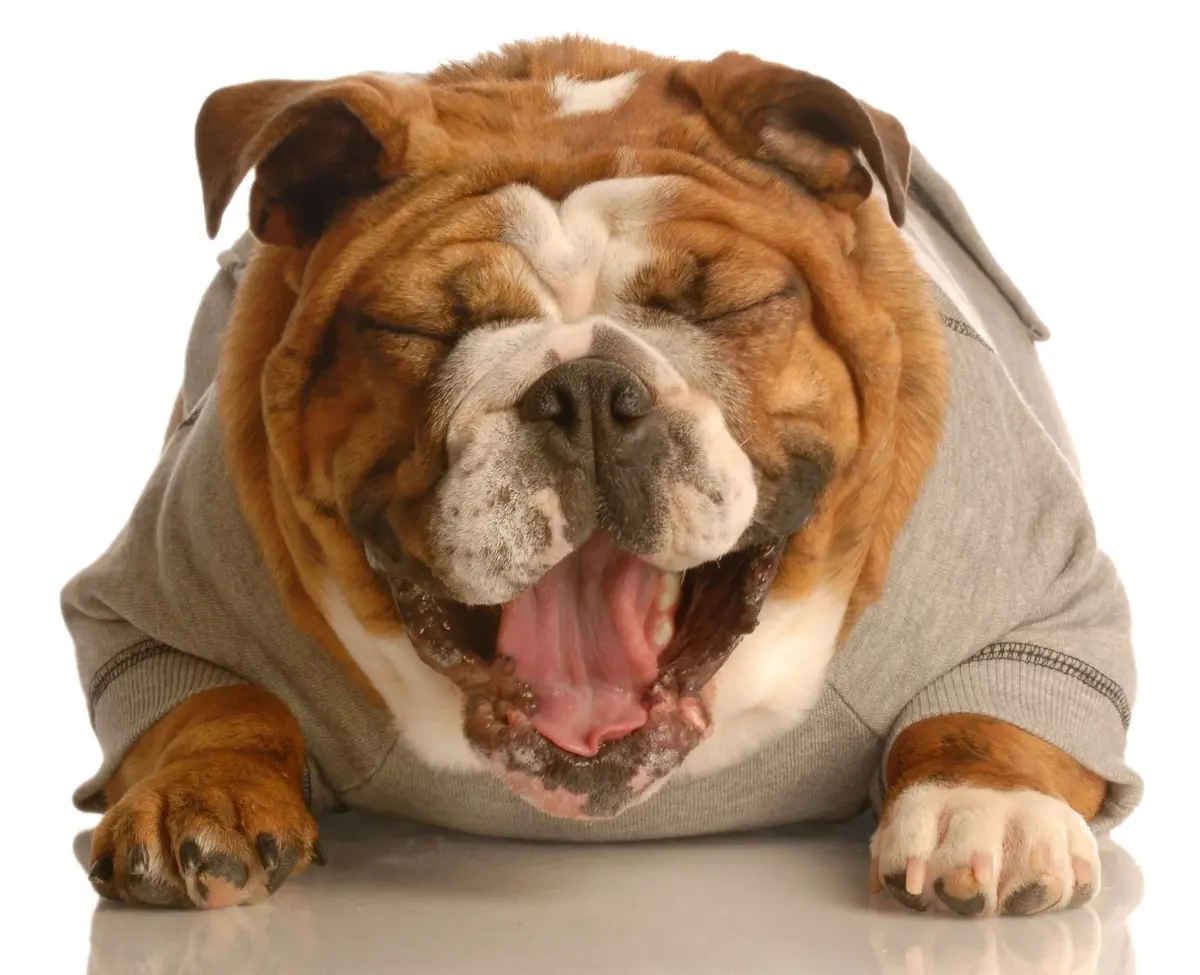
- Konrad Lorenz: The Nobel Prize-winning ethnologist argued that dogs do laugh, identifying a distinct facial expression—slightly opened jaws revealing the tongue, with a mouth angle stretched wide—often seen during high-energy play with an adored owner.
- Patricia Simonet: Animal behaviorist Patricia Simonet discovered that dogs emit specific, breathy exhalations during play. When Simonet played recordings of these sounds back in animal shelters, distressed dogs calmed down, and puppies exhibited joyous romping behavior.
- Stanley Coren: In studies published via Psychology Today, Coren attempted to replicate these breathy sounds ("hhuh-hhah-hhuh-hhah") with his own dogs. By keeping the sounds unvoiced (feeling no throat vibration) and shaping his lips appropriately, Coren successfully elicited immediate, positive physical responses—such as sitting up, tail wagging, and enthusiastic approaches from across the room.
Decoding Canine Body Language for Amusement
For an ethologist, guessing intent based on context is insufficient. Researchers look for specific behavioral clusters to correlate play and amusement in dogs:

- Relaxed Context: The animal is secure, free from immediate stressors like neighborhood cats or startling noises.
- Loose Posture: A fluid, flexible body alignment rather than rigid, defensive guarding.
- The Open Mouth: A relaxed, slightly open jaw structure.
- The "Side Eye": A knowing, sideways glance often captured in classic canine photography, such as the famous images of Cool Hand Luke featured in Patricia Coren’s For The Love of a Dog.
Official Perspectives & Expert Insights
Evaluating animal cognition requires a delicate balance between rigorous scientific skepticism and empathetic observation.
Ethologists emphasize that anthropomorphism—attributing human traits to animals—can cloud objective analysis. However, modern cognitive science increasingly recognizes that drawing a hard line between human emotion and animal intellect is scientifically obsolete. Mammalian brains share deeply conserved neurochemical pathways governing dopamine (reward), oxytocin (social bonding), and play circuits.
When a dog performs the "Felony Trot" or initiates a game of "keep away," they are engaging in complex interspecies communication. They read human facial expressions, gauge the acoustic volume of our laughter, and modulate their physical presentation to maintain our attention. Whether we label this "humor" or "sophisticated social operant behavior," the functional outcome is identical: shared joy between species.

Future Outlook: Farm Life, Conservation, and Resilience
While behavioral scientists debate the finer points of canine comedy, life on the farm continues its seasonal rhythm, bringing a blend of natural splendor and everyday challenges.
Autumnal Shifts and Botanical Beauty
Fall has descended in full force, highlighted by the unexpected installation of nearby fields converted into towering sunflowers—a daily reminder of simple, unprompted beauty during trips into town. Meanwhile, regular excursions to off-leash park trails provide vital sensory enrichment for the resident dogs, offering novel sights and smells that break up the routine of the farm’s twelve-acre expanse.
Navigating Pet Health Hurdles
Life with senior dogs also brings inevitable anxieties. Maggie, approaching her thirteenth birthday in January, has faced a challenging medical chapter following an accidental ingestion incident involving a Zizi plant. Though initial kidney parameters for her Stage 2 kidney disease remain stable, subsequent liver enzyme spikes (ALP, ALT, TBIL) and a persistent urinary tract infection have tested her resilience.

Despite treatments involving Cerenia, antibiotics, and gabapentin, her recovery has been gradual, leaving her somewhat diminished compared to her historically vibrant self. Yet, as any devoted pet owner knows, hope and humor remain the best medicines. Diagnostic plans include forthcoming ultrasounds, tempered by strict instructions to the veterinary team that serious diagnoses are formally "not allowed."
Conservation on the Prairie
Amid personal worries, ecological stewardship offers enduring optimism. The farm’s butterfly weed patches, which previously served as a vibrant nursery for monarch caterpillars, have transitioned into seed-bearing pods. Harvesting these seeds and integrating them into the fledgling prairie patch represents a small, tangible contribution to preserving monarch populations against broader environmental pressures.
Similarly, recent sheep-working sessions with Skip in the hills north of Madison—framed by the staggering, magnificent canopy of an ancient oak tree—reinforce the deep, grounding connection between humans, working dogs, and the natural world.

Conclusion
Whether dogs are genuinely crafting punchlines or simply orchestrating brilliant games to manipulate our laughter, the result is an undeniable enrichment of the human-animal bond. As we navigate the complexities of animal behavior, senior pet care, and seasonal transitions, one truth remains: joy is always present in the world, waiting for us—and our dogs—to find it.