
Executive Overview
By the time a human being shares their first glance or gentle touch with a young puppy, an invisible, high-stakes educational journey is already well underway. In the canine world, the initial ninety days of life represent a profound developmental window—a critical period that dictates how an animal processes the world, builds emotional resilience, and establishes lifelong behavioral patterns.
For the general pet owner, these early months are vital for preventing future anxiety and behavioral issues. However, for future guide dogs and professional service animals, these formative weeks are nothing short of foundational. Organizations such as Dogs Inc rely on an intricate ecosystem of volunteer puppy raisers, temporary puppy sitters, and dedicated community coordinators to shepherd these extraordinary animals through their earliest steps. Long before a dog ever puts on a harness, learns advanced directional commands, or assists an individual with visual impairments or mobility challenges, they must master the art of navigating human society with supreme confidence and calm poise.
This deep-dive investigation explores the science of early canine development, the mechanics of professional socialization, the indispensable role of volunteer puppy raisers, and the blueprint that transforms an impressionable bundle of fur into a life-changing service companion.
Detailed Chronology: The First 90 Days of Canine Growth
Understanding how a puppy transitions from a helpless newborn into a resilient, adaptable trainee requires examining their development through a chronological lens. The first ninety days are not uniform; rather, they are broken down into distinct developmental phases characterized by rapid neurological growth and shifting psychological capacities.
Days 1 to 30: The Neonatal and Transitional Phases
During the first month of life, puppies are entirely dependent on their mother and littermates. Their eyes and ears remain sealed shut for the first week or two, meaning their early perception of the world is mediated almost exclusively through touch, warmth, and scent.
- Neurological Foundations: Even in this blind and deaf state, the puppy’s brain is actively forming neural connections. Gentle handling by human caregivers during these early weeks introduces mild, beneficial stress that accelerates neurological development and stress-recovery mechanisms.
- Littermate Dynamics: As their eyes and ears open around weeks two and three, puppies begin interacting with their littermates. This is the genesis of canine communication. Through gentle wrestling, vocalizations, and nursing competition, pups learn bite inhibition and fundamental social boundaries. If a puppy bites a littermate too hard, the play stops, teaching an immediate, visceral lesson in social etiquette.
Days 31 to 60: The Dawn of Curiosity and Early Learning
As puppies enter their second month, their sensory capabilities blossom. Their world expands rapidly as they transition away from a strictly maternal diet toward solid food and explore environments outside of the whelping box.
- Environmental Exploration: During this phase, puppies exhibit a natural, uninhibited curiosity. They investigate new textures under their paws—wood, tile, carpet, and grass—while processing novel auditory stimuli, such as household appliances, doorbells, and distant traffic.
- Building Trust: Caregivers introduce simple daily routines during this period. Feeding times, brief periods of separation, and initial exposure to a crate establish a comforting sense of predictability. This structure is essential for emotional stability, teaching the puppy that transitions and brief moments of solitude are entirely safe.
Days 61 to 90: The Critical Socialization Window
Widely recognized by animal behaviorists as the peak of the critical socialization period, months two and three represent the most influential window in a dog’s life. During this timeframe, a puppy’s brain is exceptionally plastic, absorbing and cataloging environmental stimuli at a staggering rate.
- Safe Exposures: This is the prime window for introducing puppies to a vast array of people, animals, and settings. At Dogs Inc, future service dogs are deliberately—and safely—exposed to diverse human demographics (children, seniors, individuals using mobility aids like wheelchairs and white canes), different surface types, and shifting environmental conditions.
- Emotional Resilience: The goal of this phase is not merely to prevent fear, but to actively build recovery capacity. When a puppy encounters an unexpected sound or a strange object and recovers quickly with the guidance of a trusted handler, they build the psychological armor needed for a demanding working life.
Supporting Context & Metrics: The Science Behind Early Socialization
To fully appreciate the gravity of the first 90 days, one must examine the physiological and psychological mechanisms at play. Canine behavioral science consistently demonstrates that early intervention yields exponentially better behavioral outcomes than attempting to correct maladaptive behaviors later in life.

The Neurobiology of Canine Adaptability
During the peak socialization window, puppies experience a biological surge in neuroplasticity. The brain is actively pruning unneeded neural pathways while reinforcing those stimulated by frequent environmental encounters.
- The Fear Window: As puppies approach the end of this 90-day window, they naturally transition into their first developmental fear period. Experiences marked by trauma or severe fright during or immediately after this window can leave lasting psychological imprints. Conversely, positive, controlled exposures build a physiological buffer against chronic anxiety.
- Cortisol Regulation Studies: Research into working dog development indicates that puppies subjected to structured, enriching environments during their first three months exhibit lower resting cortisol (stress hormone) levels and faster autonomic nervous system recovery when faced with novel stressors.
The Standardized Puppy Raising Curriculum
Organizations dedicated to breeding and training elite assistance dogs do not leave socialization to chance. They operate on rigorous, standardized protocols designed to track and evaluate a puppy’s progress week by week.
| Developmental Stage | Primary Focus Areas | Key Environmental Exposures | Desired Behavioral Outcome |
|---|---|---|---|
| Weeks 1–4 | Neonatal care, tactile stimulation, maternal bonding | Soft bedding, human touch, scent introduction | Basic neurological stimulation and security |
| Weeks 5–6 | Weaning, littermate socialization, basic household sounds | Hard floors, ambient music, human voices, soft toys | Bite inhibition and social awareness |
| Weeks 7–9 | Individualized handling, crate introduction, short trips | Grass, gravel, car rides, friendly strangers | Curiosity, comfort with handling, basic trust |
| Weeks 10–13 | Public access preparation, obedience foundations, distraction work | Shopping centers, elevators, stairs, diverse crowds | Emotional stability and rapid recovery from startling |
Official Perspectives: Voices from the Front Lines of Service Dog Training
The intricate work of shaping a service dog cannot be accomplished by trainers alone; it requires a deeply committed community of volunteers who serve as surrogate parents during these crucial months.
The Volunteer Experience: Balancing Heart and Discipline
Raising a future guide or service dog is widely described by participants as one of the most demanding yet rewarding volunteer commitments an individual can undertake. Puppy raisers act as the architects of the dog’s early life, shouldering the daily responsibility of enforcing house manners, practicing basic obedience, and orchestrating countless public outings.
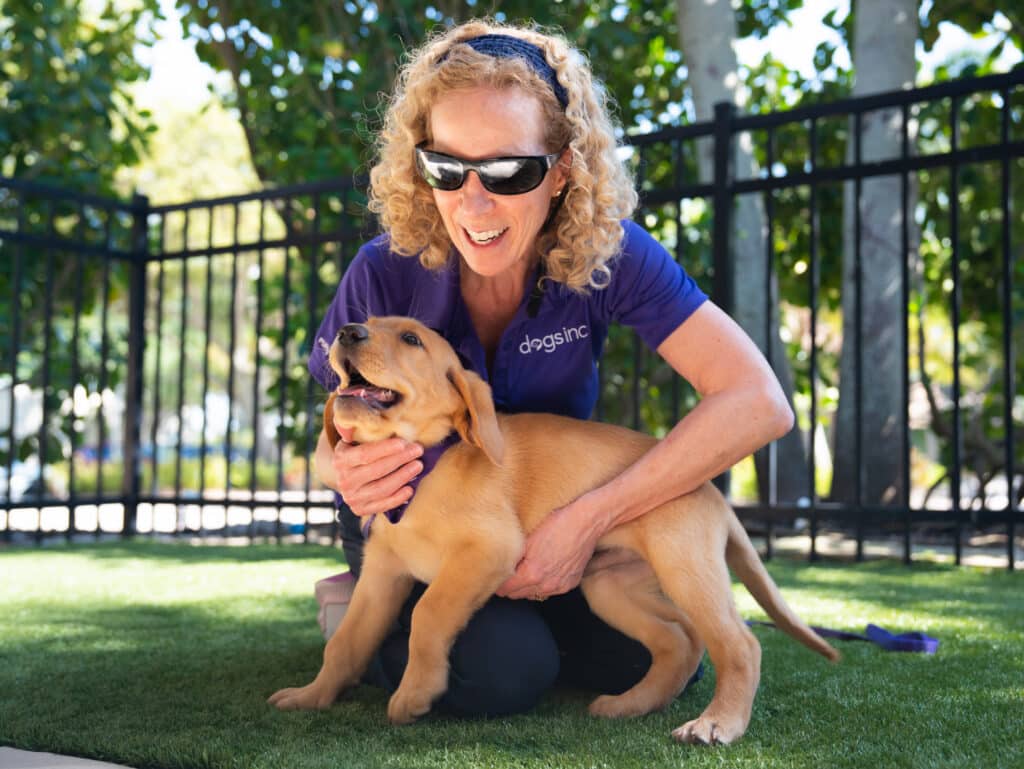
"When you take on a future service dog, you aren’t just teaching a puppy how to sit or walk nicely on a leash," explains a veteran puppy raising coordinator. "You are teaching them how to process the chaotic human world without fear. Every single trip to the grocery store, every elevator ride, and every calm introduction to a stranger is a brick laid in the foundation of that dog’s future career."
The Ecosystem of Support
Recognizing that burnout is a genuine risk for volunteers who must eventually return their beloved puppies for professional training, organizations like Dogs Inc have cultivated robust support networks.
- Puppy Sitters: Volunteers who provide temporary care when a primary raiser travels or faces medical appointments, ensuring the puppy’s routine remains unbroken.
- Area Coordinators: Experienced mentors who host regular meetings, evaluate puppy progress, and offer real-time behavioral guidance.
- Community Camaraderie: Group training sessions allow raisers to share troubleshooting tips, celebrate milestones, and lean on one another when dealing with typical puppy challenges, such as house-training regression or adolescent testing phases.
Future Outlook: The Ripple Effect of a Strong Foundation
What happens during a puppy’s first ninety days echoes far into the future, ultimately determining whether an individual with visual impairments achieves newfound independence or whether a person with mobility challenges gains a reliable, steadfast partner.
Preparing for Advanced Professional Training
Once a puppy graduates from its initial raising period—typically returning to the organization’s main campus between 12 to 18 months of age—they enter advanced training. Here, professional instructors teach complex task execution, such as intelligent disobedience (refusing a handler’s command if executing it would lead into danger), directional navigation, and specialized retrieval tasks.
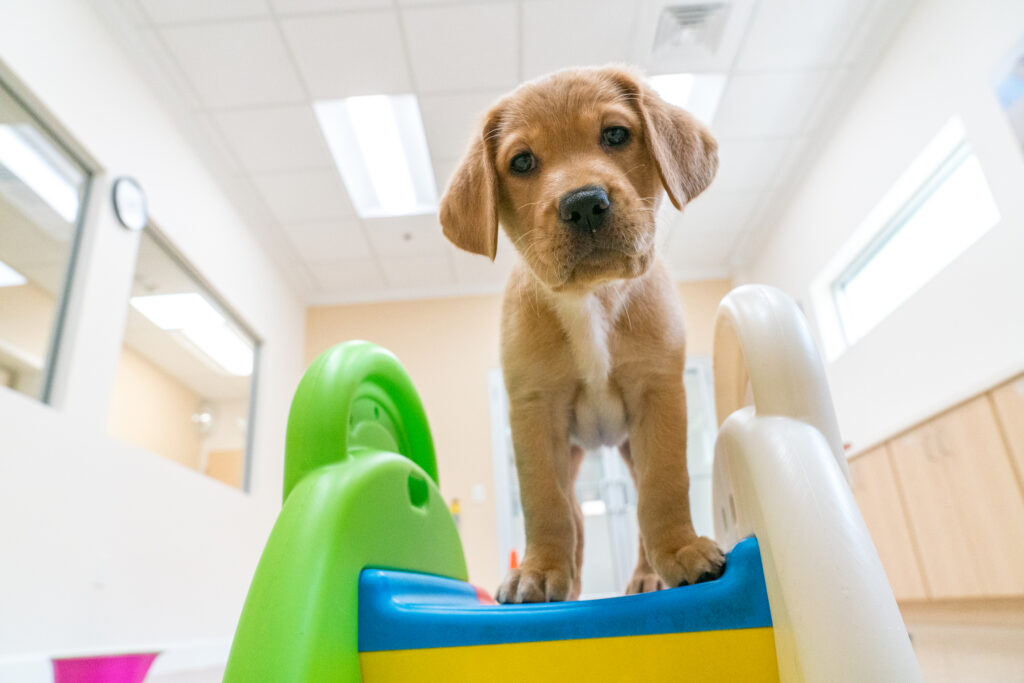
However, advanced trainers consistently emphasize that they cannot teach confidence to a dog that lacks a secure foundation. A dog that was inadequately socialized during its first ninety days will consistently struggle under the pressure of working environments, no matter how intelligent it may be. The early work done by puppy raisers ensures that advanced training builds upon a bedrock of emotional resilience and trust.
The Broader Lesson for All Dog Owners
The insights gleaned from professional guide and service dog breeding programs offer invaluable lessons for the everyday pet owner. The emphasis on early socialization, structured routines, positive reinforcement, and patience applies universally. By recognizing that a puppy’s behavior at age two is largely a reflection of its experiences during the first ninety days, owners can approach pet-rearing with greater intentionality.
For those inspired to make a tangible difference, the path is wide open. Whether through stepping forward to become a volunteer puppy raiser, supporting raising programs through community outreach, or simply following the documented journey of a new litter, the public plays an indispensable role in empowering these remarkable animals. Through patience, structure, and an unwavering commitment to early education, organizations like Dogs Inc continue to prove that the smallest, earliest experiences hold the power to completely transform a human life.