
iHeartDogs is reader-supported. When you buy via links on our site, we may earn an affiliate commission at no extra cost to you. The information presented herein is for educational purposes and should not replace professional veterinary consultation.
Executive Overview
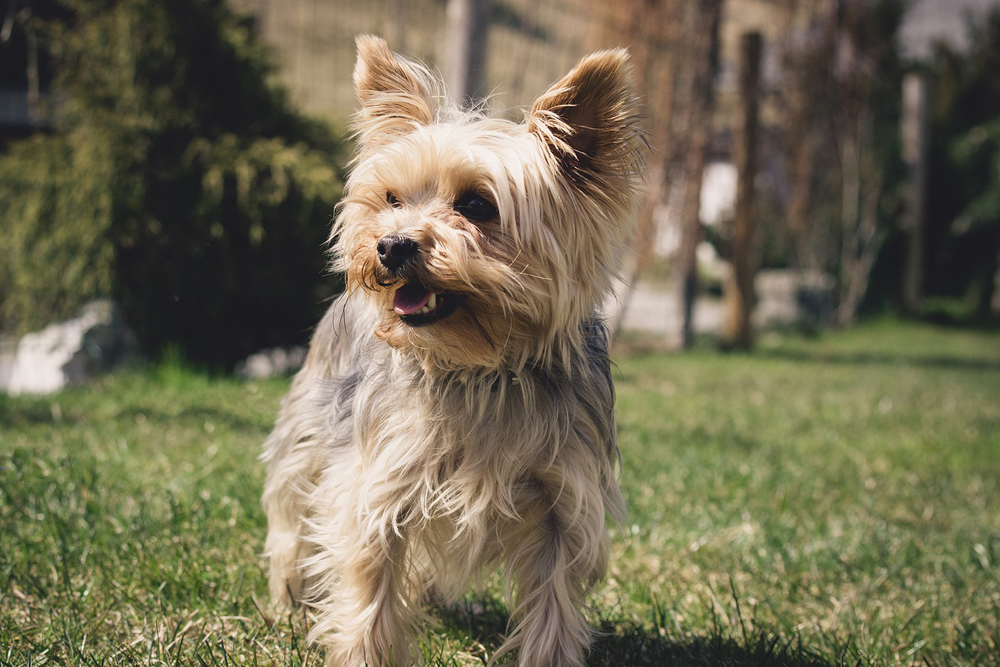
Gastrointestinal (GI) distress in toy breeds, particularly the Yorkshire Terrier (Yorkie), presents a unique clinical and caregiving challenge. Characterized by symptoms such as acute diarrhea, flatulence, emesis (vomiting), and abdominal discomfort, GI episodes can rapidly escalate from minor dietary indiscretions to life-threatening metabolic crises. Due to their diminutive size, rapid metabolic rates, and genetic predispositions, Yorkies possess highly sensitive digestive systems that react acutely to pathogens, stress, and dietary shifts.
While chronic or severe cases require immediate veterinary intervention, many mild, uncomplicated episodes of gastroenteritis can be managed effectively at home. This investigative report explores the physiological mechanisms behind Yorkie GI distress and provides an authoritative, science-based guide to home remedies, dietary interventions, and advanced microflora supplementation. By understanding the timeline of gastrointestinal recovery and the biochemical roles of probiotics, prebiotics, and digestive enzymes, pet parents can restore homeostatic balance to their canine companions safely and systematically.
Detailed Chronology of Gastrointestinal Intervention
When a Yorkshire Terrier exhibits signs of digestive upset, a systematic, phased treatment protocol must be deployed. Because toy breeds have minimal physiological reserves, interventions must be carefully timed to prevent dehydration, hypoglycemia, and mucosal inflammation.
[Onset of GI Distress]
       │
       ▼
[Phase 1: 12–24 Hour Fast] ──► *Monitor closely for Hypoglycemia*
       │
       ▼
[Phase 2: Bland Diet Transition] ──► *75/25 -> 50/50 -> 25/75 Titration*
       │
       ▼
[Phase 3: Microbiome Reconstitution] ──► *Introduce Probiotics & Postbiotics*
       │
       ▼
[Phase 4: Mucosal Coating & Fiber] ──► *Slippery Elm, Pumpkin, Chia*
       │
       ▼
[Phase 5: Long-Term Enzymatic Support] ──► *Amylase, Lipase, Protease, Cellulase*
Phase 1: The Therapeutic Fast (Hours 0 to 24)
The initial step in managing acute gastroenteritis is the temporary cessation of solid food. Withholding food for 12 to 24 hours provides "gut rest," allowing the mucosal lining of the intestines (enterocytes) to heal without the metabolic burden of processing food.
- Physiological Mechanism: Fasting reduces peristaltic contractions, limits the nutrient supply to opportunistic pathogenic bacteria, and decreases pancreatic enzyme secretion.
- Critical Toy Breed Consideration: Unlike larger breeds, Yorkies—especially puppies—are highly susceptible to hypoglycemia (low blood sugar) during periods of fasting. If a Yorkie exhibits lethargy, shivering, or weakness during a fast, rub a small amount of maple syrup or Karo syrup directly onto their gums and contact a veterinarian immediately. Fasting should rarely exceed 12 hours in toy breeds under 5 pounds without professional oversight.
- Hydration Protocol: Continuous access to clean water is mandatory. However, to prevent acute emesis triggered by rapid water engorgement, limit intake to small, frequent portions (e.g., a few tablespoons every 30 to 60 minutes) or offer ice chips.
Phase 2: Introduction of a Bland Diet (Days 1 to 3)
Following a successful fast, the gastrointestinal tract requires highly digestible, low-fat nutrients to transition back to normal function.
- Standard Formula: Boiled, skinless, unseasoned white meat chicken breast (shredded) combined with plain white rice in a 1:2 ratio. White rice is preferred over brown rice during acute episodes because its low fiber content makes it easier to digest, quickly binding the stool.
- Grain-Free Alternatives: For canines with known grain sensitivities, substitute white rice with plain, unsweetened canned pumpkin puree or mashed, overripe bananas.
- Titration Schedule: Feed small portions (1 to 2 tablespoons) every 2 to 3 hours. Once stools begin to form, gradually transition back to regular kibble over a 3-to-4-day period using the following ratio:
- Day 1 of transition: 75% bland diet, 25% regular food.
- Day 2 of transition: 50% bland diet, 50% regular food.
- Day 3 of transition: 25% bland diet, 75% regular food.
- Day 4: 100% regular diet.
Phase 3: Microbiome Reconstitution via Probiotics
Diarrhea physically flushes beneficial bacteria out of the gut, leaving the intestinal walls vulnerable to pathogenic colonization by organisms like Clostridium perfringens or Escherichia coli. Reintroducing high-quality, multi-strain probiotics is vital to re-establishing the protective mucosal barrier.
- The Role of Postbiotics and Co-Factors: Modern veterinary gastroenterology emphasizes the combination of probiotics (live beneficial bacteria), prebiotics (nourishment for bacteria), and postbiotics (the bioactive byproducts of fermentation).
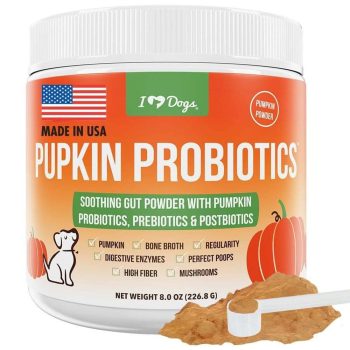
- Targeted Solutions: Formulations such as Pupkin™ Probiotics, Prebiotics & Postbiotics for Dogs utilize a synergistic blend of pumpkin, gut-soothing bone broth, and functional mushrooms. These ingredients work in tandem to soothe inflamed enterocytes, reduce systemic inflammation, and improve stool consistency rapidly.
Phase 4: Mucosal Coating and Dietary Fiber (Prebiotics)
To accelerate healing of the intestinal lining, specific soluble fibers and mucilaginous herbs can be introduced:

- Canned Pumpkin Puree: Packed with soluble fiber, pumpkin absorbs excess water in the colon, bulk-forming the stool to alleviate diarrhea, while also easing constipation.
- Slippery Elm Bark: When moistened, slippery elm creates a slick gel (mucilage) that physically coats and soothes the mucous membranes of the esophagus, stomach, and intestines, reducing inflammation.
- Chia Seeds: Highly hydrophilic, chia seeds absorb up to 12 times their weight in water, helping to dry up watery stools and provide a slow-release source of soluble fiber.
- Plantains: Containing natural antimicrobial and anti-inflammatory properties, plantains help protect the gut lining from pathogens.
Phase 5: Long-Term Enzymatic Optimization
For Yorkies prone to chronic gas, bloating, or loose stools, the root cause may be incomplete digestion. When macronutrients are left undigested in the small intestine, they ferment in the colon, producing excess gas and osmotic diarrhea. Introducing a broad-spectrum digestive enzyme supplement ensures thorough nutrient absorption.
Supporting Context & Metrics
Anatomical and Physiological Vulnerabilities in Yorkshire Terriers
To understand why Yorkies suffer so frequently from GI issues, we must examine their breed-specific physiological metrics.
| Physiological Parameter | Yorkshire Terrier Average | Impact on Gastrointestinal Health |
|---|---|---|
| Average Adult Weight | 4 – 7 lbs (1.8 – 3.2 kg) | Minimal fluid reserves; high risk of rapid dehydration during diarrheal episodes. |
| Metabolic Rate | High (relative to body mass) | Rapid energy consumption; high susceptibility to hypoglycemia during fasting. |
| Pancreatitis Risk | High | Extreme sensitivity to high-fat foods; can trigger acute, life-threatening pancreatic inflammation. |
| Microvascular Dysplasia (MVD) | Genetically Predisposed | Altered hepatic portal blood flow can compromise overall metabolic and digestive efficiency. |
The Biochemistry of Digestive Enzymes
A high-quality digestive enzyme supplement for dogs must contain four foundational enzymes to assist in breaking down feed ingredients:
- Protease: Catalyzes the breakdown of proteins into bioavailable amino acids, reducing the likelihood of food-allergen triggers in the gut.
- Amylase: Hydrolyzes complex starches and carbohydrates into simple sugars, preventing cecal fermentation.
- Lipase: Breaks down dietary lipids (fats) into fatty acids and glycerol. This is particularly crucial for Yorkies, as improper fat digestion is a primary driver of pancreatitis.
- Cellulase: Breaks down cellulose (plant fiber), which dogs cannot naturally synthesize. This assists in digesting vegetable matter and grain-free carbohydrates.
Official Statements and Clinical Guidelines
Veterinary Clinical Consensus on Acute Gastroenteritis
Veterinary emergency clinics emphasize that while home care is highly effective for mild, self-limiting cases of diarrhea, owners must recognize the clinical "red flags" that dictate immediate professional intervention.
[IS YOUR YORKIE EXPERIENCING GI DISTRESS?]
               │
       ┌───────┴───────┐
       ▼               ▼
  [Mild Cases]    [Critical Symptoms]
  - Loose stool   - Blood in stool (hematochezia/melena)
  - Mild gas      - Repeated vomiting (cannot hold water)
  - Active/Alert  - Extreme lethargy or weakness
       │          - Pale, dry, or tacky gums
       ▼               │
 [Home Care/           ▼
  Supplements]    [IMMEDIATE VETERINARY EMERGENCY]
According to clinical guidelines, a Yorkie must be evaluated by a veterinarian immediately if they display any of the following:
- Hematochezia or Melena: The presence of bright red blood or black, tarry stools, indicating upper or lower gastrointestinal bleeding.
- Intractable Emesis: Vomiting that persists even after withholding food, preventing the dog from keeping water down.
- Systemic Lethargy: A marked decrease in responsiveness, glassy eyes, or a refusal to stand.
- Signs of Shock or Severe Dehydration: Tacky, pale gums, a delayed capillary refill time (greater than 2 seconds), or loss of skin elasticity (skin tenting).
Regulatory and Quality Context (FDA Disclaimer)
It is vital to note that dietary supplements, including probiotics, prebiotics, and digestive enzymes, are categorized as nutritional aids.
"These statements have not been evaluated by the Food and Drug Administration. No product is intended to diagnose, treat, cure, or prevent any disease. The information presented is not intended to replace a one-on-one relationship with a qualified veterinary healthcare professional."
When choosing supplements, owners should look for manufacturers that adhere to strict quality control standards, use third-party testing, and source human-grade ingredients.
The Science of Biome Restoration: Clinical Case Analyses
To further understand how targeted interventions resolve digestive distress, we examine four common clinical scenarios faced by Yorkie owners.
Scenario A: Managing Dietary Transitions
Introducing a new kibble or raw diet too quickly can cause acute dysbiosis (microbial imbalance).
- The Protocol: Administer a multi-strain probiotic, such as Pupkin™, for 7 to 10 days prior to starting the food transition. This populates the gut with a robust baseline of beneficial bacteria.
- The Transition: Slowly mix the new food into the old food over a 10-day period, maintaining probiotic therapy throughout the process and for one week afterward to prevent transition-induced diarrhea.
Scenario B: Post-Antibiotic Recovery
While antibiotics are necessary to fight bacterial infections, they are non-selective, destroying both pathogenic and beneficial gut bacteria. This often leads to antibiotic-associated diarrhea (AAD).
- The Protocol: Provide a high-potency probiotic supplement during and after antibiotic therapy.
- Timing is Key: To prevent the antibiotic from killing the beneficial organisms in the probiotic, administer the supplement at least two hours before or two hours after the antibiotic dose. Continue probiotic therapy for a minimum of 30 days post-antibiotic treatment to fully restore the microbiome.
Scenario C: Stress-Induced Dysbiosis
Yorkies are highly sensitive, companion-oriented dogs. Stress from boarding, travel, veterinary visits, or changes in the household triggers the release of cortisol and catecholamines. These hormones alter gut motility and weaken the mucosal barrier, leading to "stress diarrhea."

- The Protocol: Begin daily probiotic and prebiotic supplementation 3 to 5 days before a known stressful event (e.g., holiday travel or boarding). The inclusion of gut-soothing bone broth and functional mushrooms helps stabilize the gut lining, keeping stools firm even under psychological stress.
Scenario D: Chronic Flatulence and Bloating
Excessive gas is more than just an unpleasant odor; it indicates that food is fermenting in the intestinal tract rather than being digested cleanly.
- The Protocol: A combined regimen of digestive enzymes (to break down proteins and fats before they reach the colon) and probiotics (to crowd out gas-producing, methane-emitting bacteria) can drastically reduce flatulence, bloating, and abdominal pain.
Future Outlook: The Evolution of Canine Gastroenterology
The landscape of canine digestive health is undergoing a significant shift toward personalized, proactive medicine. Researchers are moving away from broad-spectrum treatments and toward targeted, individualized therapies.
- Fecal Microbiome Sequencing: In the near future, veterinarians will routinely sequence a dog’s stool to identify the exact strains of bacteria missing from their unique microbiome. This will allow for custom-formulated probiotic therapies tailored specifically to an individual Yorkie’s genetic and environmental needs.
- The Rise of Postbiotics: While probiotics introduce live bacteria, postbiotics—the inanimate microorganisms and cellular components that remain after fermentation—are gaining clinical recognition. Postbiotics offer a highly stable shelf life and deliver immediate, targeted anti-inflammatory benefits to the gut wall without the risk of bacterial overgrowth.
- Integrative Preventive Care: Rather than treating GI distress reactively with antibiotics and synthetic binders, the veterinary community is increasingly advocating for daily preventive gut support. By maintaining a strong gut barrier with daily prebiotics, probiotics, and digestive enzymes, pet owners can significantly lower the incidence of acute digestive crises, giving their Yorkies a longer, happier, and more comfortable life.