
Executive Overview
The narrative of life on Earth has long been anchored in the study of cellular organisms—bacteria, archaea, and eukaryotes. However, a revolutionary scientific paradigm suggests that this fundamental tree of life is missing a critical, dynamic architect: the virus. Long dismissed as mere infectious agents or molecular parasites, viruses are now understood by a growing cadre of evolutionary biologists to be foundational participants in the emergence of complex biological systems.
At the epicenter of this paradigm shift is the "viral eukaryogenesis" hypothesis, which posits that the nucleus of complex eukaryotic cells—the defining feature of animals, plants, fungi, and protists—originated from an ancient, large DNA virus that established a permanent residence within an archaeal host. For over two decades, Professor Masaharu Takemura of the Tokyo University of Science (TUS) has championed this provocative theory, seeking empirical validation in the deepest recesses of the virosphere.
Now, a breakthrough discovery threatens to rewrite our understanding of evolutionary history. In a newly published study in the Journal of Virology, Prof. Takemura and an interdisciplinary research team from the National Institute of Natural Sciences (NINS) in Japan have unveiled ushikuvirus, a novel giant DNA virus isolated from Lake Ushiku in Ibaraki Prefecture. Infecting single-celled Vermamoeba organisms, ushikuvirus exhibits a unique structural architecture and a distinct replication strategy that bridges critical evolutionary gaps between known viral families.
Beyond rewriting phylogenetic trees, this discovery offers profound implications. By illuminating the diverse evolutionary trajectories of giant viruses and their interactions with single-celled hosts, researchers are not only decoding the origins of complex cellular life but also uncovering potential translational applications in modern medicine, including novel biotherapeutic approaches to combat severe amoebic infections.
Detailed Chronology: From Ancient Enigmas to the Ushikuvirus Breakthrough
The Genesis of Viral Eukaryogenesis
The relationship between viruses and the origin of life has puzzled virologists and evolutionary biologists for generations. Unlike living cellular life, which is capable of independent metabolism and protein synthesis, viruses exist in a liminal state. Composed solely of genetic material encased in a protective protein coat, or capsid, they are obligate intracellular parasites, entirely dependent on the machinery of host cells to replicate and survive.
For decades, the prevailing view relegated viruses to the sidelines of evolutionary history—secondary derivatives of cellular life that had lost their metabolic autonomy over time. However, a radical counter-hypothesis began to take shape at the turn of the millennium.
In 2001, Professor Masaharu Takemura of TUS and Dr. Philip Bell of Macquarie University independently advanced a revolutionary proposition: the cell nuclear virus origin theory, later termed "viral eukaryogenesis" by Dr. Bell. This hypothesis radically inverted traditional thinking, suggesting that the eukaryotic nucleus—a membrane-bound organelle that houses cellular DNA—did not evolve from internal cellular folding, but rather descended directly from a large, ancestral DNA virus (such as a poxvirus) that infected an archaeal host cell.
According to this model, rather than destroying its host, the ancient virus established a stable, symbiotic presence within the cytoplasm. Over evolutionary epochs, the viral entity integrated host genes, evolved regulatory mechanisms, and ultimately transformed into the sophisticated control center we recognize today as the cell nucleus. If substantiated, this theory positions viruses not merely as pathogens, but as direct catalysts for the rise of complex, multicellular life.
The Era of Giant DNA Viruses
For years, the viral eukaryogenesis hypothesis lacked sufficient empirical models, as most known viruses were microscopic and genetically streamlined. That landscape shifted dramatically in 2003 with the monumental discovery of giant DNA viruses. These biological leviathans possessed genomes rivaling those of small bacteria and physical dimensions that easily eclipsed many cellular organisms.
When giant DNA viruses infect their hosts, they construct complex intracellular structures known as "virus factories." In many instances, these specialized compartments are enclosed by distinct membranes and serve as autonomous sites for viral DNA replication—strikingly resembling a primitive version of a cell nucleus. This functional and structural parallel provided vital circumstantial evidence supporting the evolutionary continuum between viruses and complex eukaryotic cells.
In the years following this discovery, researchers identified an expanding catalog of giant DNA lineages. Among them are members of the Mamonoviridae family, which target Acanthamoeba hosts, and clandestinovirus, a closely related giant virus that infects Vermamoeba—a distinct genus of single-celled amoebic microorganisms. Yet, despite these discoveries, the vast majority of giant virus diversity remained locked away in environmental niches, waiting to be uncovered.
Isolating Ushikuvirus: A New Chapter in Virology
Entering this uncharted territory, the collaborative team led by Prof. Takemura, alongside TUS Master’s students Mr. Jiwan Bae and Mrs. Narumi Hantori, and NINS researchers Dr. Raymond Burton-Smith and Prof. Kazuyoshi Murata, turned their attention to aquatic environments in Japan.
Their targeted isolation efforts focused on Lake Ushiku in Ibaraki Prefecture, yielding a novel giant DNA virus subsequently named ushikuvirus. Described in detail in the Journal of Virology, ushikuvirus specifically infects Vermamoeba hosts, placing it in an elite category of environmental giant viruses that offer a unique window into ancient evolutionary lineages.
"Giant viruses can be said to be a treasure trove whose world has yet to be fully understood," reflects Prof. Takemura. "One of the future possibilities of this research is to provide humanity with a new view that connects the world of living organisms with the world of viruses."
Supporting Context & Metrics: Structural Morphology and Replication Dynamics
To fully appreciate the significance of ushikuvirus, virologists must analyze its morphological characteristics and intracellular behavior. While giant viruses are ubiquitous across diverse global ecosystems, isolating them remains an extraordinary technical challenge due to their fragility, sample scarcity, and immense genomic complexity.
Structural Comparison: Shared Lineages and Divergent Features
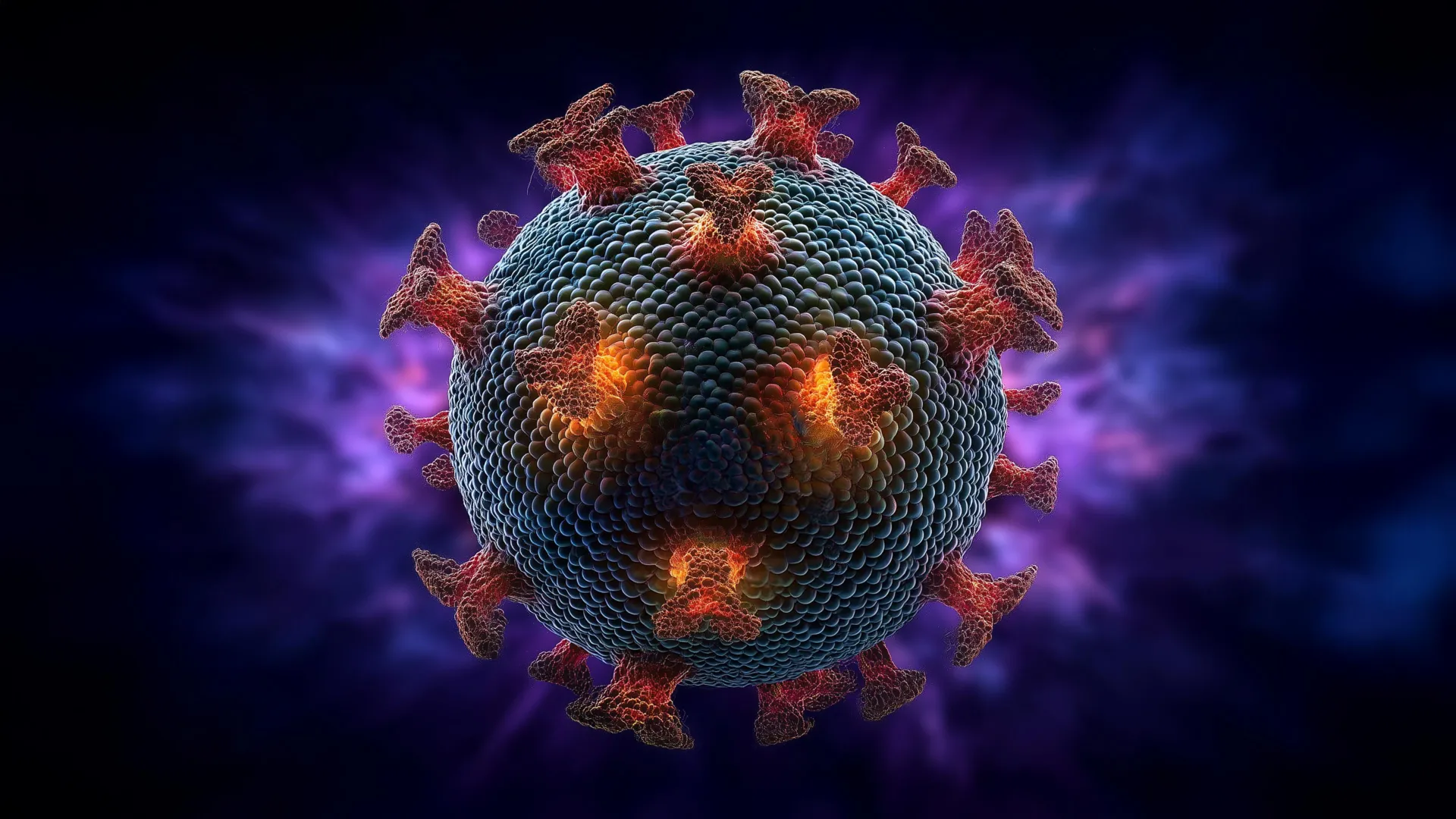
Ushikuvirus shares key phylogenetic and structural affiliations with the Mamonoviridae family, exhibiting notable similarities to Medusavirus—a well-characterized giant virus known for its striking icosahedral morphology and dense array of short spikes coating its capsid surface.
However, detailed microscopic analysis reveals that ushikuvirus has evolved distinct structural and functional specializations:
- Host Modulation: Upon infecting Vermamoeba cells, ushikuvirus triggers a distinct and dramatic cytopathic effect, causing infected host cells to swell and grow unusually large compared to infections caused by related viral species.
- Capsid Architecture: While maintaining an icosahedral framework, the capsid surface of ushikuvirus is punctuated by multiple advanced spike structures. These spikes are uniquely topped with specialized cap formations, with some featuring delicate, filament-like extensions entirely absent in Medusavirus.
The Replication Paradox: Nuclear Integrity vs. Disruption
Perhaps the most profound difference between ushikuvirus and its relatives lies in its replication strategy.
Historically, giant viruses within the Mamonoviridae family and clandestinovirus reproduce by establishing their viral factories within an intact, preserved host cell nucleus. In stark contrast, ushikuvirus employs an aggressive replication mechanism: it actively breaks down the host nuclear membrane during the replication cycle to synthesize and assemble new viral progeny.
This behavioral divergence provides evolutionary scientists with a crucial missing link. It establishes a potential phylogenetic bridge between viruses that exploit an intact host nucleus (such as the Mamonoviridae) and those that systematically dismantle it, such as pandoraviruses. Evolutionary biologists theorize that these disparate replication strategies represent ancient adaptations fine-tuned over millennia as viruses colonized shifting host populations in changing aquatic environments.
Official Statements and Academic Insights
The publication of the ushikuvirus study has generated considerable excitement within the global virology and evolutionary biology communities, underscoring the necessity of interdisciplinary collaboration in modern life sciences.
Prof. Masaharu Takemura emphasized the broader implications of the research during a press briefing following the paper’s release:
"The discovery of a new Mamonoviridae-related virus, ‘ushikuvirus,’ which has a different host, is expected to increase knowledge and stimulate discussion regarding the evolution and phylogeny of the Mamonoviridae family. As a result, it is believed that we will be able to get closer to the mysteries of the evolution of eukaryotic organisms and the mysteries of giant viruses."
The research framework was built upon the combined expertise of academic leadership at the Tokyo University of Science and the advanced imaging capabilities of the Exploratory Research Center on Life and Living Systems (ExCELLS) at NINS. Co-investigators Dr. Raymond Burton-Smith and Prof. Kazuyoshi Murata utilized state-of-the-art microscopy to capture the intricate surface topologies of ushikuvirus, confirming its unique structural deviations from known giant viral families.
Future Outlook: Evolutionary Horizons and Translational Medicine
As the scientific community digests the implications of the ushikuvirus discovery, researchers are plotting an aggressive roadmap for future investigations in both basic evolutionary biology and applied medical science.
Unraveling the Tree of Life
The primary academic objective moving forward is to map the complete genomic sequence of ushikuvirus and compare its protein-coding repertoire against known eukaryotic and archaeal genomes. By identifying conserved genetic signatures, researchers hope to determine whether the mechanisms utilized by ushikuvirus reflect ancestral traits shared with the primordial virus that ostensibly gave rise to the eukaryotic nucleus.
Furthermore, intensive isolation campaigns are underway to search for additional novel giant viruses in diverse global environments, ranging from extreme hydrothermal vents to deep-soil microbiomes. Expanding the known diversity of giant viruses will allow bioinformaticians to construct higher-resolution phylogenetic trees, testing the boundaries of the viral eukaryogenesis hypothesis with unprecedented empirical rigor.
Implications for Human Health and Biotherapeutics
While much of the excitement surrounding giant viruses remains rooted in evolutionary theory, their interactions with single-celled hosts hold direct translational value for human medicine.
Certain species of free-living amoebae, particularly within the genus Acanthamoeba, are not merely benign environmental organisms; they are opportunistic pathogens capable of inflicting severe, often fatal human diseases. These include Acanthamoeba keratitis—a painful corneal infection frequently linked to contact lens wear—and Granulomatous Amoebic Encephalitis (GAE), a devastating infection of the central nervous system with a notoriously high mortality rate.
Because these pathogenic amoebae are notoriously resilient against conventional antimicrobial treatments, medical researchers are actively exploring biological alternatives. Understanding the precise molecular mechanisms by which giant viruses like ushikuvirus and its relatives infect, commandeer, and systematically destroy amoebic hosts could pave the way for breakthrough biotherapeutic applications. In the future, engineered giant viruses or their derived lytic enzymes could serve as targeted antimicrobial agents, offering precision treatments against stubborn amoebic infestations in clinical settings.
Educational Outreach and Viral Literacy
Beyond laboratory discoveries, Prof. Takemura maintains a long-term commitment to reshaping public perception regarding viruses. Having authored more than 120 scientific papers and accumulated over 2,500 academic citations, his broader mission includes developing comprehensive educational curricula. By improving global "virus literacy," Takemura aims to transition public and academic understanding away from the narrow view of viruses strictly as harbingers of disease, repositioning them accurately as fundamental engines of biodiversity, cellular complexity, and the evolutionary history of life on Earth.
This research was made possible through the generous support of the Japan Society for the Promotion of Science (JSPS) via KAKENHI grant number 20H03078, alongside joint research initiatives from the Exploratory Research Center on Life and Living Systems (ExCELLS program No. 22EXC601-4).