
Executive Overview
For millennia, dogs have occupied a unique space in human society. Long before they were curled up on our couches or competing in agility courses, wolves and early proto-dogs stepped out of the shadows of the wild and into human encampments. Over tens of thousands of years of shared evolution, domestic dogs (Canis lupus familiaris) have evolved an almost uncanny ability to read, interpret, and react to human emotional cues. From the broad smile of a returning owner to the tense frown of a stressed handler, dogs appear to navigate the complex social landscape of humanity with remarkable ease.
Yet, while dog owners have long sworn that their pets "understand" them, empirical science has only recently begun to catch up with anecdotal wisdom. What actually happens beneath the skull of a dog when it looks into a human face? Which neurological pathways light up when a dog sees a smile, and can our canine companions genuinely differentiate between our various negative emotions, or do they simply register a monolithic sense of human distress?
A landmark study published on August 7 in the Cell Press journal iScience has begun to demystify these questions. Spearheaded by an international team of researchers—primarily from the University of Vienna, alongside collaborators from the National Autonomous University of Mexico and Eötvös Loránd University in Hungary—the research offers an unprecedented look inside the canine brain. Utilizing advanced neuroimaging and machine learning techniques, the study provides the first definitive biological evidence that dog brains process human smiles through distinct neurological pathways, while simultaneously proving that dogs can tell apart disparate negative human expressions, such as anger, fear, and sadness.
This comprehensive investigation goes far beyond basic stimulus-response mapping. By illuminating the evolutionary adaptations that allow domesticated dogs to decode human facial expressions, this research sheds light on the profound biological shifts that occurred when two entirely different species forged an unprecedented alliance. As scientists continue to unpack the neural machinery of the canine mind, the implications stretch across ethology, veterinary medicine, and our daily interactions with the animals who share our homes.
Detailed Chronology & Methodology: Inside the Canine Neuroimaging Lab
To uncover the neural correlates of human emotion processing in dogs, the research team—led by first author Raúl Hernández-Pérez and senior author Laura Cuaya—had to design a rigorous, non-invasive experimental framework. Studying active brain function in conscious, unrestrained animals presents significant methodological hurdles, but modern functional neuroimaging has revolutionized how ethologists study animal cognition.
Phase One: Mapping the Smile
The journey toward these findings began with a deep dive into how dogs process human happiness. Previous behavioral research had strongly suggested that positive human facial expressions hold special, reinforcing value for dogs. To see if this preference was reflected at the neurological level, the researchers recruited a cohort of eight pet dogs for an initial functional magnetic resonance imaging (fMRI) study.
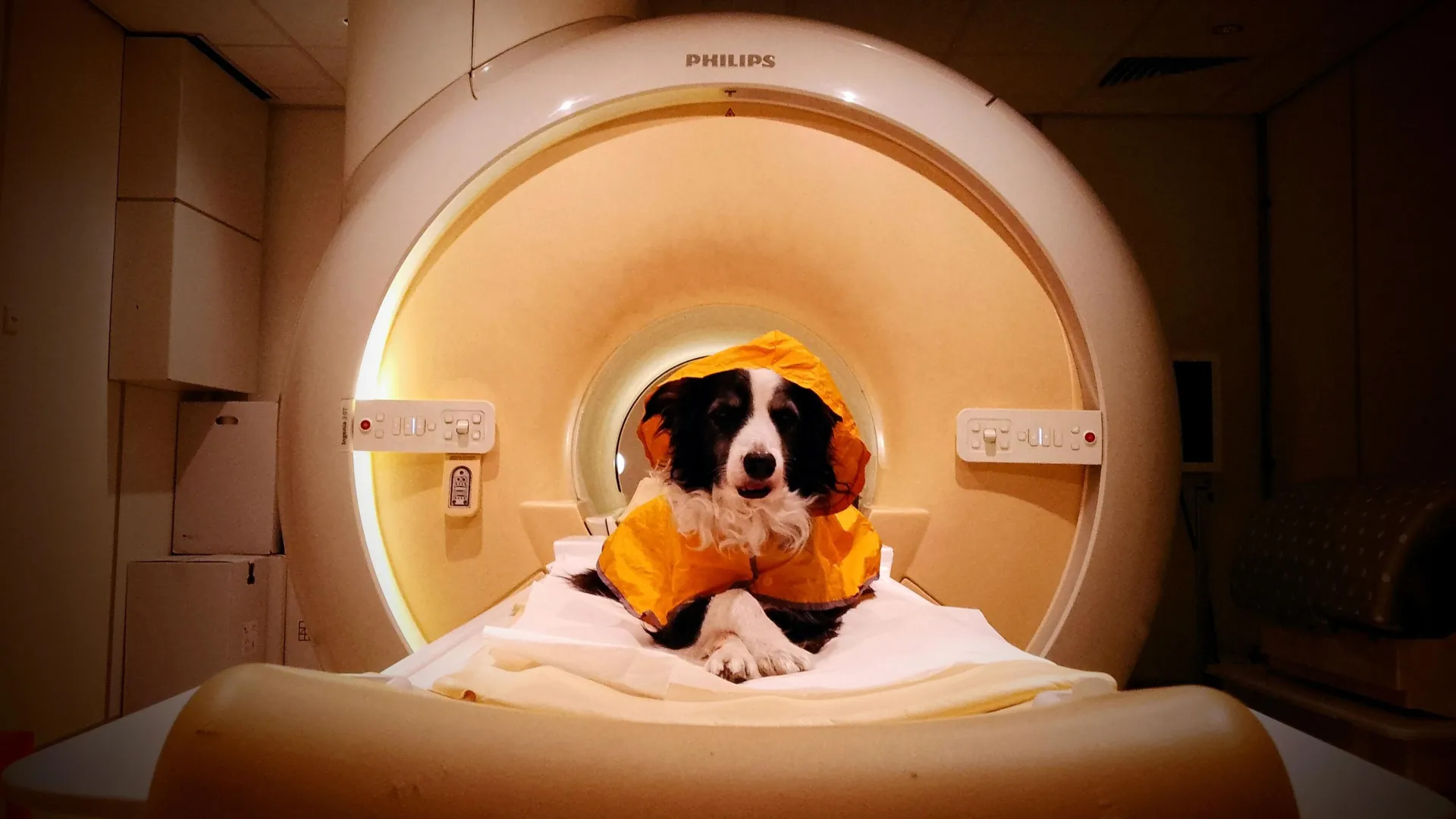
The dogs were trained to remain still inside an MRI scanner without sedation—a testament to patient positive-reinforcement training protocols. While inside the scanner, the animals were shown a series of visual stimuli: static images of unfamiliar human faces displaying either distinctly happy expressions (smiles) or neutral expressions.
The results were striking. When exposed to happy human faces, the dogs exhibited a statistically significant surge in brain activity within two specific regions:
- The Temporal Cortex: An area associated with higher-level cognitive processing, visual integration, and the interpretation of complex environmental stimuli.
- The Caudate Nucleus: A core component of the brain’s reward system, heavily implicated in processing anticipation, value, and pleasurable experiences.
"The activity in the caudate nucleus is particularly interesting," explains Laura Cuaya, reflecting on the initial trials. "It suggests that happy human faces may have deep emotional significance for dogs, essentially lighting up the brain’s reward circuitry in a way that implies smiles are inherently gratifying or reassuring to them."
Phase Two: Expanding the Emotional Spectrum
Encouraged by these initial findings, the research team sought to determine whether these exact same brain networks reacted uniformly to all emotional stimuli, or if the canine brain possessed a more granular capacity for emotional discrimination.
For the second phase of the experiment, the sample size was expanded to 12 pet dogs. These animals were exposed to a wider, more complex array of human facial expressions, encompassing happiness, anger, fear, and sadness. To ensure the integrity of the data and prevent confounding variables, the images utilized standardized human models, controlled lighting, and neutral backgrounds.
Because the resulting neuroimaging data was immensely complex, the researchers turned to advanced computational tools. They employed machine learning algorithms to analyze the intricate spatial and temporal patterns of brain activity triggered by each distinct facial expression.
Through this machine learning analysis, the researchers discovered that the dogs did not process negative expressions as a single, homogenous category of "bad" or "scary" stimuli. Instead, the temporal cortex and caudate nucleus network showed uniquely distinct activity patterns specifically in response to happy faces, allowing the algorithm to easily isolate smiles from the various negative emotions. More importantly, a whole-brain analysis revealed that fear produced a neural activation pattern distinct from both anger and sadness. This milestone represents the first empirical evidence that dogs can cognitively and neurologically distinguish among specific negative human facial expressions, rather than merely reacting to a general sense of human agitation.
Supporting Context, Comparative Biology & Metrics
To fully appreciate the weight of these findings, one must contextualize them within the broader framework of evolutionary biology and comparative neuroscience.
The Evolutionary Divergence: Primates vs. Canids
When neuroscientists study how primates—such as chimpanzees, macaques, and humans—process emotional signals, they are generally looking at shared evolutionary traits inherited from a common ancestor. Primate social cognition is built upon millions of years of arboreal, highly visual, group-living heritage.
With dogs, however, the evolutionary story is entirely divergent. Canids split from the lineage leading to modern carnivorans tens of millions of years ago, evolving into predatory, often territorial hunters equipped with an extraordinary olfactory world that far surpasses their visual acuity. Yet, despite this vast evolutionary gap, dogs managed to bridge the communicative divide through the unique evolutionary pressure known as domestication.
[Common Ancestor]
       │
       ├───> Primate Lineage (Shared visual/social ancestry)
       │
       └─(Millions of Years Divergence)─> Canid Lineage
                                                │
                                       [Domestication Process]
                                                │
                                       (Neurological Adaptations)
                                                │
                                       Enhanced Canine Social Cognition
                                       (Processing Human Smiles & Negative Cues)
"When we compare humans with primates, we are looking at abilities that may have come from a common ancestor," notes senior author Laura Cuaya. "With dogs, the story is totally different. They followed a very different evolutionary path, yet through domestication, they developed the social abilities needed to understand and cooperate with us."
Understanding the Metrics: Sample Sizes and Methodological Rigor
While neuroimaging studies involving animals often face skepticism regarding small sample sizes, the methodological architecture of the iScience study addresses these concerns through rigorous statistical validation:
- Cohort Composition: The initial phase utilized 8 dogs, while the expanded second phase incorporated 12 dogs. All subjects were family pets, ensuring high ecological relevance to domestic environments.
- Awake, Unrestrained fMRI: Unlike studies that require chemical immobilization—which can profoundly alter neurological function—these dogs were fully conscious, trained using positive reinforcement, and voluntarily participated in scanning sessions.
- Machine Learning Validation: By applying algorithmic pattern recognition to whole-brain scan data, the researchers avoided relying solely on subjective human interpretation of localized brain regions, thereby strengthening the objectivity of the findings.
Official Statements & Expert Insights
The implications of this research have resonated deeply within the scientific community, sparking discussions among ethologists, cognitive psychologists, and animal welfare advocates alike.
Raúl Hernández-Pérez, the study’s first author from the University of Vienna, emphasizes the finely tuned perceptual capacities of our canine companions: "Humans are really good at picking up small details on the face, and so are dogs. This makes dogs very interesting. By studying their brains, we can understand what adaptations have developed to support their remarkable social and emotional understanding of humans."
This high-resolution perceptual ability is not merely a byproduct of living alongside humans; it represents a specialized cognitive adaptation. Dogs have spent upwards of 15,000 to 30,000 years—and potentially much longer, according to recent archaeological and genetic models—adapting their behavior to read human intentions. In a human-dominated world, the ability to accurately gauge whether a human is pleased, furious, or terrified can mean the difference between inclusion and rejection, safety and danger.
At the same time, the researchers urge caution against anthropomorphism—the attribution of human traits and emotional experiences to non-human animals. While the brain scans confirm that dogs register the difference between a scowl and a smile, and between fear and anger, this does not necessarily mean dogs experience these emotions in the exact same subjective, phenomenological way that humans do.
Furthermore, the researchers point out a critical limitation: static 2D images capture only a tiny fraction of real-world communication. In natural settings, dogs do not interpret humans through isolated facial expressions alone. Canine social intelligence is multisensory, drawing simultaneously on:
- Facial Micro-Expressions: Rapid shifts in brow tension, eye width, and lip posture.
- Body Language: Posture, tail carriage, weight distribution, and movement velocity.
- Auditory Cues: Tone of voice, pitch, cadence, and vocal volume.
- Olfactory Signals: Chemical signatures released through human sweat and stress hormones (apocrine sweat glands).
"When we look at a still image in a scanner, we are looking at a sterile environment," the research team notes. "In daily life, dogs synthesize a symphony of multimodal signals to understand what we are feeling and what we might do next."
Future Outlook & Practical Implications
As neuroimaging technology becomes more refined and our understanding of non-human cognition deepens, this study opens several exciting avenues for future research.
Future Research Directions
- Dog-Centric Environmental Studies: All subjects in the recent study were domesticated family pets living in human-centric households. Future studies will aim to investigate free-ranging or street-dwelling dogs to determine whether different social environments alter how the canine brain processes human emotional cues.
- Multisensory Integration Mapping: Researchers plan to explore how dogs combine visual facial expressions with auditory cues (such as a soothing voice versus an angry shout) and olfactory inputs inside the brain.
- Cross-Species Comparative Processing: Upcoming projects will directly compare how dogs and humans process identical emotional information, potentially revealing new insights into convergent cognitive evolution.
Practical Takeaways for Dog Owners and Professionals
Beyond the academic sphere, these findings carry profound practical implications for how we interact with, train, and care for our pets:
- Revising Training Methodologies: Understanding that dogs can distinctively process negative emotions such as fear and anger underscores the importance of positive-reinforcement training. When handlers display anger or frustration, dogs do not just sense generic tension—their brains register specific negative states. Cultivating a calm, predictable emotional environment is therefore vital for canine psychological well-being.
- Enhancing Animal-Assisted Therapy: Therapy dogs, search-and-rescue dogs, and emotional support animals rely heavily on their ability to read human handlers. Knowing how their brains process our emotional expressions can help trainers select and prepare animals that are exceptionally resilient to human stress signals.
- Shifting Cultural Perceptions of Animal Sentience: Perhaps the most vital takeaway is philosophical and ethical. As Laura Cuaya aptly summarizes:
"I would like people to see dogs as emotional beings. They have evolved with us to understand our expressions and cooperate with us, and recognizing that can change how we communicate with and care for them."
Ultimately, this groundbreaking research bridges the gap between science and sentiment. It proves mathematically and neurologically what pet owners have known in their hearts for generations: our dogs are not merely reacting to us out of blind instinct; they are looking into our faces, reading our expressions, and participating in an ancient, cross-species dialogue that continues to shape the very fabric of human-animal coexistence.