
Executive Overview
In the landscape of modern animal rescue, stories of physical rehabilitation are commonplace. Countless organizations around the globe work tirelessly to heal sick, abandoned, and neglected animals, turning suffering frames into healthy bodies. However, the psychological and emotional recovery of an animal—specifically, bridging the chasm between deep-seated trauma and human trust—remains one of the most complex challenges in animal welfare.
This is the narrative of Fungi, a tiny black-and-white kitten whose journey encapsulates the fragility of fear and the transformative power of patience. Rescued in Indonesia by Shyaniz and the dedicated foster network at Bubupawpaw, Fungi entered the rescue system carrying the physical toll of a severe fungal skin infection and the invisible, heavy burden of acute terror. For months, his default coping mechanism was evasion; when the world became too loud or unpredictable, he retreated into the sterile confines of his litter box, seeking invisibility.
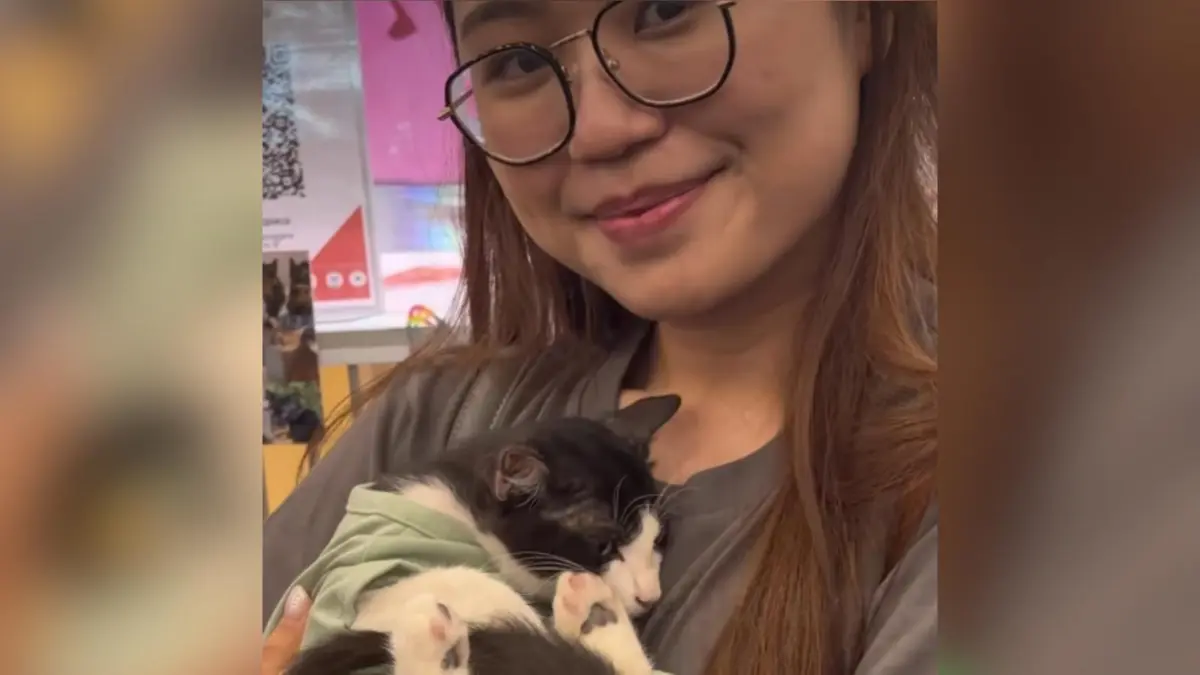
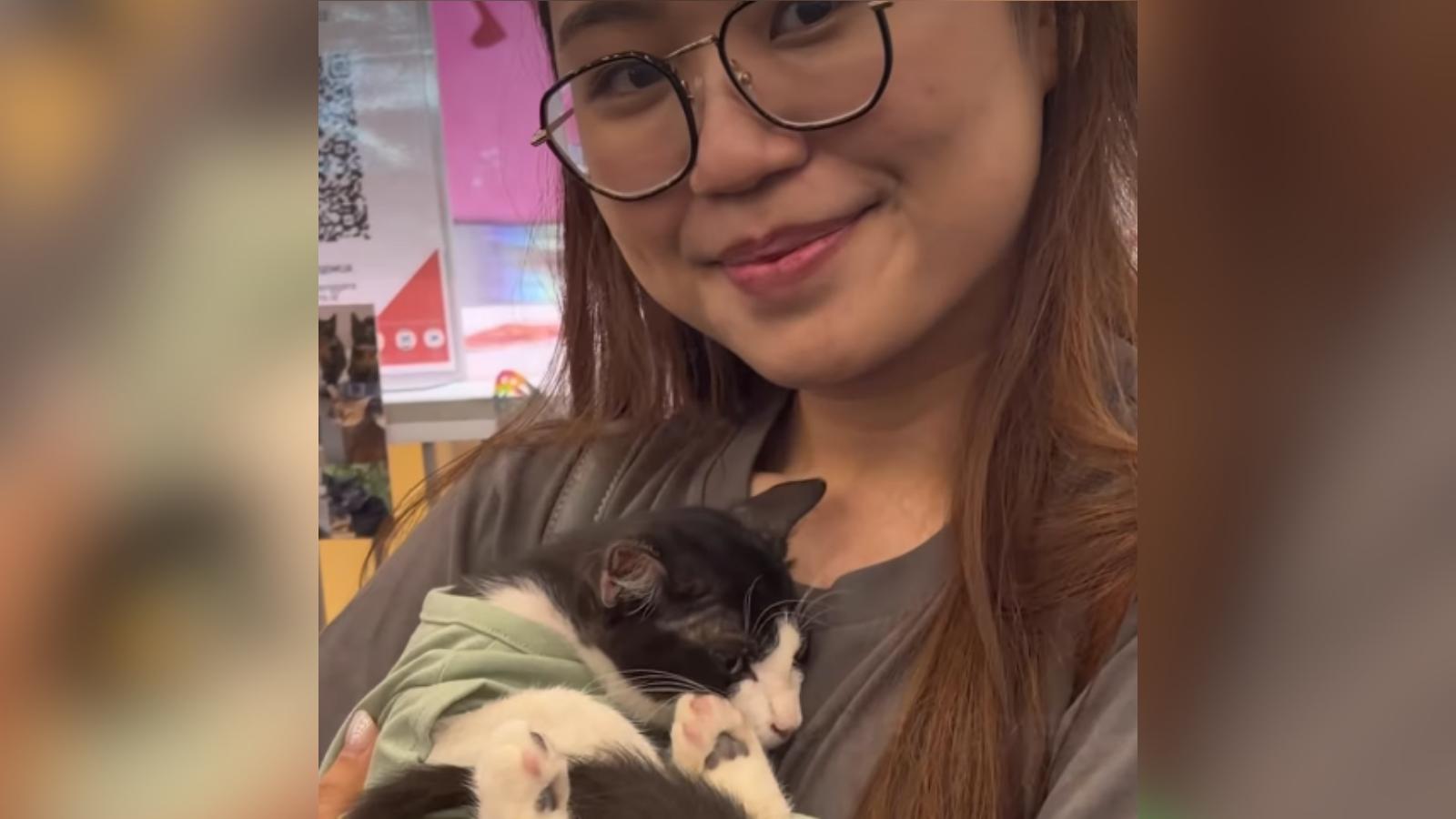
When Fungi was brought to the Indonesia International Pet Expo in hopes of securing a permanent home, his timid nature worked against him. While extroverted kittens caught the eyes and captured the hearts of bustling crowds, Fungi remained hidden, passed over by dozens of prospective adopters. Yet, animal rescue is an arena defined by serendipity. In a single, poignant moment that stunned his experienced foster caregivers, an intuitive woman named Angelica looked past the hiding spots, picked up the overlooked kitten, and unlocked an unexpected reservoir of trust. Cradled like a human infant, Fungi wrapped his tiny paws around her wrist, closed his eyes, and signaled the end of his days as a stray.
Now officially renamed Flowey and settled into a permanent home complete with a feline sibling, Fungi’s journey serves as a powerful testament to the impact of dedicated foster care, the necessity of specialized trauma-informed socialization, and the profound magic that occurs when the right human connects with a misunderstood animal.
Detailed Chronology: From Abandonment to Adoption
Phase One: Discovery and Medical Intervention
The story of Fungi began in June, when the helpless kitten was first encountered on the streets of Indonesia. Unhoused, malnourished, and vulnerable, his most immediate and striking affliction was a severe, widespread fungal skin infection. The condition had caused significant inflammation, hair loss, and physical discomfort across his small frame. It was this prominent physical marker that ultimately inspired the moniker given to him by his rescuers: Fungi.
Recognizing that the kitten required immediate professional medical oversight, Shyaniz—a core member of the Bubupawpaw rescue team—stepped in. She transported Fungi to a veterinary clinic, where clinicians initiated a targeted therapeutic regimen to address the irritated, inflamed skin. Treating a fungal infection in a young, immunocompromised kitten is a delicate process, requiring medicated baths, topical ointments, and strict environmental hygiene to prevent reinfection.
Phase Two: The Sanctuary of Foster Care
Once initial veterinary treatments stabilized his physical condition, Fungi transitioned from the clinical environment into the home of Shyaniz, who served as his primary foster caregiver. While Bubupawpaw provides standard rescue operations, the emotional rehabilitation of a frightened animal occurs in the quiet hours of domestic foster homes.
Here, the parameters of Fungi’s recovery shifted from dermatology to behavioral psychology. While his skin gradually healed and his fur began to regrow, his emotional landscape remained scarred. Unfamiliar noises, sudden movements, and the presence of humans—even well-intentioned ones dedicated to his recovery—elicited an intense flight response.
Unlike confident kittens who explore every corner of a new home, Fungi sought out the smallest, most secure spaces available. His primary sanctuary became his litter box. To the casual observer, this behavior might have seemed eccentric or antisocial; to experienced rescuers like Shyaniz, it was a clear indicator of profound psychological distress. Understanding that forcing socialization would only deepen his trauma, Shyaniz adopted a strategy of passive presence—allowing Fungi to observe household routines from a distance, dictating the pace of his own rehabilitation without pressure, coercion, or stress.
Phase Three: The Indonesia International Pet Expo
After months of consistent care, medical management, and gentle socialization, Fungi had achieved sufficient physical and developmental milestones to be cleared for adoption. To maximize his exposure to potential adopters, the Bubupawpaw team made the strategic decision to include him in their contingent attending the high-profile Indonesia International Pet Expo.
Mega-adoption events and large pet expos present a double-edged sword for rescue organizations. On one hand, they offer unprecedented foot traffic and visibility, placing animals directly in front of thousands of potential families. On the other hand, these environments are sensory nightmares for timid animals. The cacophony of barking dogs, flashing lights, amplified announcements, and a constant stream of strangers create a pressure cooker of anxiety.
For Fungi, the expo proved overwhelming. While more outgoing foster kittens vied for attention at the front of their enclosures, playing with dangling toys and greeting passersby, Fungi retreated inward. True to his established coping mechanism, he spent the vast majority of the exhibition hidden deep inside his litter box. To the average convention-goer browsing the rows of adoptable pets, Fungi was effectively invisible. Hour after hour ticked by as visitors walked past his enclosure, captivated by more visible, confident cats. For Shyaniz and the Bubupawpaw team, watching other kittens secure their forever families while Fungi remained overlooked was a deeply discouraging experience, testing their resolve but deepening their protective commitment to the shy feline.
Phase Four: The Turning Point
The trajectory of the entire day—and indeed, of Fungi’s life—shifted when an attendee named Angelica approached the Bubupawpaw area. Unlike the scores of visitors who glanced briefly into the enclosure and moved on, Angelica paused. She noted the quiet black-and-white kitten and expressed a distinct desire to hold him.
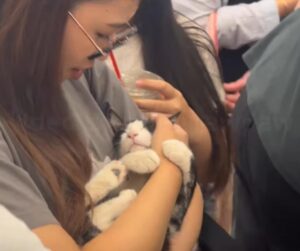
What transpired next defied all of Fungi’s established behavioral patterns. Trained by months of fear to bolt from unfamiliar human contact, Fungi allowed Angelica to lift him out of his enclosure. Instead of tensing, hissing, or attempting to scramble back to safety, the kitten experienced a remarkable shift in demeanor. Cradled securely in Angelica’s arms like a human infant, Fungi visibly melted.
Witnessing observers watched in stunned silence as the chronically terrified shelter kitten wrapped his tiny paws around Angelica’s wrist, closed his eyes, and surrendered entirely to the moment. The physiological markers of fear—stiff posture, dilated pupils, hyper-vigilance—vanished, replaced by the deep relaxation characteristic of an animal that has finally found absolute safety.
Phase Five: Transition to Permanent Residency
Recognizing an undeniable bond, Angelica immediately initiated the adoption process. She completed the rigorous screening protocols established by Bubupawpaw to ensure that prospective pet parents possess the capability, environment, and emotional readiness to care for rescued animals.
Upon passing the evaluation, Fungi officially transitioned out of the foster system and into his permanent home. In a symbolic gesture marking his rebirth, his new family renamed him Flowey. Integrating into a multi-cat household, Flowey quickly formed a strong bond with an existing feline resident, proving that beneath his initial shell of terror lay a deeply social and affectionate companion waiting for the right key to unlock his heart.
Supporting Context & Metrics: The Reality of Special-Needs Feline Adoption
To fully appreciate the significance of Fungi’s adoption, one must examine the broader socioeconomic and psychological metrics governing animal rescue operations, particularly within densely populated regions of Southeast Asia.
The Burden of Fungal Infections in Rescue Populations
Dermatophytosis, commonly known as ringworm or fungal skin infections, is among the most prevalent medical challenges faced by rescue groups dealing with stray cat populations. Caused by spore-forming fungi (most frequently Microsporum canis), these infections thrive in humid climates, unsanitary urban environments, and among immunocompromised or malnourished animals.
- Prevalence: Veterinary data from shelter networks across Southeast Asia indicate that up to 35% of unhoused kittens entering intake facilities present with some form of dermatological compromise.
- Resource Strain: Treating fungal infections is notoriously resource-intensive. It requires weeks or months of isolation protocols, expensive specialized shampoos, systemic anti-fungal medications, and rigorous environmental decontamination to prevent the spread of spores to other animals and human handlers.
- The Aesthetic Stigma: Beyond the physical misery of intense pruritus (itching) and inflammation, animals suffering from severe fungal infections often experience patchy hair loss and crusting skin. In a consumer-driven adoption market where aesthetic appeal heavily influences initial human interest, these visual symptoms frequently cause prospective adopters to bypass sick animals in favor of healthier-looking peers.
The Psychology of the "Hiding Kitten"
Fungi’s reliance on his litter box as a psychological bunker highlights a widespread behavioral phenomenon in feline rescue: shelter-induced or trauma-induced withdrawal.
- The Fight-Flight-Freeze-Fag Paradigm: When cats experience chronic instability, malnutrition, or abuse during their formative developmental weeks (typically between 2 and 7 weeks of age), their amygdala—the brain’s emotional processing center—develops an exaggerated threat response.
- The Litter Box Paradox: To a human, a litter box is a designated waste elimination zone; to a traumatized cat, it is often perceived as a secure, enclosed cave with high walls that limit visual access from predators. By curling up inside it, the cat minimizes its perceived surface area and attempts to render itself invisible to perceived threats.
- Adoption Attrition Rates: Behavioral studies within rescue facilities consistently show that timid or hiding cats experience adoption times up to 300% longer than outgoing, playful kittens. Many shy cats spend their entire lives in institutional or foster care simply because they lack the theatrical desperation required to catch the eye of casual visitors at public events.
Official Statements and Perspectives
The emotional weight of Fungi’s journey is best understood through the reflections of those who walked the path alongside him. Shyaniz, speaking on behalf of the Bubupawpaw rescue collective, provided critical insight into the initial challenges and ultimate triumphs of the case.
Reflecting on the kitten’s physical condition upon intake, Shyaniz noted:
"When we first found him, his body was covered in a fungal skin infection, which is actually how he got [his] name. His skin was so inflamed, and he was so frightened of everything around him that hiding felt like his only option."
Addressing the frustrations of the adoption expo—where Fungi’s trauma-induced retreat cost him precious opportunities—Shyaniz explained the heartbreak inherent in rescue work:
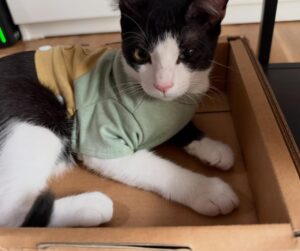
"During the event, he spent most of his time hiding inside the litter box, so not many potential adopters showed interest in him. It was difficult to watch other kittens find their families while he waited, because we knew how much sweetness was hidden underneath that fear."
The narrative shifted dramatically upon the arrival of Angelica. Describing the moment Fungi bypassed months of defensive conditioning to embrace a total stranger, Shyaniz expressed sheer astonishment:
"When she held him, he seemed to feel comfortable with her almost immediately, even though he’s usually so scared of people. It was an incredible moment for all of us. He wrapped his little paws around her wrist, closed his eyes, and just trusted her. That was the moment we knew his life had truly changed."
Future Outlook: The Ongoing Mission of Bubupawpaw
The successful adoption of Fungi, now thriving as Flowey, serves as a beacon of hope and a validation of methodology for Bubupawpaw and similar independent rescue groups across Indonesia.
The Ripple Effect of Patience-Based Fostering
Fungi’s case underscores the vital importance of patience-based fostering models. In an era where many traditional shelters face severe capacity constraints that necessitate rapid turnover—sometimes resulting in tragic outcomes for unadopted animals—foster networks like Bubupawpaw provide an indispensable safety net. By absorbing the long-term emotional and medical rehabilitation costs of special-needs animals, these decentralized networks ensure that chronically shy or medically compromised pets are given the runway they need to heal.
Education and Advocacy in Public Adoption Spaces
Moving forward, rescue organizations are increasingly evaluating how public events like pet expos are structured for timid animals. Strategies are shifting toward:
- Controlled Environmental Exposure: Creating designated low-stimulus zones within large expos to prevent sensory overload for sensitive cats.
- Pre-Screening Adopters: Educating the public on pet body language, teaching prospective owners that the animal hiding in the back of the cage is often the one most in need of a quiet, secure home.
- Digital Advocacy: Utilizing social media to showcase the quiet personalities of shy cats before they enter high-stress public environments, directly connecting them with patient adopters who prefer a lower-energy companion.
Ultimately, Flowey’s transition from an unhoused, afflicted kitten shivering in a litter box to a cherished family member sleeping peacefully in a loving home illustrates the core philosophy of ethical animal rescue: no life is beyond repair, and every animal, no matter how frightened or overlooked, possesses the capacity to love and be loved when given time, grace, and an open heart.