
Executive Overview
A critical legal vulnerability has emerged at the intersection of state agricultural law and national pet food standardisation. A comprehensive legal analysis reveals that statutory animal feed definitions across fourteen U.S. states directly conflict with the ingredient definitions published by the Association of American Feed Control Officials (AAFCO)—the body whose model definitions govern the multi-billion-dollar commercial pet food industry.
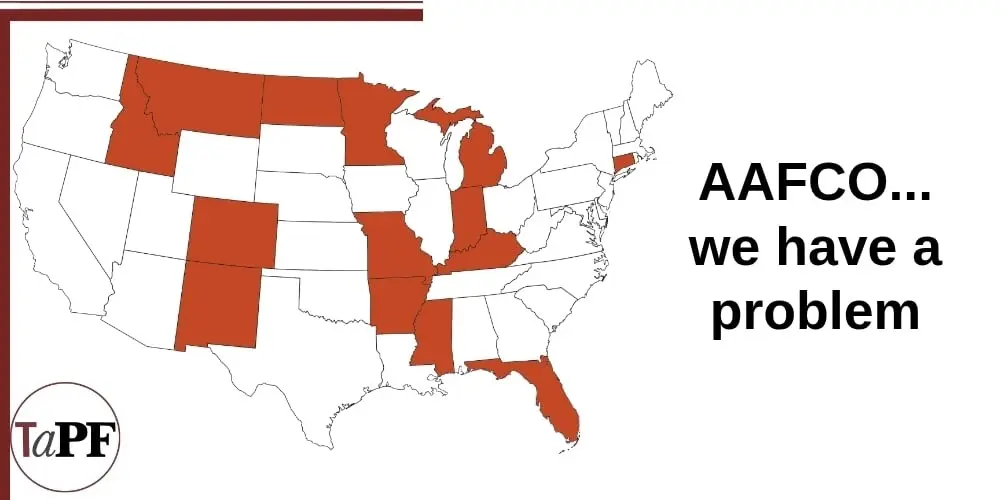
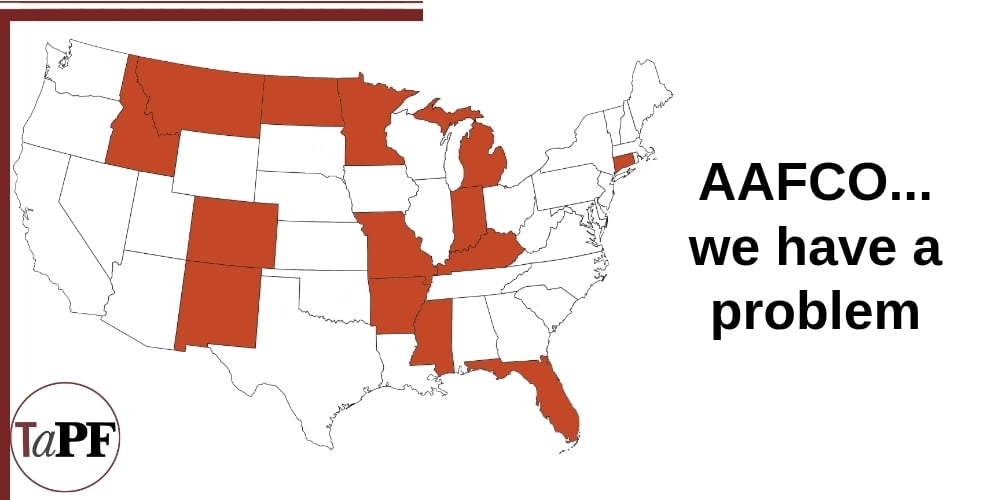
The fourteen states—
Arkansas, Colorado, Connecticut, Florida, Idaho, Indiana, Kentucky, Michigan, Minnesota, Mississippi, Missouri, Montana, New Mexico, and North Dakota—maintain explicit state statutes that define commercial feed as "adulterated" if it contains components from animals that died by means other than slaughter, or if it consists of filthy, putrid, or decomposed matter. Conversely, AAFCO’s standardized definitions for ubiquitous animal protein ingredients—including Poultry By-Product Meal, Meat Meal, Meat and Bone Meal, Animal By-Product Meal, and Animal Digest—do not legally mandate that raw materials originate exclusively from slaughtered, disease-free livestock.
If challenged in state courts, AAFCO’s ingredient definitions could be declared legally invalid under state administrative procedures laws that automatically void agency rules conflicting with state statutes. Such judicial invalidation would strip these commonly used rendered ingredients of their legal definitions within those jurisdictions. Consequentially, state departments of agriculture could be forced to prohibit the sale of hundreds of commercial pet food products containing these ingredients, creating an unprecedented supply chain and regulatory crisis for manufacturers, retailers, and pet owners.
Detailed Chronology and the Regulatory Fault Line
The system governing pet food safety in the United States relies on a complex co-regulatory framework. While the U.S. Food and Drug Administration (FDA) holds federal authority under the Federal Food, Drug, and Cosmetic Act (FD&C Act), individual states regulate the distribution and labeling of commercial feed through state statutes and administrative rules. For decades, state legislatures and regulatory agencies have deferred to AAFCO to establish uniform ingredient definitions, which are updated annually in the AAFCO Official Publication.
   +-----------------------------------------------------------------------+
   |                        STATE LEGISLATIVE STATUTES                     |
   |   Strictly prohibit non-slaughtered, diseased, or decomposed animal   |
   |   materials in commercial feed (e.g., Missouri Rev. Stat. § 266.180). |
   +-----------------------------------------------------------------------+
                                       |
                                       v  [DIRECT LEGAL CONFLICT]
   +-----------------------------------------------------------------------+
   |                       AAFCO INGREDIENT DEFINITIONS                    |
   |   Omit mandatory slaughter requirements; rely on conditional clause    |
   |   "suitable for use in animal food" (allowing FDA enforcement discretion)|
   +-----------------------------------------------------------------------+
                                       |
                                       v  [JUDICIAL CONSEQUENCE]
   +-----------------------------------------------------------------------+
   |                    STATE ADMINISTRATIVE RULE INVALIDATION             |
   |   Under state laws (e.g., Mo. Rev. Stat. § 536.014), conflicting administrative|
   |   definitions are legally void, leaving common ingredients undefined  |
   |   and unlawful for commercial sale.                                   |
   +-----------------------------------------------------------------------+
This regulatory architecture contains a deep structural flaw. Over past decades, state legislatures codified strict anti-adulteration standards into statutory law, establishing that commercial animal feed must not contain diseased tissues, decomposed material, or parts from animals that died outside of controlled slaughter facilities. Concurrently, AAFCO revised its ingredient definitions to incorporate broader terminology, driven in part by rendering industry practices and federal compliance policies.
The timeline of this growing systemic rift underscores long-standing administrative oversights:
- Legislative Enactments (Mid-to-Late 20th Century): State legislatures across the 14 identified jurisdictions passed foundational commercial feed acts. These acts established unambiguous statutory definitions of feed adulteration aligned with traditional public safety standards.
- Administrative Adoption: State feed control officials—many serving simultaneously as voting members, committee chairs, and board members within AAFCO—adopted AAFCO ingredient definitions into state administrative codes.
- Federal Regulatory Divergence: Over several decades, federal oversight evolved to rely heavily on administrative enforcement discretion. Under certain FDA Compliance Policy Guides (CPGs), federal authorities permitted non-slaughtered animal tissues and rendered products derived from unslaughtered dead animals to enter the animal feed chain, provided they underwent thermal processing.
- Formal Regulatory Challenge (2025/2026): Pet food consumer advocate Susan Thixton, representing the Association for Truth in Pet Food, conducted a legal audit comparing state statutes against the AAFCO Official Publication. The investigation uncovered that state administrative rules incorporating AAFCO definitions violate primary state statutes. Thixton submitted a formal, documented petition to AAFCO leadership, demanding immediate corrective rulemaking to realign ingredient definitions with state legislative mandates.
Supporting Context & Metrics: The Anatomy of the Legal Conflict
To understand the scope of this regulatory exposure, one must examine both the specific state statutory language and the mechanics of AAFCO’s ingredient definitions.
The 14 Vulnerable Jurisdictions
The legal inconsistency is not an isolated anomaly; it spans 14 states across multiple federal appellate circuits:
- Arkansas
- Colorado
- Connecticut
- Florida
- Idaho
- Indiana
- Kentucky
- Michigan
- Minnesota
- Mississippi
- Missouri
- Montana
- New Mexico
- North Dakota
Benchmark Statutory Analysis: Missouri as a Case Study
Missouri’s legal framework illustrates the structural vulnerability present across all 14 jurisdictions. Under Missouri Revised Statutes Section 266.180 (Adulterated feed, what constitutes):
"A commercial feed shall be deemed to be adulterated… (i) If it is, in whole or in part, the product of a diseased animal or of an animal which dies other than by slaughter which is unsafe within the meaning of section 402(a)(5) of the Federal Food, Drug, and Cosmetic Act…"
Furthermore, the statute explicitly dictates that commercial feed is adulterated:
"If it consists in whole or in part of any filthy, putrid, or decomposed substance, or if it is otherwise unfit for feed."
However, administrative rules within the state that incorporate AAFCO standards run directly into Missouri Revised Statutes Section 536.014 (Rules invalid, when), which dictates:
"No department, agency, commission or board rule shall be valid in the event that: (2) The rule is in conflict with state law."
Because state administrative rules cannot override primary statutes passed by the legislature, any administrative rule adopting an AAFCO definition that permits non-slaughtered, diseased, or decomposed material is legally void ab initio (from the beginning).

| Ingredient Name | AAFCO Definition Standard | State Statutory Mandate (14 States) | Legal Status if Challenged |
|---|---|---|---|
| Poultry By-Product Meal | Consists of ground, rendered, clean parts of the carcass of slaughtered poultry. However, relies on general clause permitting non-slaughtered material under enforcement discretion. | Strictly requires origin from slaughtered, non-diseased animals; prohibits decomposed material. | Invalid (Conflicts with state adulteration statutes) |
| Meat Meal | Rendered tissue from mammals; does not explicitly require slaughter origin in primary definition text. | Mandates strict slaughter-only origin and freedom from disease/filth. | Invalid (Omits statutory slaughter requirement) |
| Meat and Bone Meal | Rendered mammal tissue including bone; lacks explicit mandatory slaughter clause. | Requires slaughter origin; prohibits parts from animals dying otherwise. | Invalid (Direct conflict with state law) |
| Animal By-Product Meal | Rendered non-rendered animal tissues; permits varied sourcing under generic safety clauses. | Prohibits non-slaughtered raw material inputs unconditionally. | Invalid (Fails state statutory standards) |
| Animal Digest | Material derived from enzymatic or acid hydrolysis of animal tissue; lacks slaughter verification requirements. | Prohibits filthy, putrid, decomposed, or non-slaughtered inputs. | Invalid (Lacks statutory compliance assurances) |
The "Suitable for Use" Legal Loophole
AAFCO’s defense of these definitions hinges on a standard qualifying sentence embedded across its animal product definitions: "It shall be suitable for use in animal food."
AAFCO officially defines "suitable for use in animal food" as conforming to the Federal Food, Drug, and Cosmetic Act "unless otherwise expressly permitted by the appropriate state or federal agency."
This reliance on agency permission creates a profound legal contradiction:
- Federal/Agency Discretion vs. State Statutory Mandate: State statutes do not grant state agriculture departments administrative discretion to permit raw materials from dead, dying, diseased, or disabled (4D) animals. The state laws explicitly classify such products as adulterated.
- Regulatory Overreach: When an administrative body (such as a state department of agriculture operating within AAFCO) permits an ingredient definition that relies on administrative exceptions to bypass statutory bans on non-slaughtered animals, it violates the governing state statute.
Official Statements and Petition Analysis
The formal challenge submitted to AAFCO leadership by consumer advocate Susan Thixton of TruthaboutPetFood.com and the Association for Truth in Pet Food outlines the systemic failure of oversight by state regulators participating in AAFCO governance.
================================================================================
                      FORMAL DEMAND / PETITION TO AAFCO
================================================================================
FROM: Susan Thixton, Pet Food Consumer Advocate
      TruthaboutPetFood.com / Association for Truth in Pet Food
TO:   Association of American Feed Control Officials (AAFCO) Board & Committees

SUBJECT: Conflict Between State Statutory Laws and AAFCO Animal Product Definitions

SUMMARY OF DEMANDS:
1. IMMEDIATE REVIEW: AAFCO must immediately address ingredient definition
   inconsistencies prior to potential consumer litigation and regulatory freeze.
2. DEFINITION REVISION: Re-align all Animal Product ingredient definitions—
   specifically Poultry By-Product Meal, Poultry By-Products, Meat Meal,
   Meat and Bone Meal, Animal By-Product Meal, and Animal Digest—to explicitly
   require:
     a. Direct sourcing from slaughtered animals only.
     b. Verification of disease-free origin.
     c. Total exclusion of filthy, putrid, or decomposed matter.
3. JURISDICTIONAL HARMONIZATION: At a minimum, issue state-specific statutory
   revisions for Arkansas, Colorado, Connecticut, Florida, Idaho, Indiana,
   Kentucky, Michigan, Minnesota, Mississippi, Missouri, Montana, New Mexico,
   and North Dakota to preserve legal feed definitions in those markets.
================================================================================
In her submission, Thixton explicitly challenged the role of state officials in approving definitions that violate their home-state laws:
"It is concerning that many individuals from these 14 states voted to approve these ingredient definitions, participated on the Pet Food and Ingredient Definitions committees, and even held high positions within AAFCO knowing their state laws conflicted with the AAFCO definitions—yet no one ever spoke up.
"If challenged, many commonly used pet food ingredients could be deemed invalid resulting in these ingredients being prohibited for use in pet foods (due to lack of legal definition)… We are asking AAFCO to immediately address this issue, before a serious problem for pet food consumers and industry occurs."
Future Outlook: Industry Impact and Regulatory Realignment
The exposure of this legal contradiction places the commercial pet food sector, state regulatory bodies, and legal teams in an unprecedented position. The downstream consequences of this conflict span several operational, legal, and financial domains.
1. Risk of Class-Action Litigation and Regulatory Enforcement
If a consumer group or competitor files a declaratory judgment action in any of the 14 affected states—such as Missouri or Minnesota—requesting a court to apply state administrative procedure laws (e.g., Mo. Rev. Stat. § 536.014), the court would be statutorily bound to invalidate the administrative rule adopting the affected AAFCO definitions.
Once an ingredient definition is invalidated, any commercial pet food containing "Meat Meal" or "Poultry By-Product Meal" distributed within that state would lack a recognized legal definition under state commercial feed codes. Under state laws, selling commercial feed containing undefined ingredients renders the product misbranded and unregisterable, subjecting manufacturers to immediate stop-sale orders.
2. Supply Chain Vulnerability for Manufacturers
Pet food manufacturers relying on rendered protein meals face significant operational risk. Renderers routinely process raw materials sourced from multiple channels, including farm mortality, dead livestock, and processing by-products. If state laws requiring origin strictly from slaughtered animals are strictly enforced, feed manufacturers would be forced to establish rigorous, auditable supply chain tracing systems to certify that every batch of rendered meal originates exclusively from inspected slaughter facilities.
  +-------------------------------------------------------------------------+
  |                   POTENTIAL INDUSTRY DISRUPTION PATH                    |
  +-------------------------------------------------------------------------+
                                       |
                                       v
  [1. Judicial Challenge Filed in 1 of 14 State Courts]
                                       |
                                       v
  [2. Court Rules AAFCO Definition Invalid under State Administrative Law]
                                       |
                                       v
  [3. Ingredient Lacks Legal Definition in State Jurisdiction]
                                       |
                                       v
  [4. State Dept. of Agriculture Issued Injunction / Stop-Sale Mandate]
                                       |
                                       v
  [5. Multi-State Retail Pull-Back & Supply Chain Restructuring]
3. The Imperative for AAFCO Rulemaking Reform
To mitigate broad commercial disruption, AAFCO and state feed control officials must choose between two primary paths forward:
- Comprehensive Standard Elevation: AAFCO can amend its core definitions for rendered animal products to explicitly require sourcing from inspected, slaughtered animals, while barring decomposed material. This change would align administrative rules with existing state statutory protections and elevate overall feed safety standards.
- Legislative Preemption or Amendment Campaigns: Alternatively, feed industry lobbying groups may attempt to force statutory amendments through the legislatures of all 14 affected states to dilute state anti-adulteration laws—a move likely to face intense resistance from consumer advocacy groups, veterinary associations, and pet owners demanding transparency.
Conclusion
The divergence between state statutory safety mandates and national administrative standards highlights a systemic blindspot in pet food regulation. As public scrutiny of pet food safety and ingredient sourcing intensifies, the reliance on informal regulatory discretion instead of clear statutory alignment is no longer sustainable. Regulatory authorities and industry stakeholders must systematically address these conflicting definitions before judicial intervention disrupts the market.