
Executive Overview
For centuries, the fundamental paradigm of canine training has relied on absolute compliance. From household pets learning basic commands like "sit," "stay," and "come," to traditional working dogs executing tasks on cue, the standard metric of a well-trained dog has been its immediate, unhesitating adherence to human instruction. However, a specialized tier of working animals operates under a completely different, counter-intuitive psychological framework: guide dogs for the blind and visually impaired.
At the core of this advanced capability is a concept known as intelligent disobedience. Far from being a sign of behavioral failure or stubbornness, intelligent disobedience is a masterclass in critical thinking, situational awareness, and risk assessment. It occurs when a guide dog intentionally chooses to ignore or override a handler’s command because executing it would place the human in imminent physical danger.
Whether refusing to step off a curb into the path of an oncoming electric vehicle, steering completely clear of sudden construction barriers, or navigating around unexpected sidewalk hazards, these remarkable service
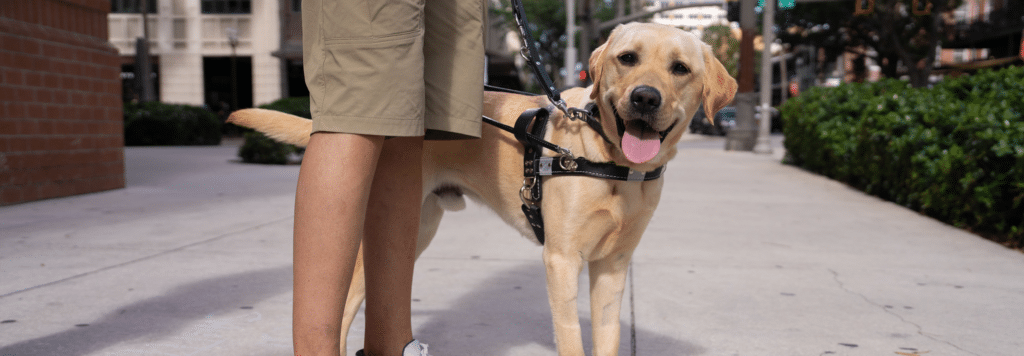
animals act as an independent layer of safety. This comprehensive investigation explores the science, rigorous training methodologies, psychological nuances, and profound human-animal partnerships that underpin intelligent disobedience—revealing how saying "no" ultimately grants handlers the greatest gift of all: absolute independence and freedom of movement.
Detailed Chronology: The Lifecycle of a Guide Dog in Training
The journey toward mastering intelligent disobedience is not a quick trick taught overnight; it is the culmination of a meticulously structured, multi-year developmental pipeline. Transforming an exuberant puppy into a life-saving, autonomous decision-maker requires a rigorous timeline of socialization, environmental exposure, and professional evaluation.
[Birth & Early Socialization] ──> [Puppy Raising (12–18 Months)] ──> [Advanced Training (Min. 5 Months)] ──> [Handler Matching & Juno Walk] ──> [Lifelong Working Partnership]Phase 1: Foundations and Puppy Raising (Birth to 18 Months)
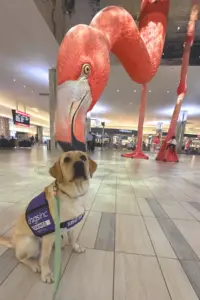
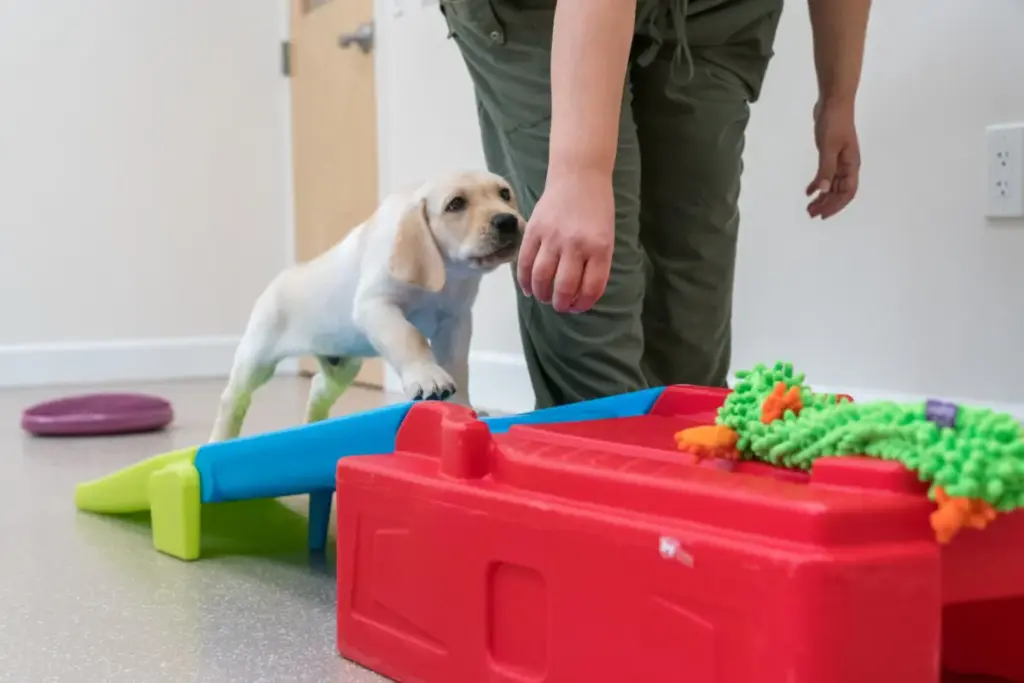
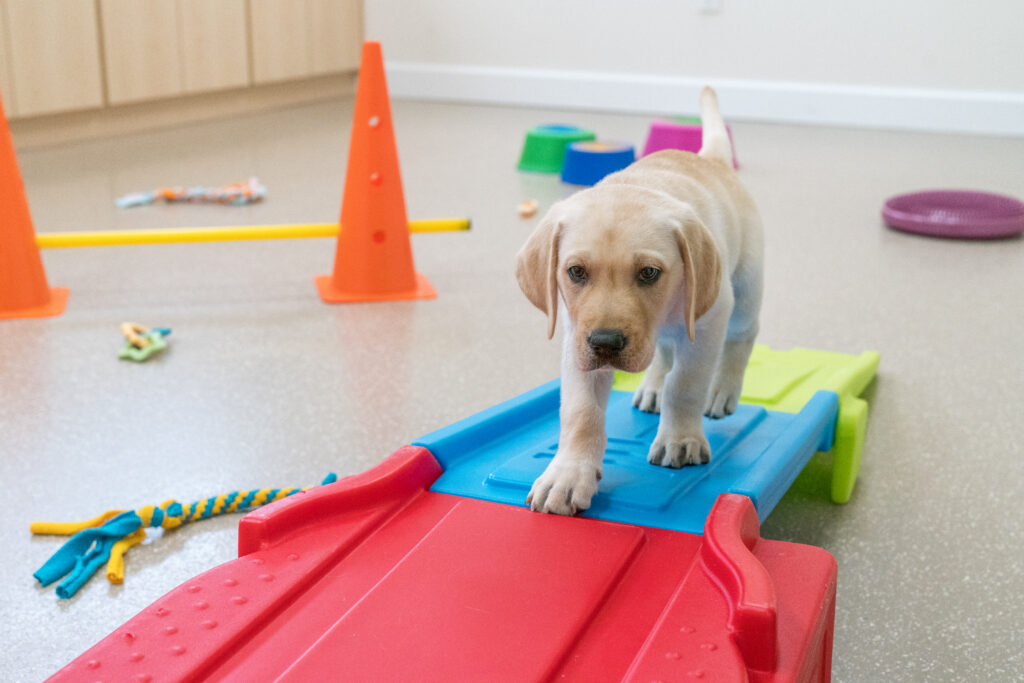
The roadmap to intelligent disobedience begins virtually at birth. During the first year to year-and-a-half of life, future guide dogs live with volunteer puppy raisers. This foundational period focuses on basic house manners, supreme socialization, and environmental stability. Puppies are routinely exposed to bustling shopping malls, public transportation networks, varied weather conditions, and unfamiliar crowds. The objective here is to build unshakeable confidence, ensuring the dog remains calm, focused, and adaptable under pressure.
Phase 2: Advanced Professional Training (Months 18 to 24+)
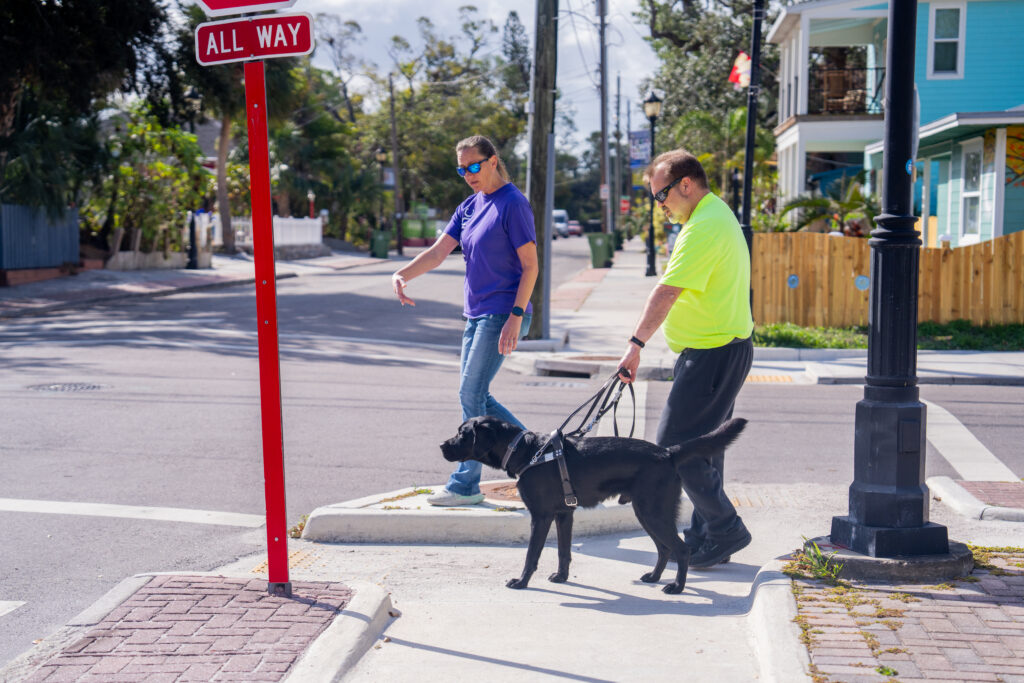
Once basic socialization is complete, the dogs enter formal, advanced training facilities under the guidance of professional mobility instructors. This intensive phase lasts a minimum of five months. During this window, trainers systematically introduce complex scenarios designed to test and build problem-solving skills. Dogs learn to evaluate environmental cues—such as traffic flow, low-hanging obstacles, and blocked pathways—and are heavily rewarded for making independent safety decisions. If a handler-in-training gives a "forward" command toward a simulated hazard, the dog is trained and reinforced for standing its ground.
Phase 3: Team Matching and the Juno Assessment
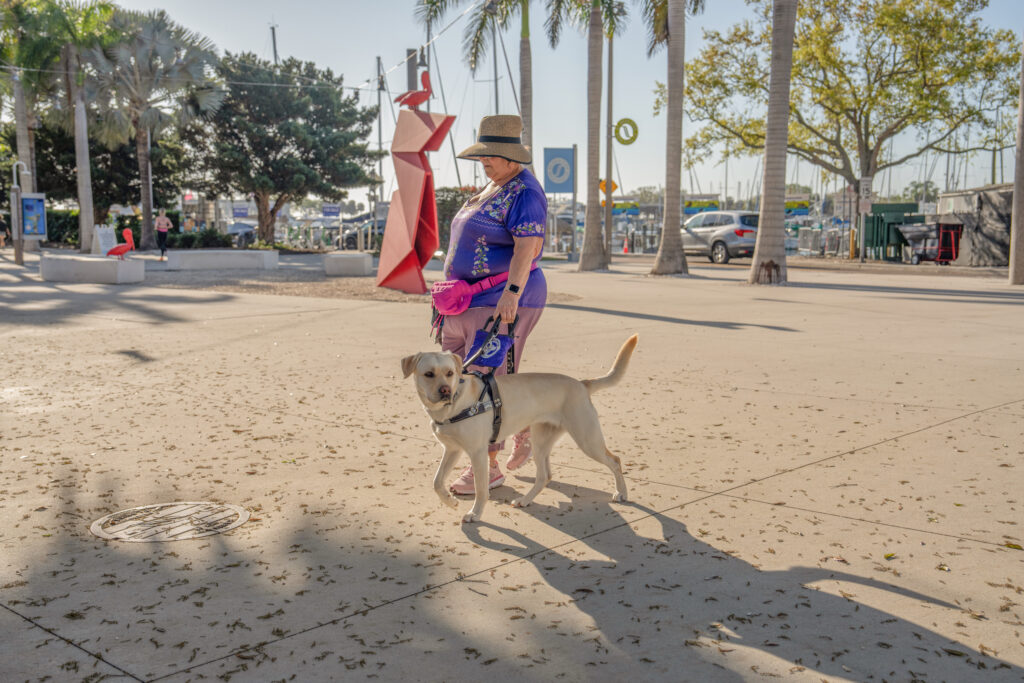
A dog’s technical prowess means little if it cannot seamlessly integrate with its ultimate handler. The matching process evaluates a prospective owner’s specific lifestyle, physical walking pace, daily commute routes, and unique personality traits. To test compatibility prior to final placement, organizations utilize a specialized evaluation tool known as a Juno Walk. This structured trial assesses how well the human-animal dyad functions in real-world traffic and navigation scenarios, ensuring long-term success and mutual trust.
Supporting Context & Metrics: The Mechanics of Safety
To fully appreciate the gravity of intelligent disobedience, one must understand how visually impaired individuals navigate the world. People who are blind or experience low vision rely extensively on non-visual cues—primarily audition (hearing traffic patterns, ambient noise, echolocation), tactile feedback from canes or footwear, and kinesthetic awareness. However, modern urban environments present hazards that are entirely silent or difficult to detect through traditional sensory methods.
The Modern Urban Landscape: Invisible Hazards
- Silent and Hybrid Vehicles: The proliferation of electric and hybrid cars has eliminated the traditional engine noise that visually impaired pedestrians historically relied upon to gauge traffic proximity.
- Overhead and Ground Obstacles: Construction scaffolding, low-hanging tree branches, protruding signposts, and uneven, broken pavement present constant physical threats that a cane alone may fail to catch in time.
- Dynamic Obstructions: Pop-up street vendors, erratic micro-mobility devices (such as abandoned e-scooters), and sudden pedestrian bottlenecks require split-second spatial recalculations.
Statistical Overview of Guide Dog Program Timelines
| Training Milestone | Duration / Timeframe | Core Objective |
|---|---|---|
| Early Development | Birth to 12 Months | Basic obedience, socialization, and confidence building. |
| Puppy Raising | 12 to 18 Months | Public access training and exposure to diverse environments. |
| Advanced Instruction | Minimum 5 Months | Hazard evaluation, obstacle avoidance, and intelligent disobedience. |
| Team Integration | 2 to 4 Weeks (Intensive) | On-site handler training, route practice, and the Juno Walk assessment. |
Official Statements & Expert Insights: Evaluating Canine Judgment
Evaluating a dog’s capacity for independent thought requires specialized expertise. Guide dog mobility instructors utilize rigorous, standardized testing protocols during training walks to measure a dog’s psychological resilience, situational awareness, and executive functioning.
"A guide dog is not a remote-controlled appliance; they are an autonomous thinking partner. When an animal chooses to disobey a direct command, it represents the absolute pinnacle of trust and training. The dog is essentially saying, ‘I love my job, I respect my handler, but my primary loyalty is to your physical survival.’"
— Senior Guide Dog Mobility Instructor
Core Competencies Evaluated by Mobility Instructors
During increasingly realistic field evaluations, mobility instructors look for specific behavioral indicators to determine if a dog possesses the necessary judgment for working life:
- Composure Under Pressure: Can the dog maintain emotional regulation and focus when startled by loud noises, sudden movements, or erratic pedestrian behavior?
- Proactive Problem Solving: Does the animal independently seek out safe, alternative pathways around construction zones or blocked walkways without panicking?
- Consistent Prioritization of Safety: Does the dog reliably refuse forward momentum when a moving hazard (such as a turning vehicle) breaches its safety threshold?
The Role of Trust: A Mutual Psychological Pact
Intelligent disobedience cannot exist in a vacuum; it is fundamentally dependent on an unbreakable cycle of mutual trust between human and animal.
While the human provides strategic intent—determining the destination, the general route, and the overall schedule—the guide dog provides tactical execution, managing the immediate physical environment step-by-step. When a guide dog suddenly halts, refusing to budge despite a confident forward command, the handler must override their natural human impulse to question the animal.
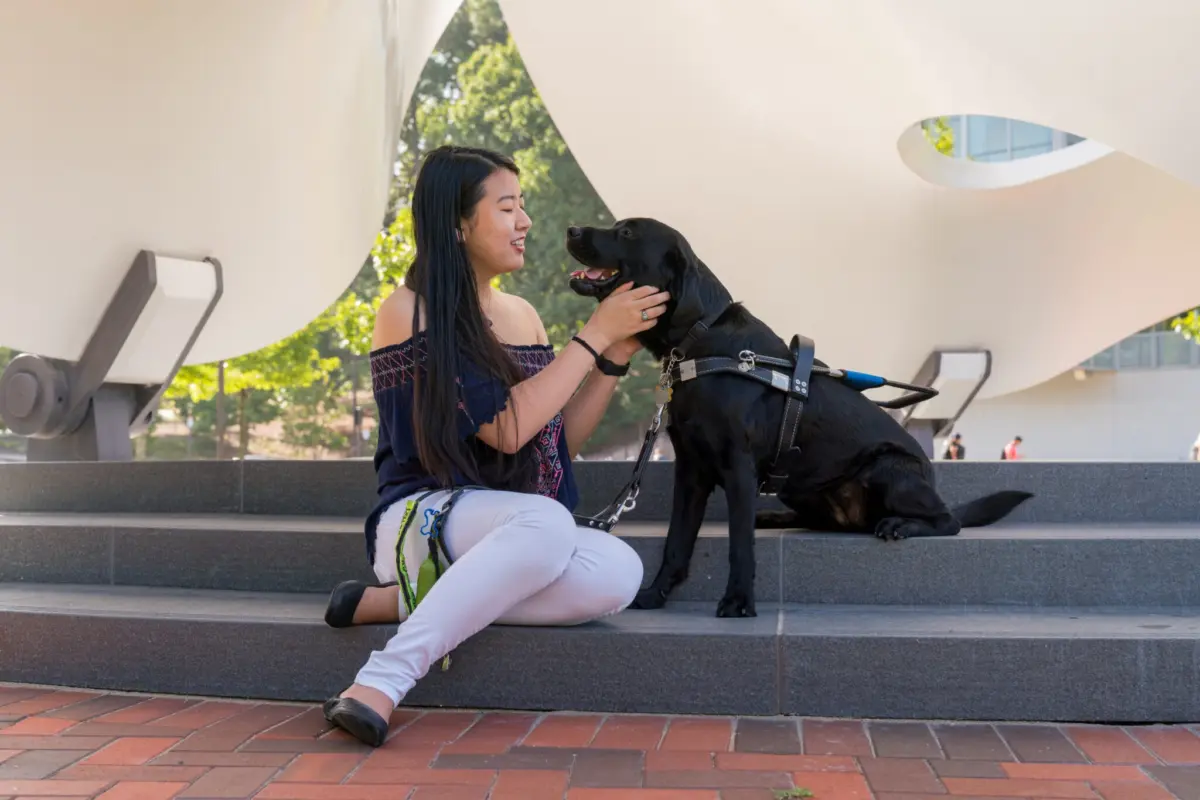
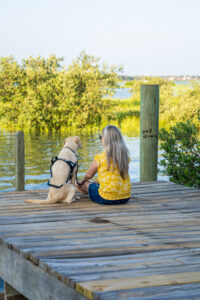
Over months and years of partnership, handlers learn to read the subtle postural adjustments, breath patterns, and energetic cues of their dogs. They realize that an unexpected stop is never an act of stubbornness; it is an invisible shield protecting them from harm. This shared vulnerability and reliance forge a profound psychological bond that transforms the canine from a working animal into an indispensable, cherished teammate.
Future Outlook: The Evolution of Mobility and Independence
As our cities become denser, more technologically complex, and increasingly crowded, the role of the guide dog remains more critical than ever. While advancements in wearable assistive technology, GPS-enabled haptic vests, and smart canes continue to evolve, no silicon processor can replicate the dynamic, real-time empathetic reasoning and split-second physical adaptability of a trained guide dog.
Organizations such as Dogs Inc. continue to refine breeding, socialization, and advanced training methodologies to enhance these natural problem-solving traits. By prioritizing genetic temperament, emotional stability, and environmental resilience, future generations of guide dogs will be even better equipped to navigate the unpredictable challenges of modern infrastructure.
Ultimately, intelligent disobedience transcends simple animal training. It stands as a profound testament to what can be achieved when cross-species communication is elevated to a collaborative art form. By teaching dogs when it is right to say "no," trainers unlock a world of boundless freedom, supreme confidence, and unshakeable safety for individuals who are blind or visually impaired—proving that true obedience sometimes requires breaking the rules.