The contemporary household is undergoing a structural and aesthetic evolution. As urbanization drives a premium on residential square footage and the "humanization of pets" trend reaches unprecedented heights, the traditional boundaries between pet utility and home decor have dissolved. Historically, pet owners were forced to choose between the physiological comfort of their canine companions and the aesthetic integrity of their living spaces. The market’s response to this tension is the rise of "hidden" and furniture-integrated dog beds—dual-purpose solutions designed to harmonize with high-end interior design while fulfilling a dog’s natural denning instincts.
This investigative analysis explores the structural engineering, behavioral science, and market dynamics driving the adoption of hidden dog beds. By evaluating top-tier products ranging from faux-rattan igloos to heavy-duty end-table crates, this report provides a comprehensive framework for understanding how modern industrial design is solving the spatial and psychological challenges of cohabitating with domestic animals.
Detailed Chronology of Pet Furniture Integration
The evolution of canine bedding from primitive floor mats to architectural centerpieces reflects broader socioeconomic shifts over the last half-century.
+-----------------------------------------------------------------+
| Era 1: Utilitarian Isolation (Pre-1990s)                        |
| - Outdoor dog houses, basic floor mats, industrial wire crates.  |
| - Focus on containment rather than aesthetic integration.       |
+-----------------------------------------------------------------+
                                |
                                v
+-----------------------------------------------------------------+
| Era 2: The Proliferation of Orthopedic Cushions (1990s-2010s)   |
| - Focus shifts to canine joint health and physical comfort.      |
| - Introduction of memory foam; beds remain visually obtrusive.  |
+-----------------------------------------------------------------+
                                |
                                v
+-----------------------------------------------------------------+
| Era 3: The Multifunctional Design Revolution (2010s-Present)    |
| - Rise of "hidden" beds, end-table crates, and couch protectors. |
| - Pet furniture matches mid-century modern and rustic aesthetics.|
+-----------------------------------------------------------------+
Era 1: Utilitarian Isolation (Pre-1990s)
For decades, canine bedding was treated purely as a utility. Dogs were primarily housed outdoors, in utility rooms, or confined to industrial wire crates in secluded areas of the home. Bedding consisted of simple, fiber-filled pillows or discarded blankets. The design language was strictly functional, prioritizing containment and easy cleaning over any semblance of interior styling.
Era 2: The Proliferation of Orthopedic Cushions (1990s–2010s)
As veterinary medicine advanced and pet owners began viewing dogs as integral family members, the focus shifted toward canine ergonomics. The market saw an influx of high-quality memory foam and orthopedic dog beds designed to alleviate joint pain and arthritis. While these products improved canine welfare, they presented an aesthetic challenge: large, bulky, and often unsightly cushions occupying central floor space in living rooms and bedrooms.
Era 3: The Multifunctional Design Revolution (2010s–Present)
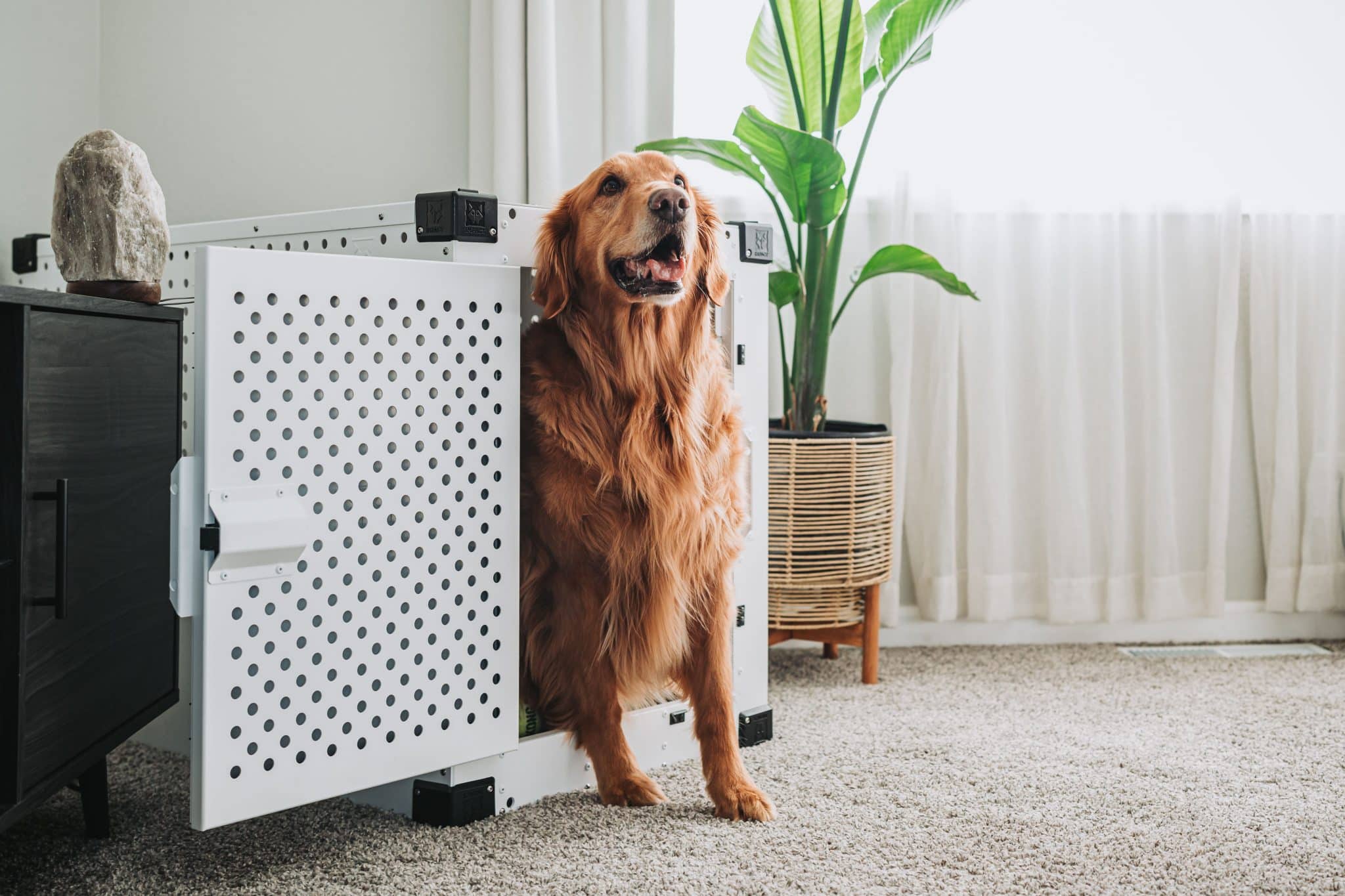
The modern era is defined by spatial efficiency and design cohesion. High-density urban living has made dedicated floor space for large dog beds impractical. Concurrently, interior design movements like minimalism and mid-century modernism have rejected the clutter of traditional pet accessories. This has catalyzed the development of "hidden" dog beds—furniture pieces that serve a dual human function (such as end tables, nightstands, or credenzas) while secretly housing a dedicated, comfortable sanctuary for dogs.
Technical Evaluations of Market-Leading Solutions
To understand how manufacturers are executing this integration, we examine several prominent design archetypes currently leading the market.
1. The Sculptural Enclosure: The Refined Canine Igloo
Designed for homeowners who favor organic textures and modern geometry, the Refined Canine Igloo redefines the traditional dog dome.
Structural Composition: Constructed from heavy-duty, claw-proof faux rattan, this unit avoids the fraying and degradation common to natural wicker.
Multifunctionality: The flat, reinforced top surface is engineered to support books, lamps, and beverages, serving effectively as a living room end table.
Canine Ergonomics: The spherical design provides a semi-enclosed environment that satisfies a dog’s instinctual desire for a secure, den-like shelter. It features a high-density foam cushion wrapped in a machine-washable, stain-resistant cover.
2. The Industrial End-Table Crate: HOOBRO Dog Crate Furniture
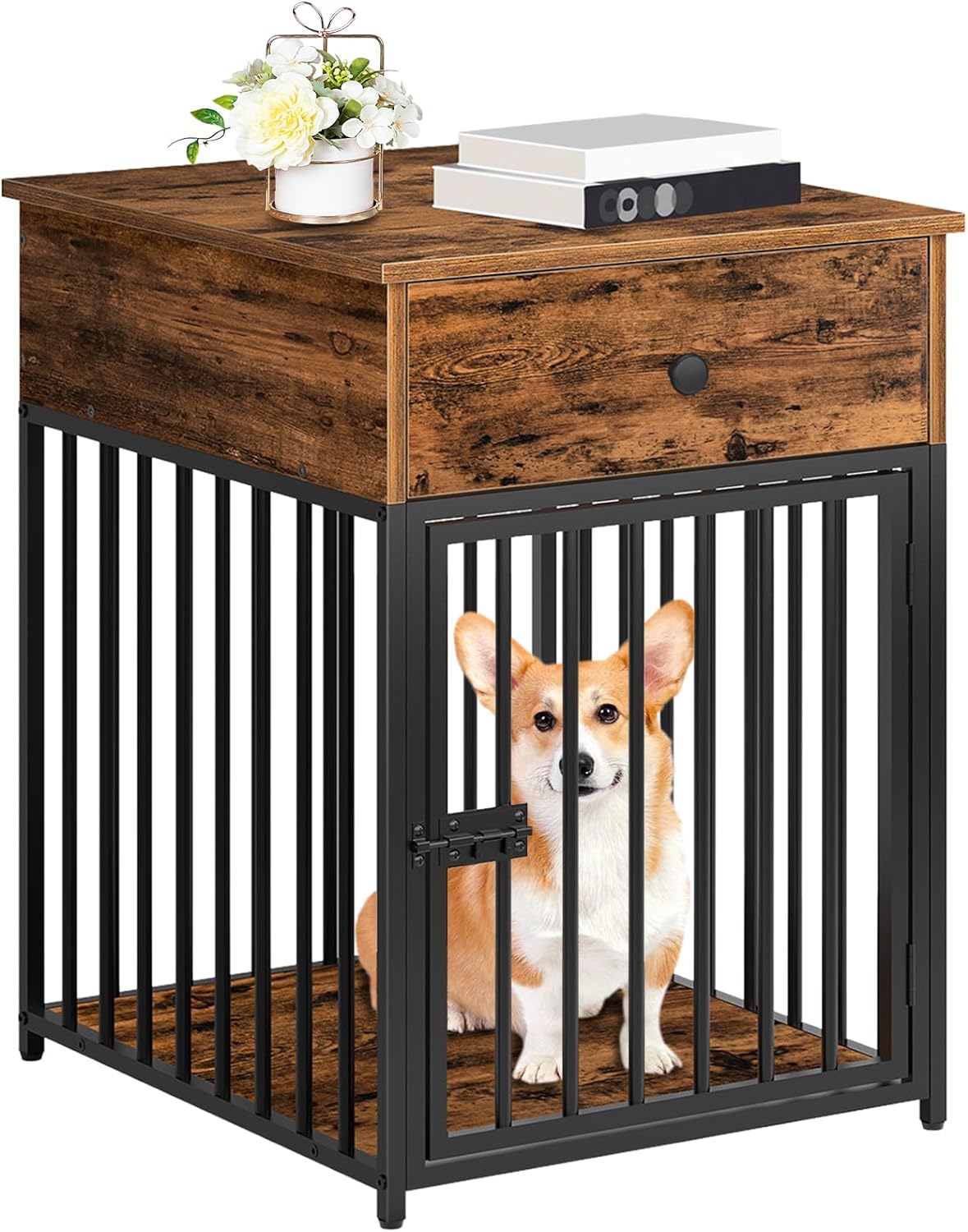
For dog owners requiring containment capabilities alongside aesthetic integration, the HOOBRO Dog Crate represents a hybrid approach.
Materials Science: Utilizing E1-grade particleboard coupled with a rigid steel frame, this structure resists chewing and scratching while maintaining a rustic, wooden finish.
Space Optimization: The inclusion of an integrated drawer allows owners to store leashes, medications, and grooming tools directly within the unit, eliminating external storage needs.
Ventilation & Visibility: The steel bars ensure 360-degree ventilation and line-of-sight, reducing confinement anxiety in crate-trained dogs.
3. The Textile Protector: Auemtyn Calming Faux Fur Bed
Not all hidden beds rely on rigid wooden structures; some integrate directly into existing human furniture.
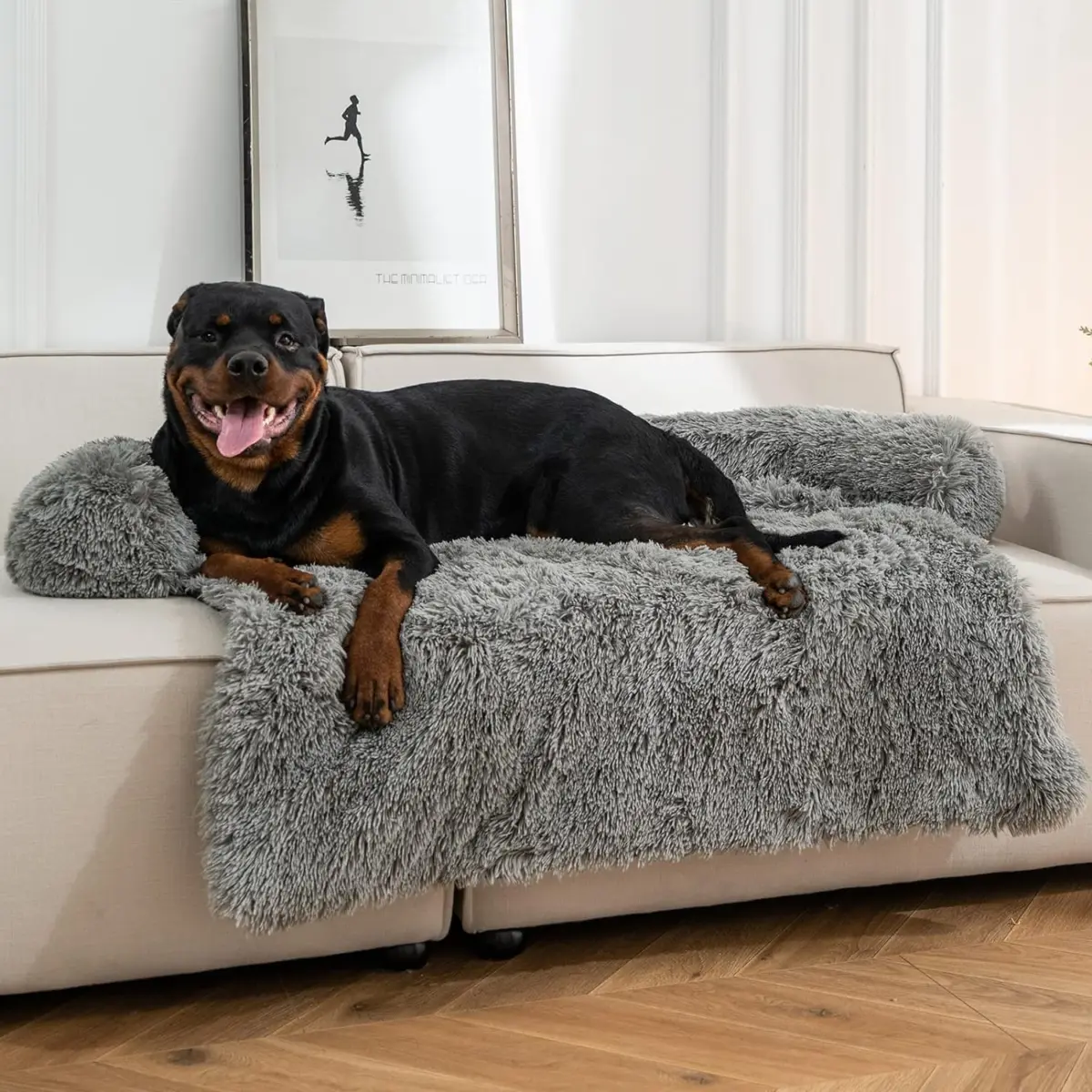
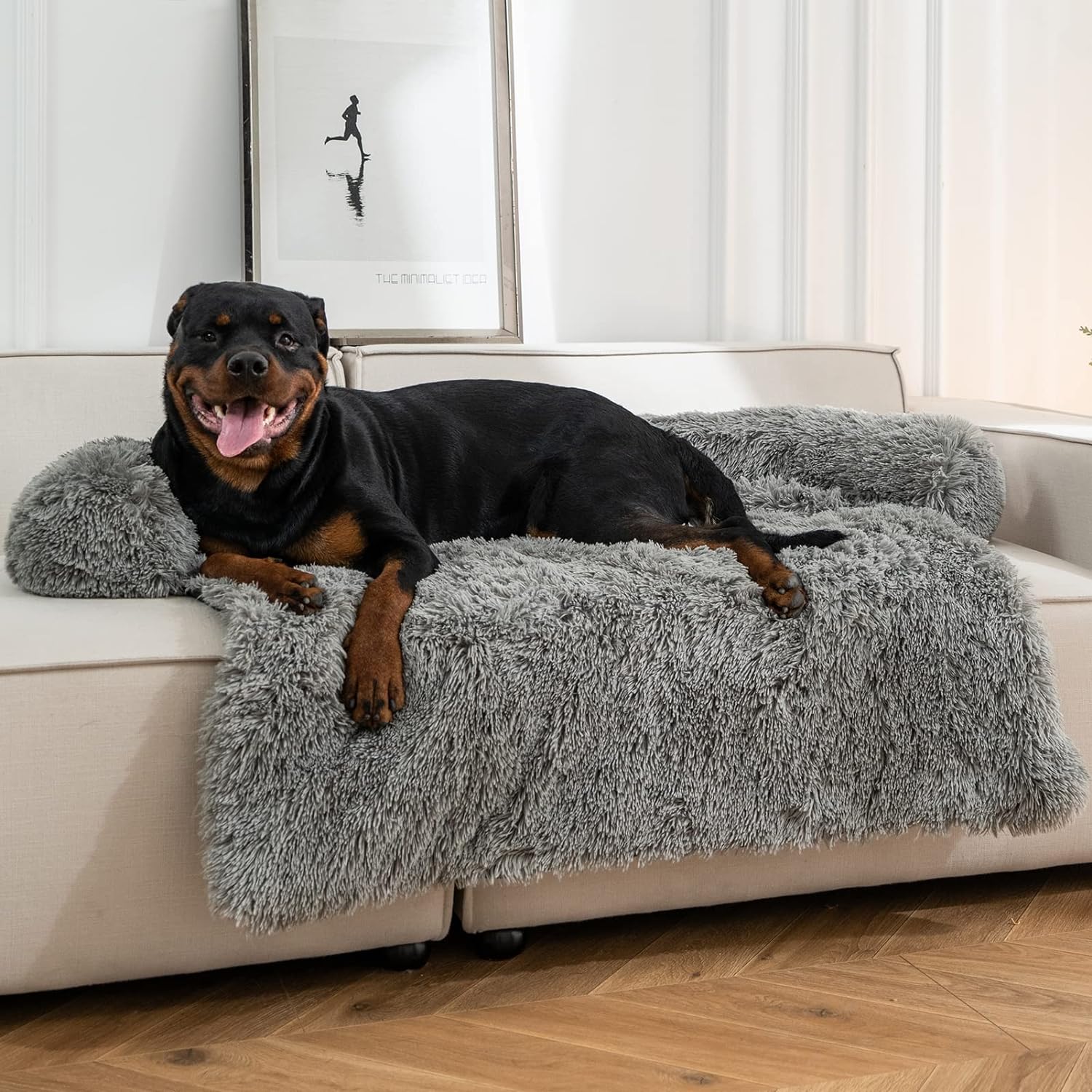
Design Philosophy: The Auemtyn Calming Faux Fur Bed is designed as a bolster-style couch cover. It allows dogs to sleep on sofas without exposing the underlying upholstery to dander, claws, and moisture.
Anxiety Reduction: The raised bolsters provide head and neck support while mimicking the physical sensation of maternal nesting, which clinically lowers canine cortisol levels.
Mechanical Stability: A non-slip rubberized bottom prevents the bed from sliding off leather or fabric sofas during entry and exit.
4. The Premium Nightstand Hybrid: Unipaws Furniture-Style Series
The bedroom remains a primary location for canine sleeping quarters. Unipaws addresses this with furniture-grade nightstand crates.
Dual-Door Access: Featuring both front and side doors, these units offer placement versatility in tight bedroom layouts, such as corner spaces next to platform beds.
Premium Construction: Made from solid MDF (medium-density fiberboard) with metal wire accents, these pieces mimic high-end cabinetry.
Secure Latches: Upgraded locking mechanisms ensure that dogs cannot easily manipulate the latch from the inside, providing secure containment when necessary.
Supporting Context & Metrics
The shift toward premium, integrated pet furniture is supported by substantial economic and behavioral data. According to market research, the global pet furniture market is projected to reach billions of dollars by the end of the decade, driven largely by millennial and Gen Z homeowners who prioritize design aesthetics.
Key Buyer Considerations
When investing in a hidden dog bed, consumers must balance several variables:
Metric / Feature
Target Specification
Impact on Canine Health & Home Integration
Sizing Tolerance
Bed length = Dog length (nose to tail base) + 4 to 6 inches
Prevents spinal curvature; ensures the dog can fully extend its limbs during REM sleep.
Prevents toxic off-gassing and protects dogs from ingesting harmful chemicals if they chew the frame.
Maintenance Rating
Removable, machine-washable covers with water-resistant liners
Critical for managing odors, flea prevention, and maintaining hygienic standards in shared living areas.
Structural Integrity
Minimum top-surface load capacity of 50–100 lbs
Ensures the furniture piece can safely support household items (lamps, electronics) without bowing or collapsing.
Philanthropic Impact of the Pet Industry
The rise of premium pet product consumption has also generated significant funding for animal welfare initiatives. For instance, platforms like iHeartDogs leverage consumer purchases to fund critical rescue operations. The real-world impact of these purchase-driven models is substantial:
Nutritional Support: Over 50 million meals have been donated and counted for shelter dogs nationwide, reducing the operational costs of animal rescues.
Emergency Transport: At-risk dogs are flown or transported from high-kill shelters to safety, saving thousands of lives annually.
Humanitarian Alignment: Over $1.8 million has been raised to pair veterans with trained service dogs, while significant funding is directed toward keeping domestic violence survivors and their pets together in secure shelters.
Official Statements & Expert Perspectives
The Behavioral Veterinary Viewpoint
Dr. Karen Pendleton, a veterinary behaviorist specializing in canine anxiety, highlights the psychological benefits of enclosed, furniture-style beds:
"Dogs are evolutionary den animals. In the wild, their ancestors sought out small, covered spaces to protect themselves from predators while sleeping. Standard open-floor dog beds can sometimes leave anxious dogs feeling exposed and vulnerable.
Furniture-style dog beds—particularly those that function as end tables or enclosed igloos—provide a structural ceiling that acts as a psychological shield. When introduced correctly with positive reinforcement, these hidden sanctuaries can significantly reduce environmental stress and noise-induced anxiety in domestic dogs."
The Interior Design Perspective
Sarah Jenkins, principal designer at Aesthetic Abodes, notes the shifting demands of modern homeowners:
"For years, the biggest challenge in designing a cohesive family room was what to do with the dog bed. Clients would spend tens of thousands of dollars on custom cabinetry and high-end sofas, only to have the entire room’s visual balance disrupted by a giant, gray polyester dog cushion in the corner.
The advent of high-quality, furniture-integrated pet crates and beds has completely changed our approach. We can now select pieces that match the wood tones, hardware finishes, and overall design style of the home, transforming a functional necessity into an elegant design element."
Future Outlook: The Smart Integration Era
As the home automation and "smart home" industries mature, the next frontier for hidden dog beds lies in technological integration. We are already beginning to see the prototyping and early-stage release of smart pet furniture designed to actively monitor and improve canine health.
+-----------------------------------------------------------------+
|                       The Smart Pet Bed                         |
|                                                                 |
|  +------------------------+             +--------------------+  |
|  | Biometric Sensors      |             | Climate Control    |  |
|  | - Weight tracking      |             | - Heating elements |  |
|  | - Sleep cycle analysis |             | - Cooling fans     |  |
|  +------------------------+             +--------------------+  |
|                                              /                 |
|                                             /                  |
|                 v                           v                   |
|  +-----------------------------------------------------------+  |
|  | Central Microprocessor                                    |  |
|  | - Processes biometric and environmental data              |  |
|  +-----------------------------------------------------------+  |
|                               |                                 |
|                               v                                 |
|  +-----------------------------------------------------------+  |
|  | IoT Connectivity                                          |  |
|  | - Transmits data to mobile app for owner & veterinarian   |  |
|  +-----------------------------------------------------------+  |
+-----------------------------------------------------------------+
Biometric Monitoring
Future iterations of hidden dog beds will likely feature integrated scale sensors within the base structure. This will allow owners to track their pet’s weight automatically over time, sending alerts to their mobile devices if sudden weight loss or gain is detected—an early indicator of many canine health issues.
Climate-Controlled Micro-Environments
Integrating low-voltage heating and cooling elements into the base of furniture-style beds will allow for automated temperature regulation. Using ambient temperature sensors, the bed can warm up for senior dogs suffering from arthritis during winter months, or cool down for thick-coated breeds during summer heatwaves.
Sustainable and Circular Materials
The future of pet furniture is also deeply tied to ecological sustainability. Consumers are increasingly demanding that furniture-grade dog beds be constructed from FSC-certified sustainable wood, non-toxic water-based finishes, and recycled ocean plastics for cushion fillings. This shift ensures that the products we bring into our homes are safe for our pets, our families, and the planet.