
Executive Overview
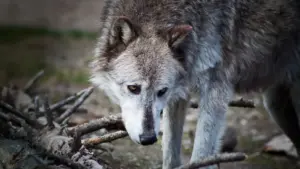
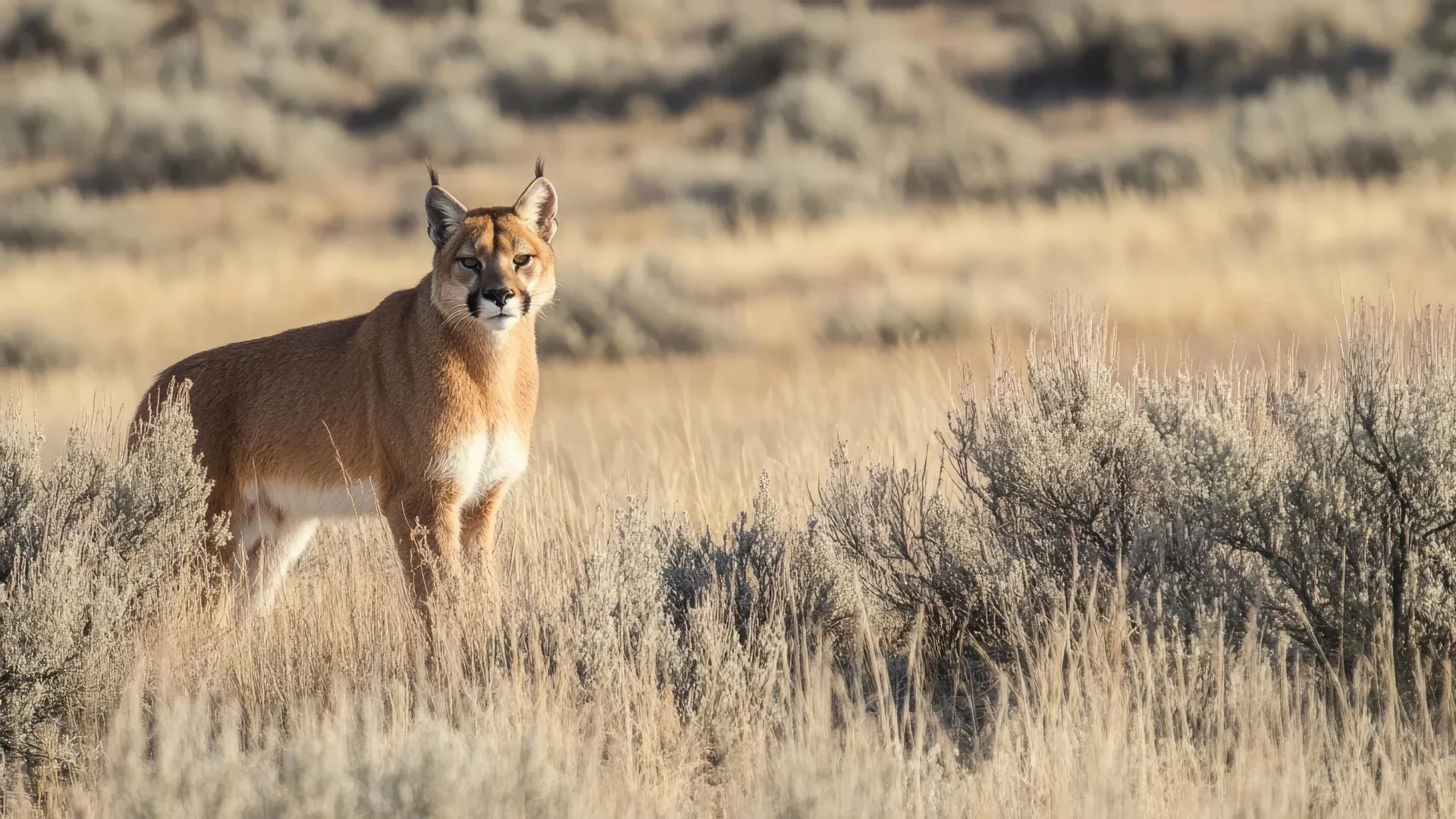
In the sprawling, high-altitude wilderness of Yellowstone National Park, an ancient ecological drama is quietly being rewritten. For decades, conservationists, wildlife biologists, and ecologists have observed the complex, often high-stakes relationship between two of North America’s most formidable apex predators: the gray wolf (Canis lupus) and the cougar (Puma concolor).
A landmark new study, published this week in the prestigious Proceedings of the National Academy of Sciences (PNAS), sheds unprecedented light on how these two heavyweights navigate a landscape of overlapping territories. The research reveals that the primary catalyst for tense, potentially lethal encounters between wolves and cougars is not territorial defense, but food piracy—specifically, wolves commandeering freshly slain prey originally harvested by solitary cougars.
To survive and thrive in a world where wolves hold the distinct advantage of pack dynamics, cougars have fundamentally altered their behavioral patterns. Rather than going head-to-head with canine packs, cougars are increasingly targeting smaller prey items, such as deer, while actively avoiding zones heavily trafficked by wolves. Furthermore, these elusive felines anchor their hunting grounds near rugged, vertical escape terrain—cliffs, rocky outcrops, and dense clusters of climbable trees—providing a vital refuge when danger approaches.
Drawing upon an exhaustive nine-year dataset that combines high-resolution GPS telemetry, machine learning models, and rigorous field investigations at nearly 4,000 potential kill sites, the research team offers a masterclass in modern wildlife ecology. As wolves and cougars successfully reclaim historical ranges across the western United States, the findings underscore a profound ecological lesson: peaceful coexistence between apex predators depends less on raw prey abundance and more on landscape heterogeneity, structural refuge, and dietary flexibility.
Detailed Chronology of the Research
The roots of this comprehensive study stretch back nearly a decade, bridging the gap between meticulous field biology and cutting-edge computational data science.
The Foundation: Decades of Fieldwork and Telemetry
The project’s observational backbone was forged in the rugged northern range of Yellowstone National Park, a landscape defined by dramatic topography and shifting ecological baselines. Between 2016 and 2024, researchers tracked the movements of GPS-collared wolves and cougars, logging millions of spatial data points.
Wesley Binder, lead author of the study and a doctoral student at Oregon State University, spent nearly ten years intimately monitoring Yellowstone’s cougar population through the Yellowstone Cougar Project. Beginning in 2022, Binder’s doctoral work formalized these years of observation. His early field efforts involved deploying 140 remote camera traps across the park’s northern tier, capturing elusive footage, and safely darting and collaring cougars to track their daily routines, hunting success, and home ranges.
Investigating the Kill Sites
Telemetry data alone, however, only tells half the story. To understand the granular nature of predator interactions, the research team conducted exhaustive field investigations at roughly 4,000 predicted kill sites. These physical check-ins allowed biologists to verify what species were hunted, how long predators remained at a carcass, and whether signs of aggressive interspecies contact were present.
Machine Learning and the Asymmetric Conflict
Faced with mountains of spatial and temporal data, the research team—including co-authors Joel S. Ruprecht, Rebecca Hutchinson, and Taal Levi from Oregon State’s College of Agricultural Sciences, Jack Rabe from the University of Minnesota and the Yellowstone Center for Resources, and Matthew Metz and Daniel Stahler also from the Yellowstone Center for Resources—turned to advanced technology.
By training machine learning models on confirmed historical kill site data, the researchers combined GPS movement patterns with predictive algorithms. This computational approach enabled the team to accurately map probable feeding events and pinpoint when and where wolves and cougars crossed paths.
The analytical results unveiled a stark asymmetry in the predator hierarchy:
- Wolf-Led Usurpations: Approximately 42% of all recorded wolf-cougar spatial interactions occurred at predicted sites where cougars had successfully made and processed a kill.
- Cougar-Led Usurpations: In stark contrast, only a single interaction was documented at a site where a wolf had killed prey and a cougar subsequently attempted to scavenge.
Mortality Metrics
The human and natural mortality records gathered over the nine-year study window further cemented the imbalance of power:
- Cougar Fatalities: Researchers recorded 12 adult cougar deaths during the study period. Two of these deaths—representing roughly 16.7% of the total—were directly inflicted by wolves. Crucially, in both instances, the fatal encounters occurred in areas devoid of nearby escape terrain. In both cases, the wolves did not consume the cougars; instead, they killed the felines to usurp the elk carcasses the cougars had secured.
- Wolf Fatalities: During the exact same timeframe, 90 wolf deaths were documented within the study parameters. Zero wolf deaths were attributed to cougars. The vast majority of wolf mortalities stemmed from natural causes, disease, intraspecific conflict (rival wolf packs), or regulated human activities.
Supporting Context & Metrics
To fully appreciate the gravity of these findings, one must examine the historical trajectory of large carnivores in North America and the specific behavioral mechanics that dictate their interactions.
The Historical Reassembly of Western Ecosystems
For the greater part of the 20th century, aggressive federal, state, and local predator-eradication programs systematically purged wolves and cougars from the contiguous United States. By the mid-1900s, both species were functionally extirpated from Yellowstone.
Public attitudes and conservation policies began to shift in the 1960s and 1970s, granting legal protections to cougars and allowing their populations to slowly rebound. The watershed moment for Yellowstone, however, arrived in 1995 with the federal reintroduction of gray wolves. Over the subsequent three decades, both apex predators have expanded their ranges back into historic territories across the western United States, creating unprecedented ecological overlap.
[1900s-1950s] Eradication Policies -> Wolves & Cougars Extirpated from Yellowstone
[1960s-1970s] Legal Protections      -> Cougars Begin Slow Population Recovery
[1995        ] Federal Action        -> Gray Wolves Reintroduced to Yellowstone
[2016-2024   ] Research Window       -> 9-Year GPS Tracking & 4,000 Kill Site Analysis
Why Wolves Hold the Upper Hand
Ecological theory has long established that social structure dictates dominance in carnivore guilds. Wolves are obligate pack hunters, operating as a coordinated, highly communicative social unit numbering anywhere from four to over a dozen individuals. This numerical and cooperative advantage allows wolf packs to easily intimidate, displace, or dispatch solitary competitors.
Conversely, cougars are solitary, territorial stalkers. In many global predator systems, smaller or subordinate carnivores accept high mortality risks in exchange for the nutritional reward of scavenging leftovers from dominant apex predators (a dynamic frequently observed between hyenas and leopards, or wolves and coyotes). Cougars, however, buck this trend. They rarely scavenge from other large carnivores, preferring to hunt fresh prey independently. This behavioral independence left scientists questioning the true drivers of wolf-cougar conflict—a knowledge gap successfully bridged by the new PNAS study.
The Elk-to-Deer Dietary Shift
One of the most fascinating ecological adaptations uncovered by the research involves dietary shifts driven by predator pressure. Historically, Yellowstone cougars relied heavily on elk as their primary dietary staple. However, as elk populations within the park fluctuated and declined due to a combination of wolf predation, hunting, and environmental factors, cougars adapted.
The felines pivoted their predatory focus toward mule deer and white-tailed deer. This dietary transition yielded two distinct survival benefits:
- Reduced Handling Time: Deer are substantially smaller than elk, meaning a cougar can consume and process the carcass much more rapidly.
- Minimized Exposure Window: By spending significantly less time tethered to a single kill site, cougars drastically shrink the temporal window during which traveling wolf packs might detect the scent of fresh blood and home in on the location.
Official Statements and Expert Perspectives
The implications of the research extend far beyond the borders of Yellowstone, offering vital metrics for wildlife managers overseeing carnivore recovery programs across the globe.
"In North America and worldwide, carnivore communities are undergoing major changes. Our research provides insight into how two apex predators compete, which informs recovery efforts."
— Wesley Binder, Doctoral Student, Oregon State University, and Lead Author
Binder, who transitioned from frontline field monitoring to academic research, emphasizes the pressing nature of these ecological adjustments. Having spent a decade managing camera traps and handling cougars in the park’s rugged northern range, he views the current era as a critical transition phase for western ecosystems.
"You’ve had these places that in the last 20, 30 years have had cougars come back, and now wolves are coming back as well. There are a lot of people asking questions like, ‘What are our ecological communities going to look like now that we have both of these large carnivores back on the landscape?’"
— Wesley Binder
The collaborative nature of the research highlights an interdisciplinary approach to wildlife conservation. Co-authors such as Dr. Taal Levi and Dr. Rebecca Hutchinson brought together expertise in wildlife ecology and machine learning, proving that modern ecological investigations require sophisticated technological toolsets to decode subtle behavioral shifts across vast geographic expanses.
Future Outlook: Coexistence in a Crowded Wilderness
As wildlife agencies across the American West grapple with the ongoing recovery and expansion of large carnivore populations, the lessons gleaned from Yellowstone provide a crucial roadmap for management and conservation.
Implications for Habitat Management
The study demonstrates that conserving apex predators requires more than simply maintaining static population quotas or setting aside broad tracts of forest. The availability of structural refugia—such as rocky cliffs, steep canyons, and mature, climbable trees—is paramount. Without these natural escape routes, subordinate predators like cougars face disproportionately high mortality risks when their hunting paths intersect with those of mobile wolf packs.
Furthermore, maintaining robust, diverse prey assemblages is essential. When wildlife managers ensure healthy populations of multiple prey species (such as both elk and deer), subordinate predators possess the behavioral flexibility to shift targets, reduce carcass residency times, and minimize fatal friction with dominant competitors.
The Road Ahead for Ecological Research
As machine learning and high-resolution GPS telemetry continue to evolve, researchers anticipate unlocking even deeper layers of behavioral ecology. Future studies will likely examine how seasonal climate shifts, human encroachment, and ungulate migration patterns further influence the delicate dance between wolves and cougars.
Ultimately, the Yellowstone study offers a message of resilience. Nature is neither static nor fragile; rather, it is characterized by dynamic adaptation. By altering their diets, modifying their spatial habits, and clinging to the cliffs and timber, cougars have proven that coexistence, while fraught with peril, is entirely possible when the landscape provides the necessary tools for survival.