
Executive Overview
For pet owners, the morning ritual is rarely peaceful. It often begins before the coffee brews, illuminated by a slanting ray of morning light revealing a familiar, frustrating scene: a delicate, persistent layer of fur dancing in the air and blanketing furniture, rugs, and hard floors. No matter how meticulously one cleans the day before, living alongside animals—whether it is a full menagerie of three cats and two rabbits or a single shedding hound—makes managing pet hair a uniquely relentless chore.
To help consumers navigate the crowded and often confusing market of cleaning appliances, a team of dedicated reviewers tested dozens of vacuums across multiple categories. The goal was simple: identify the models that can effectively and efficiently conquer pet fur without requiring endless passes or frustrating maintenance. After rigorous testing, evaluating suction power, brush-roll efficiency, battery performance, and maneuverability, six top-tier models emerged.
This report details four of the standout champions from that extensive testing process, spanning handheld units, high-performance canister vacuums, versatile cordless stick vacuums, and autonomous robot cleaners. By examining their specific engineering, strengths, and ideal use cases, pet owners can find the precise tool needed to restore order to their living spaces.
Detailed Chronology: The Evolution of Pet-Specific Cleaning Technology
The battle against pet fur is as old as domestic pet ownership itself, but the technology deployed to fight it has undergone a remarkable evolution over the past few decades. Understanding how the market reached its current state highlights why specialized features—such as motorized brushes, self-emptying docks, and high-efficiency particulate air (HEPA) filtration—are no longer luxury add-ons, but absolute necessities.
The Era of Passive Suction (Late 20th Century)
Historically, vacuum cleaners were designed with one primary objective: pulling loose household dirt and tracked-in soil out of carpets. Early upright vacuums relied heavily on sheer airflow suction and basic bristle strips. When faced with animal hair—which binds to fabric fibers via static electricity and microscopic barbs—these legacy machines frequently failed. Fur would wrap tightly around standard agitator brushes, clogging intake ports and diminishing overall performance. Consumers were forced to rely on manual lint rollers and rubber brushes to supplement their heavy cleaning appliances.
The Rise of Specialized Agitation (Early 2000s)
As pet ownership rates surged globally, manufacturers began recognizing the unique physical properties of pet hair. Engineers realized that suction alone could not defeat the static bond between animal fur and woven upholstery. This realization sparked a wave of innovation centered on active mechanical agitation. Motorized mini-tools and specialized brush rolls engineered to resist hair wrapping entered the market. Canister vacuums with dedicated pet-grooming attachments and specialized turbine heads began to cater specifically to households with shedding cats and dogs.
The Cordless and Robotic Revolution (Present Day)
Over the past ten years, the cleanup paradigm has shifted dramatically toward convenience, automation, and targeted power. The widespread adoption of lithium-ion battery technology enabled the creation of high-powered cordless stick vacuums and advanced handheld units that do not sacrifice suction for portability. Simultaneously, robotic vacuums evolved from clumsy, random-bump pucks into sophisticated, LiDAR-mapping navigators capable of maintaining daily baseline cleanliness. Today’s top-tier pet vacuums integrate smart app controls, self-emptying debris stations, and multi-surface brush rolls that handle everything from delicate hardwood to deep-pile carpets, transforming the grueling chore of hair removal into an automated, manageable routine.
Supporting Context & Metrics: Putting the Top Contenders to the Test
To understand why specific vacuums earn top recommendations, it is vital to examine the metrics used during the evaluation process. Testing environments simulated real-world homes experiencing high-volume shedding, utilizing controlled amounts of pet fur applied to varied surfaces, including tight-weave upholstery, hardwood floors, low-pile area rugs, and plush carpets.
1. The Ultimate Handheld Champion: Black+Decker 20V Max Dustbuster AdvancedClean+ Cordless Pet Hand Vacuum (HHVK515JP07)
For quick spot-cleaning of stairs, car interiors, and cat-napping zones on the sofa, a dedicated handheld vacuum is indispensable. The Black+Decker HHVK515JP07 earned its top spot through superior engineering specifically tailored to embedded fur.
- Suction and Agitation Power: Unlike standard handhelds that rely solely on suction apertures, this model features a specialized motorized brush roll. The brush actively agitates fabric fibers, dislodging stubborn, grippy pet fur that ordinary nozzles simply slide right over.
- Reach and Versatility: An integrated, extendable crevice tool allows users to pivot instantly from wide upholstery cleaning to pinpointing pet dander and kibble crumbs tucked deeply between couch cushions or along baseboards.
- Capacity and Runtime Metrics: The HHVK515JP07 boasts the largest dustbin capacity among its handheld competitors, reducing the frequency of mid-clean interruptions. It delivers a robust 25 minutes of continuous runtime on a single charge. The battery replenishes fully in under three hours, though it is non-replaceable. Maintenance is straightforward thanks to washable and replaceable filters, all backed by a two-year manufacturer warranty.
2. The Heavy-Duty Powerhouse: SEBO Airbelt K3 Premium Canister Vacuum
For multi-pet households spanning sprawling square footage with a mix of hardwood floors, area rugs, and wall-to-wall carpeting, a bagged canister vacuum remains the gold standard of deep cleaning.
- Cleaning Versatility: The SEBO Airbelt K3 Premium stands out due to its exceptionally engineered electric cleaner head. In rigorous evaluations, the head glided effortlessly across bare floors while offering multi-level height adjustments to transition seamlessly from low-pile entry rugs to dense, high-pile living room carpets.
- Filtration and Attachments: Equipped with a secure bagged system, it traps fine pet dander and allergens effectively—an essential feature for allergy-sufferers living with shedding animals. It includes three onboard utility attachments, highlighted by an efficient upholstery tool that pulls embedded hair out of fabric furniture with minimal effort.
- Warranty Metrics: Longevity is a key selling point for high-end canister vacuums. When purchased through an authorized dealer, the SEBO K3 Premium includes a generous warranty package: seven years of coverage on the motor and five years on parts and labor. This coverage extends to an impressive 10 years for the motor and seven years for parts and labor simply by registering the product.
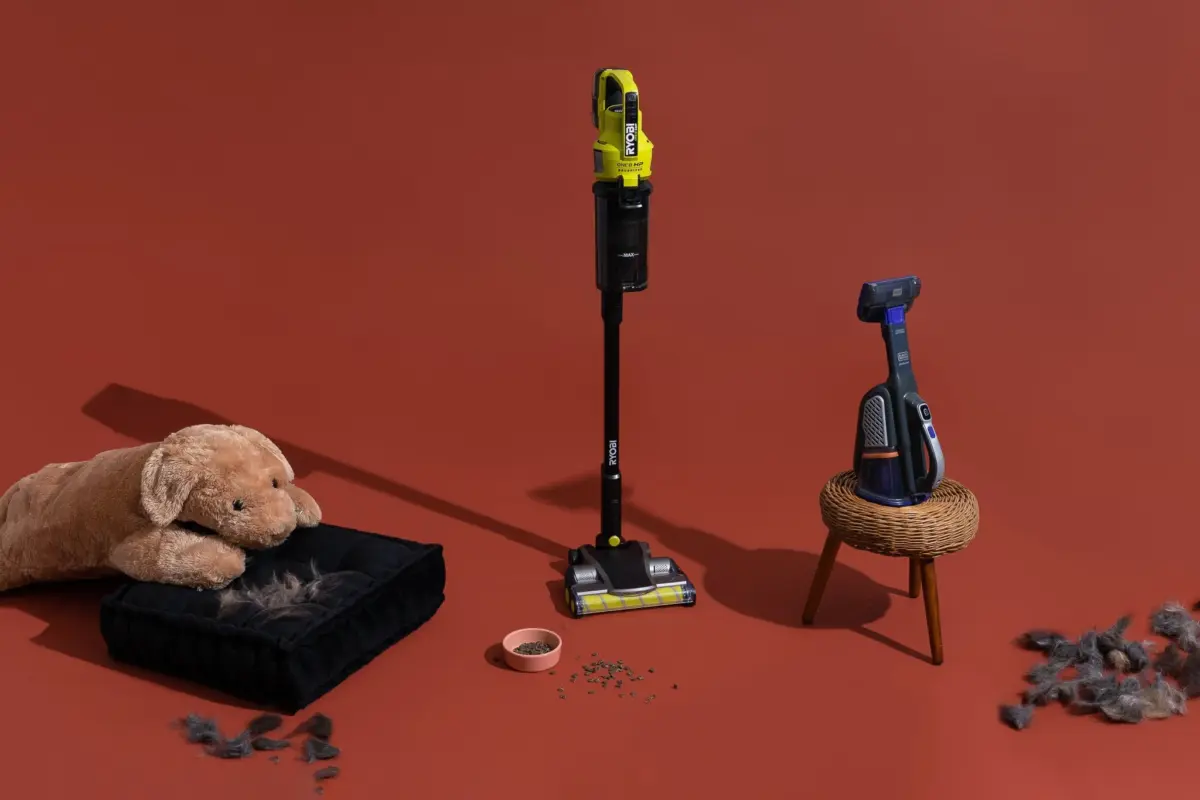
3. The Apartment-Friendly All-Rounder: Ryobi 18V One+ HP Advanced Stick Vacuum Kit
Living in a compact apartment with one or two shedding pets presents unique space and storage challenges, making bulky upright vacuums impractical.
- Performance and Design: The battery-powered Ryobi 18V One+ HP stick vacuum delivers balanced performance at a reasonable price point. Its all-terrain cleaner head utilizes aggressive bristles to lift embedded hair from carpets and hard flooring alike. An extra-large dustbin ensures users rarely need to empty the chamber halfway through cleaning a multi-room apartment.
- Maneuverability and Tools: While slightly heavier than some elite, ultra-lightweight cordless competitors—making it marginally more demanding to lug up carpeted stairs—it compensates with specialized hardware. It includes a motorized brush for upholstery, a standard crevice tool, and a micro-crevice tool designed explicitly for flushing out fluff from tight, awkward gaps.
- Battery Metrics: In eco (low) power mode, the Ryobi battery runs for approximately 32 minutes. Its recharge time of roughly two hours ranks among the fastest in its class. Furthermore, the removable battery is cross-compatible with a vast ecosystem of other Ryobi cordless tools, offering unmatched utility for DIY enthusiasts. The unit is supported by a three-year warranty.
4. The Autonomous Maintainer: Roborock Q7 M5+ Robot Vacuum
Daily baseline maintenance is the secret weapon of efficient pet owners. Capturing tumbleweeds of fur before they have a chance to settle deep into carpet fibers drastically reduces the burden of manual weekend cleaning sessions.
- Navigation and Mapping: The Roborock Q7 M5+ excels through advanced LiDAR navigation, mapping multi-level home layouts with precision. Its companion smartphone app provides deep customization, allowing users to schedule targeted room cleanings, dispatch the robot to spot-clean specific problem areas, and establish virtual "no-go" boundaries around pet food bowls or delicate electronics.
- Obstacle Avoidance and Acoustics: While no robotic obstacle-detection system is entirely flawless, the Q7 M5+ navigated stray toys and cords more effectively than competing models in its cohort. Notably, it operates at a remarkably quiet decibel level—a crucial feature for households with skittish cats or noise-sensitive dogs.
- Self-Emptying Convenience: The robot docks at a dedicated charging station that automatically vacuums out the contents of the onboard dustbin, depositing the accumulated fur and debris into a large, enclosed disposable bag. This hands-free disposal system minimizes human contact with concentrated allergens and pet dander, and the unit is backed by a one-year warranty.
Official Statements and Expert Insights
Industry experts and testing directors emphasize that combating pet hair is rarely about finding a single "magic bullet" appliance. Instead, achieving a truly fur-free home usually requires a strategic combination of tools tailored to specific cleaning zones.
"When dealing with multi-pet households—especially those housing long-haired cats, rabbits, or heavy-shedding dogs—suction numbers alone mean very little," notes a senior reviewer from the product testing team. "Airflow must be paired with mechanical agitation. If a vacuum head cannot physically lift and brush the hair fibers apart on an upholstered sofa or deep rug, the hair simply remains anchored, no matter how powerful the motor claims to be."
Furthermore, experts highlight the psychological impact of appliance noise on household pets. Many animals experience high levels of stress when exposed to high-decibel cleaning equipment. The inclusion of quieter operational modes in modern robotic units, such as the Roborock Q7 M5+, represents a significant industry shift toward animal welfare and user comfort.
Manufacturers of bagged canister systems, such as SEBO, emphasize the health benefits of sealed filtration systems. Traditional bagless vacuums often release a plume of fine dander and microscopic hair particles back into the breathing air when users empty the dust cup into an open trash can. Sealed bagged systems trap these allergens permanently, protecting both the human respiratory system and the surrounding indoor environment.
Future Outlook: What Lies Ahead for Pet Cleaning Technology
As smart-home ecosystems continue to mature, the future of pet hair management is poised for even greater automation, smarter diagnostics, and sustainable engineering.
Predictive and AI-Driven Cleaning
Future iterations of robotic vacuums are expected to leverage advanced artificial intelligence and optical recognition to identify specific types of household debris in real time. Rather than following a rigid schedule, next-generation cleaners may proactively detect seasonal shedding surges—such as a dog blowing its undercoat in the spring—and automatically adjust cleaning frequency, suction profiles, and pattern density in high-traffic zones.
Advanced Anti-Tangle Mechanics
Hair wrap around brush rolls remains the single most common maintenance headache for vacuum owners. Emerging engineering developments focus on self-cleaning comb teeth integrated directly into vacuum heads, actively slicing or unspooling long human and animal hair before it can accumulate and choke the motor axle.
Battery Longevity and Eco-Friendly Materials
With cordless stick vacuums becoming the dominant consumer choice, the next frontier centers on battery lifespan sustainability. Industry trends suggest an ongoing push toward modular, easily user-replaceable battery packs—mitigating the current frustration where an otherwise functional vacuum must be discarded solely because its integrated lithium-ion cell has degraded. Additionally, manufacturers are increasingly incorporating recycled ocean plastics and durable, non-toxic composites into appliance housings to satisfy the growing demand for eco-conscious home goods.
Ultimately, while fur will always remain a natural byproduct of sharing one’s life with beloved animals, the ongoing innovations in vacuum engineering ensure that keeping a clean, hygienic, and welcoming home is easier, faster, and more efficient than ever before.