
Executive Overview
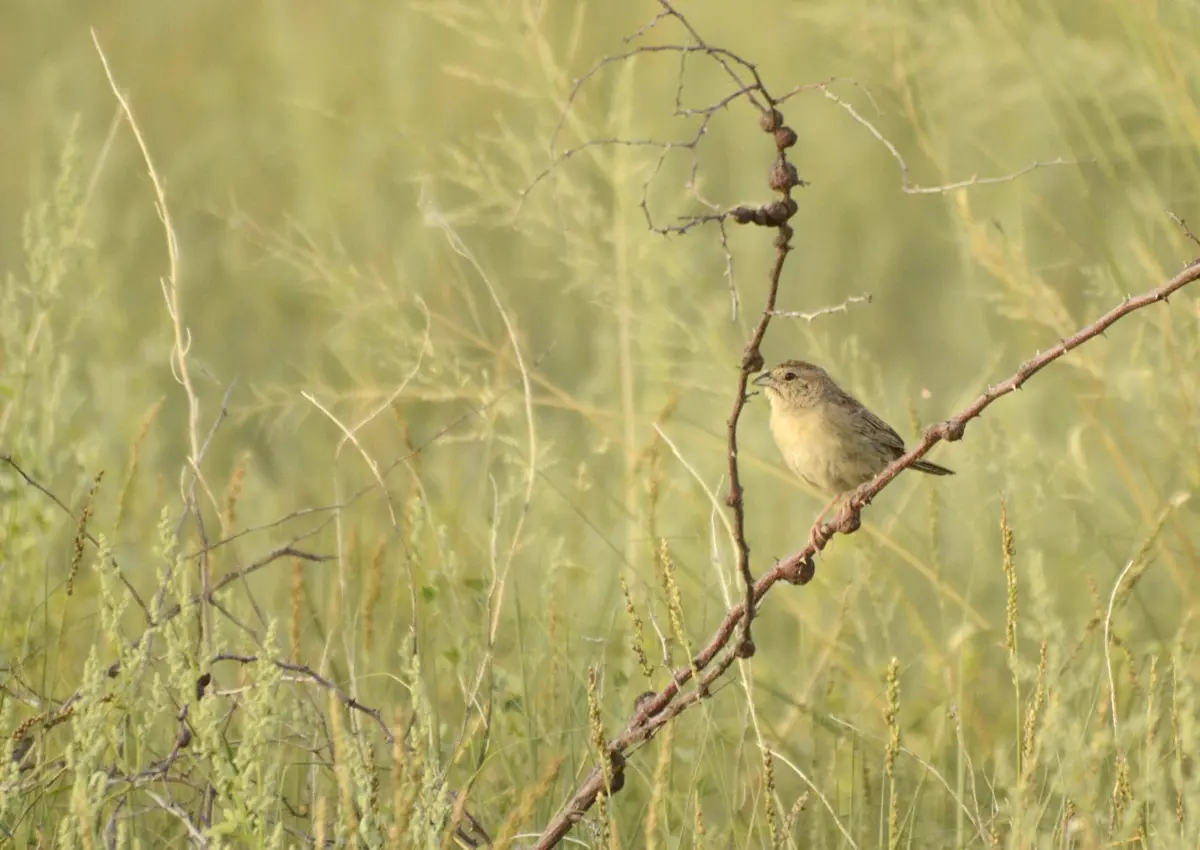
Nestled within the undulating, sun-bleached grasslands of southeastern Arizona, the Appleton-Whittell Research Ranch serves as a vital sanctuary for some of North America’s most elusive avian specialists. Each year, the arrival of Cassin’s, Botteri’s, and Grasshopper sparrows marks the vibrant rhythm of the summer season. These grassland specialists are deeply emblematic of the southwestern ecosystem: they nest quietly within dense, native bunchgrasses, forage on prolific swarms of grasshoppers, and famously frustrate birders who attempt to catch more than a fleeting glimpse of their feathers.
Yet, beneath the idyllic surface of these rolling hills lies a profound ornithological mystery. Traditional range maps paint these species as straightforward year-round residents, but the day-to-day reality observed by researchers living and working on the ranch tells a far more complicated story. Are these birds truly permanent locals, or are they ghost-like migrants navigating vast continental flyways, hiding in plain sight?
To answer these questions, conservationists have turned to cutting-edge technology. Through the newly established Research Ranch Grassland Sparrow Motus Project, scientists are deploying state-of-the-art radio telemetry to pierce the veil of avian secrecy. By marrying traditional field ornithology with a global automated radio-tracking network, this initiative is transforming our understanding of sparrow migration, refining wildlife tracking technology, and training the next generation of conservation scientists. As habitat loss and climate change continue to threaten North America’s grasslands, decoding the seasonal movements of these three sparrow species is no longer just an academic pursuit—it is an urgent conservation imperative.
Detailed Chronology: Unraveling Decades of Avian Mystery
For decades, ornithologists studying the Appleton-Whittell Research Ranch have grappled with the confounding behavioral patterns of its three signature sparrows. Each species presents a unique puzzle, characterized by distinct arrival schedules, secretive micro-habitats, and elusive seasonal disappearances.
The Phantom of the Grasses: The Botteri’s Sparrow Enigma
The seasonal narrative on the ranch begins in earnest each May, when the landscape suddenly comes alive with the bouncy, bubbling songs of Botteri’s Sparrows (Peucaea botterii). Their melodic calls echo from every corner of the property, creating an acoustic backdrop to the early summer months.
However, this auditory abundance vanishes as abruptly as it arrives. By mid-September, the ranch turns conspicuously silent. Compounding the mystery is the extreme difficulty of actually seeing the birds. Even when populations are high, Botteri’s Sparrows are notorious for running like mice through the dense mat of grass rather than taking flight. While a handful of winter records do exist within suitable southeastern Arizona habitats, researchers are left with a persistent, unanswered question: Do Botteri’s Sparrows truly migrate away from the ranch each autumn, or do they simply become behavioral phantoms, remaining on-site while adopting an ultra-secretive, silent lifestyle outside of the breeding season?
The Monsoon Miracle: Cassin’s Sparrow Dynamics
If the Botteri’s Sparrow is a seasonal phantom, the Cassin’s Sparrow (Peucaea cassinii) is a miraculous apparition. Unlike its predictable cousin, Cassin’s Sparrows do not arrive on a fixed calendar schedule. Instead, their appearance is tethered entirely to the erratic whims of the weather.
As dependable as clockwork, the arrival of Cassin’s Sparrows follows a specific meteorological trigger: the first serious monsoon storm of the summer. Following heavy downpours, the sparrows materialize seemingly out of thin air, exploding into the landscape. In exceptionally wet years, their complex, cascading songs can become so abundant that they entirely drown out the boisterous calls of the Botteri’s Sparrows. Conversely, during severe drought years, the Cassin’s Sparrows may not show up at all. The underlying ecological cues and physiological mechanisms that allow these birds to detect distant rainfall and mobilize to the ranch with such precision remain one of the great wonders of avian behavior.
The Year-Round Illusion: Grasshopper Sparrows
Of the three species, the Grasshopper Sparrow (Ammodramus savannarum) appears to be the most reliable, maintaining a nominal year-round presence on the property. Walk the grasslands of the Research Ranch in January or July, and you are likely to hear their distinct, insect-like buzzes and tinkling songs.
However, beneath this apparent stability lies a demographic sleight of hand. Ornithologists suspect that the individuals singing and breeding on the ranch during the summer months head south for the winter, only to be replaced by entirely different populations of Grasshopper Sparrows that have bred much further north. Therefore, while the species is a year-round resident at the ecosystem level, the individual birds occupying the habitat are in a state of constant flux.
The Technological Turning Point
For years, these hypotheses remained speculative, limited by the sheer physical difficulty of tracking tiny, ground-dwelling birds across vast and rugged landscapes. That limitation changed dramatically in 2022 with the installation of an on-site Motus Wildlife Tracking station, setting the stage for a new era of empirical investigation.
Supporting Context & Metrics: The Science of Motus
To transform speculation into data, the Research Ranch turned to Motus—a Latin derivative meaning "movement." Managed by the Bird Conservancy of the Rockies as a vital node within the broader Great Plains-Chihuahuan Desert Motus Network, the ranch’s on-site tracking station is a marvel of modern wildlife telemetry.
How Motus Works
Traditional radio telemetry requires researchers to actively track animals using bulky handheld antennas and receivers. Motus, by contrast, is an automated, passive radio-telemetry system.
- The Tags: Tiny, lightweight radio-transmitting nanotags are securely and safely affixed to small wildlife, such as grassland sparrows. These tags emit unique radio signals at a standardized frequency (166 MHz) without impeding the bird’s flight, foraging, or nesting behaviors.
- The Stations: Automated receiving stations—like the one installed at the Research Ranch—are equipped with omnidirectional and directional antennas. These stations continuously scan the airwaves for the digital signatures of tagged animals.
- The Global Network: When a tagged bird flies within range of a Motus station (often up to 15 kilometers away, depending on line-of-sight and topography), the station logs the exact time, date, and ID code of the tag. Because the Motus network comprises over 2,000 stations scattered across 34 countries—coordinated globally by Birds Canada—a sparrow tagged in Arizona can be detected traversing the Chihuahuan Desert, migrating through the Great Plains, or wintering in central Mexico.
Project Metrics and Collaborative Synergy
The Appleton-Whittell Research Ranch Motus Project officially kicked off its field operations in 2024. The initiative represents a massive inter-agency and academic collaboration, drawing vital support and expertise from:
- The Arizona Game and Fish Department
- The Sonoran Joint Venture
- Arizona State University (ASU)
- The Tucson Bird Alliance
- The Bird Conservancy of the Rockies
Through coordinated netting and banding efforts, researchers successfully fitted their first cohort of sparrows with Motus tags in 2024. By the conclusion of the summer field season, more than 25 individual grassland sparrows had been successfully tagged and released back into the ranch’s native grasslands.
Beyond tracking individual migration routes, this initial cohort has provided invaluable methodological data. Researchers are actively evaluating the efficacy of Motus technology itself, learning crucial lessons about how environmental variables impact signal detection. For instance, the data has revealed that local topography—such as the rolling hills and deep arroyos characteristic of the Research Ranch—combined with individual species behavior (such as the ground-hugging habits of a Botteri’s Sparrow versus the higher-altitude flight patterns of migrating species) directly influences whether a tag’s signal is successfully captured by the base station.
Official Statements & Expert Insights
The intersection of advanced technology, rigorous field biology, and student mentorship has generated widespread enthusiasm among the partner organizations steering the project.
"Unraveling these mysteries is not merely an academic exercise; it is the absolute bedrock of effective conservation," notes the research team at the Appleton-Whittell Research Ranch. "When dealing with species that inhabit rapidly disappearing grassland biomes across North and Central America, knowing precisely where they go when they leave our sight is just as important as knowing what they need while they are nesting in our front yard."
The collaborative nature of the project has also placed a heavy emphasis on workforce development and academic mentorship, engaging undergraduate and graduate researchers in hands-on conservation science.
Heaven Sanchez, an undergraduate researcher from Arizona State University and a recipient of the prestigious 2025 Appleton-Whittell Research Ranch Fellowship Program, was among the first students to dive headfirst into the telemetry data. Working alongside field ornithologists, Sanchez and subsequent student groups—including a dedicated cohort of ornithology students from Prescott College who assisted with the summer tagging efforts—have gained invaluable, real-world experience in avian field techniques, data analysis, and the deployment of telemetry hardware.
"Working with these tagged birds bridges the gap between classroom ecology and boots-on-the-ground conservation," student researchers shared during the field deployment phases. "Seeing how a microscopic radio tag can connect a bird fluttering in an Arizona bunchgrass to a telemetry tower hundreds of miles away changes how you view the entire global landscape."
Future Outlook: The Road Ahead for Grassland Conservation
As the Research Ranch Grassland Sparrow Motus Project moves past its initial multi-year pilot phase, the horizon is brimming with new scientific queries and technological possibilities.
Grasslands are among the most threatened and rapidly degrading biomes on the North American continent, squeezed on all sides by agricultural conversion, urban expansion, overgrazing, and the compounding pressures of a changing climate. For species like the Cassin’s, Botteri’s, and Grasshopper sparrows, survival depends entirely on the ecological integrity of a vast, interconnected chain of habitats stretching from the interior United States down through the Mexican plateau.
Next Steps and Research Horizons
With three years of foundational fieldwork now behind them, the project leaders are preparing for the next phase of research, which will include:
- Expanding Tagging Cohorts: Scaling up the number of tagged birds across all three target species to generate statistically robust datasets regarding seasonal dispersal and site fidelity.
- Cross-Network Data Sharing: Leveraging the expanding international Motus network to pinpoint exact wintering grounds and migration corridors previously obscured by geographical data gaps.
- Habitat Modeling: Integrating telemetry detections with fine-scale vegetation and climate data to better predict how sparrows respond to prolonged drought and shifting monsoon patterns.
- Academic Publications: Translating field discoveries into peer-reviewed scientific literature to guide regional and national bird conservation strategies.
Track the Migration Live
For bird enthusiasts, conservationists, and the general public eager to follow the real-time progress of the project, transparency is a core tenet of the research. Visitors and researchers alike can monitor active signals, view historic tracking data, and observe visitors from other regional wildlife projects by visiting the public Research Ranch Motus Station Dashboard.
As new tracking technologies evolve and a passionate new generation of conservation scientists steps forward to analyze the data, the future of grassland sparrow research has never been brighter. The Appleton-Whittell Research Ranch continues to prove that even the smallest, most secretive birds can reveal monumental truths about the natural world—provided we have the tools, and the dedication, to listen.