
When the public pictures a service dog at work, the mind invariably drifts toward the extraordinary. We imagine the high-stakes, cinematic moments: a medical alert dog detecting a microscopic shift in blood chemistry before modern technology can register it; a guide dog navigating a handler safely through a chaotic, congested metropolitan intersection; a veteran’s service dog physically interrupting a panic attack before adrenaline completely highjacks the nervous system.
These advanced tasks are nothing short of miraculous. Yet, beneath every medical alert, every directional command, and every grounding exercise lies an invisible engine that makes the magic possible: calmness.
Without emotional regulation and baseline tranquility, even the most genetically gifted and technically proficient service dog will ultimately falter in the unpredictable reality of the modern world. While task-specific training garners the applause, calm behavior is the bedrock that allows service dogs to perform reliably, safely, and consistently in everyday life. A calm dog can think clearly in overwhelming spaces, filter out a barrage of sensory distractions, and remain locked onto the handler who depends on them. In short, calmness is not merely a desirable trait—it is the foundational skill that unlocks every other capability.
Executive Overview: Redefining Canine Excellence
In the specialized realm of service dog training, the word "calm" is frequently misunderstood. To the layperson, a calm dog might simply look like a pet that is quiet, lazy, or sleeping on a rug. In professional training circles, however, "calm" is an active, highly regulated state of being.
A truly calm working dog is emotionally stable, thoughtfully analytical, and capable of self-regulation when confronted with environmental stressors. They can process unfamiliar, high-intensity environments without entering a state of physiological overload, and they possess the resilience to recover swiftly when the unexpected occurs.
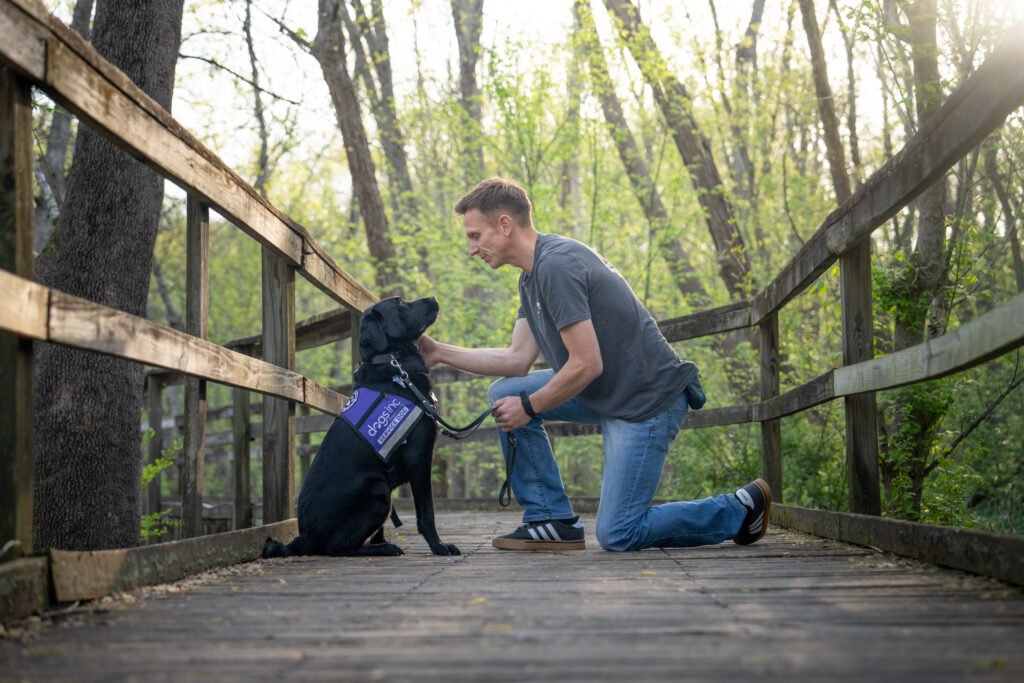
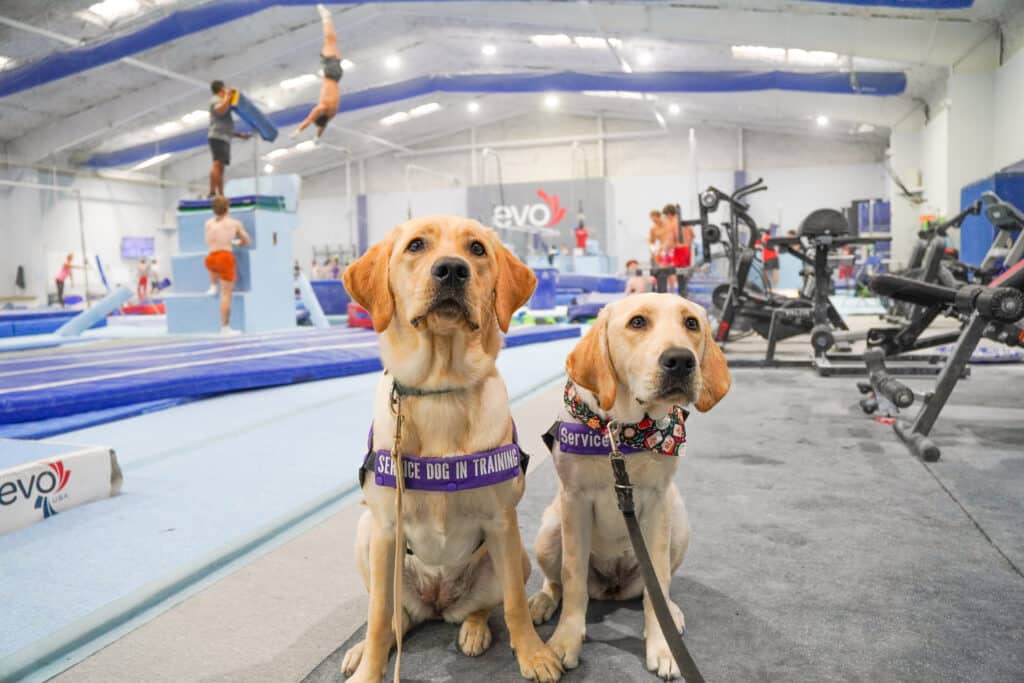
Consider the logistical hurdles of daily life: a dog walking past an erratic, barking pet without breaking stride; ignoring an aromatic piece of food dropped onto the slick floor of a bustling restaurant; or maintaining absolute composure inside the auditory assault of a crowded airport terminal. Service dogs are not bred or trained to be unfeeling robots; rather, they are conditioned to acknowledge their environment without becoming emotionally reactive to it.
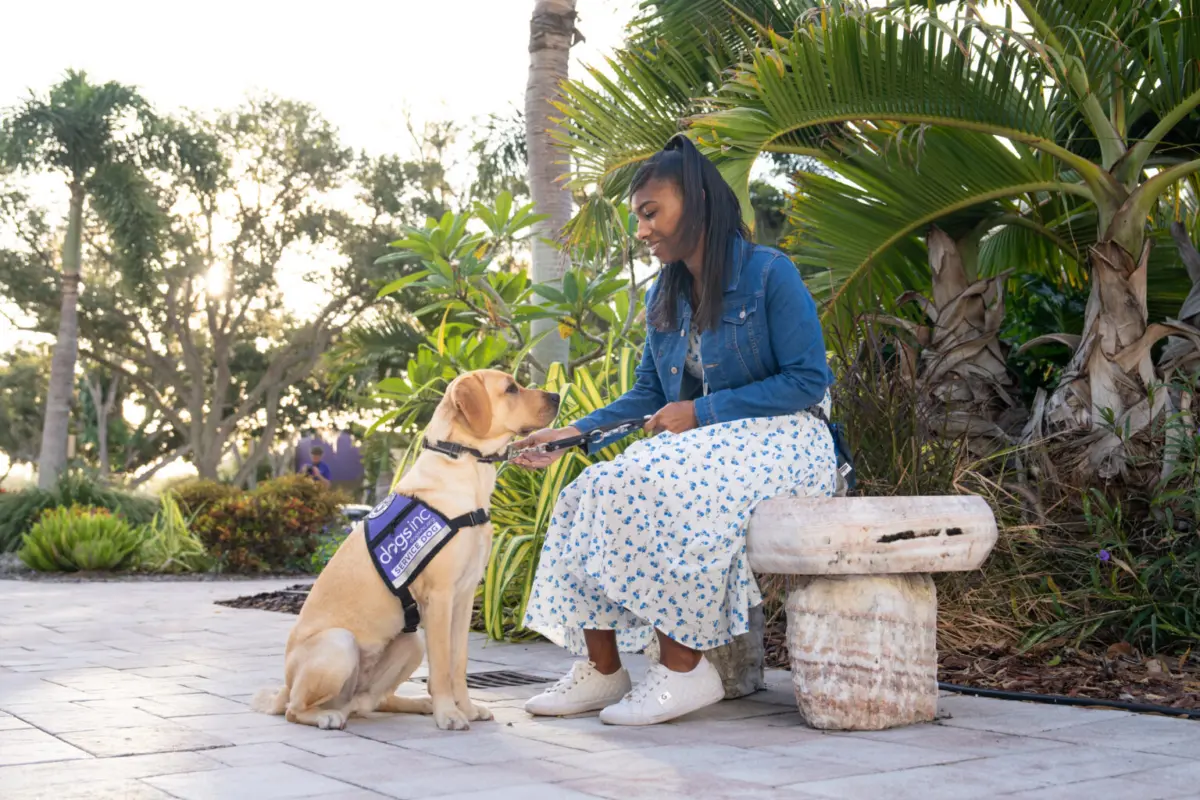
Organizations like Dogs Inc emphasize that a calm dog is never a "shut-down" dog—one that has suppressed its behavior out of fear. Instead, a calm dog is a regulated dog. They maintain their vibrant personalities, playfulness, and affection off-duty, but they possess the cognitive switch required to settle, focus, and work appropriately the moment their harness or vest goes on.
Detailed Chronology: The Lifecycle of a Calm Service Dog
Calmness is not an innate switch that is simply flipped on; nor is it a personality trait that a dog either possesses or lacks. It is a carefully engineered psychological state, systematically constructed across a distinct chronological timeline that begins in early puppyhood and evolves through professional graduation.
Phase 1: Puppyhood and the Architecture of Regulation (Months 0–6)
The journey toward a calm adult service dog begins long before formal task training ever starts. During the formative weeks of puppyhood, specialized puppy raisers lay the groundwork for emotional stability.
- Early Neurological Stimulation: Puppies are introduced to novel surfaces, unusual sounds, and varied textures in controlled micro-doses. This gradual exposure prevents the amygdala—the brain’s fear center—from overreacting to novelty later in life.
- Impulse Control Fundamentals: Basic domestic rules are established immediately. Behaviors such as "four on the floor" greetings are strictly reinforced. Puppies learn that excitement does not yield attention or rewards; rather, patience and a lowered arousal state unlock positive outcomes.
- The Pause Response: Handlers teach puppies how to settle independently. Instead of constantly entertaining the puppy, raisers reward calm moments of inaction, teaching the young dog that the world does not require a constant, frantic reaction.
Phase 2: Adolescent Exposure and Distraction Management (Months 6–18)
As dogs enter adolescence, their hormonal landscape shifts, testing their burgeoning impulse control. This phase requires meticulous, professional oversight.

- Structured Public Access: Trainers introduce adolescent candidates to increasingly complex environments—subway stations, grocery store aisles, and veterinary clinics. Exposure is calibrated to ensure the dog remains challenged yet confident, never allowing them to flood into panic.
- Neutrality Training: Dogs learn the art of the "neutral pass." They are conditioned to ignore the temptations of falling food, chirping children, aggressive or reactive pet dogs, and strangers attempting to make unsolicited eye contact or vocalizations.
- Positive Reinforcement Integration: Utilizing clicker training and high-value rewards, trainers capture moments where the dog makes a conscious choice to disengage from a distraction and check back in with the handler. This builds deep cognitive resilience.
Phase 3: Advanced Task Integration and Real-World Application (Months 18+)
In the final stretch of training, the dog’s specialized tasks are fused directly with their baseline calmness.
- Task Execution Under Pressure: Whether it is performing deep pressure therapy (DPT) during a sensory overload event or retrieving dropped medication in a crowded hallway, the dog must execute these tasks with clinical precision. High adrenaline from the dog would render them useless; absolute calm is mandatory.
- The Public Access Test (PAT): Candidates undergo rigorous evaluation to prove they can maintain their composure across hours of continuous work, validating that their calm demeanor is durable, reliable, and immune to environmental fatigue.
Supporting Context & Metrics: Why Calmness Equals Efficacy
The science underpinning service dog training heavily supports the supremacy of emotional regulation. When a mammal—human or canine—experiences acute stress or over-stimulation, cortisol and adrenaline flood the bloodstream. Neurologically, this shifts processing power away from the prefrontal cortex (the seat of logic, learning, and impulse control) and hands it over to the primitive brain, which governs fight, flight, or freeze responses.
[Environmental Distressor / Overstimulation]
       │
       ▼
[Surge of Cortisol & Adrenaline]
       │
       ├──► (Low Regulation Dog)   ──► Prefrontal Cortex Offline ──► Panic / Reactivity / Failure
       │
       └──► (Trained Service Dog)  ──► Emotional Regulation   ──► Focused Problem-Solving / Success
Data from professional assistance dog schools highlights several core metrics regarding candidate success and failure:
- Washout Rates: Industry studies consistently reveal that behavioral "washouts"—dogs failing out of service programs—are rarely due to an inability to learn physical tasks. Up to 70% of program dismissals stem from underlying emotional reactivity, noise phobias, or an inability to maintain composure in public environments.
- Cognitive Retention: Behavioral psychologists note that dogs trained using low-arousal, positive reinforcement methodologies retain complex cue responses up to 40% more effectively in chaotic environments compared to dogs trained under high-stress or coercive conditions.
- Handler Health Outcomes: Handlers partnered with dogs exhibiting superior public neutrality report lower baseline cortisol levels themselves. The dog’s steady, unshakeable demeanor acts as a bio-feedback loop, directly dampening the handler’s hypervigilance and anxiety.
Official Statements and Expert Perspectives
The philosophy of cultivating tranquility as a primary directive is championed by leading behaviorists and directors within the assistance animal community.
Dr. Elena Vance, a prominent veterinary behaviorist specializing in working-dog psychology, notes:
"When we look at a service dog, we are looking at an animal operating in an unnatural human world. Society asks these dogs to navigate spaces filled with flashing lights, unpredictable crowds, and sirens. A dog that lacks internal calm cannot learn; it can only survive. Calmness is the physiological shield that protects the dog’s mental health while enabling it to work for a human life."
Representatives from Dogs Inc echo this sentiment, emphasizing the distinction between pets and working partners:
"People often ask us what separates a good pet from a world-class service dog. The answer isn’t intelligence—most dogs are smart. It is emotional bandwidth. Our training methodology is entirely built around expanding that bandwidth. By rewarding calm choices from puppyhood onward, we aren’t suppressing a dog’s spirit; we are building an anchor of stability that allows them to thrive in any environment on Earth."
Future Outlook: The Evolution of Service Dog Selection and Breeding
As the demand for service dogs continues to outpace supply, the industry is experiencing a profound shift in how candidate dogs are evaluated and bred. The future of service dog training is moving increasingly toward predictive behavioral genomics and early-stage emotional profiling.
1. Predictive Emotional Phenotyping
Modern breeding programs are no longer relying solely on subjective evaluations of adult dogs. Advanced facilities are utilizing standardized behavioral assessments on puppies as young as three days to eight weeks old. By measuring a puppy’s heart-rate variability during novel stimuli and tracking how rapidly they return to a baseline state after a startle, breeders can predict with startling accuracy which lines possess the genetic predisposition for true, unshakeable calmness.

2. Tailored Neuro-Developmental Protocols
Looking ahead, training curricula are shifting toward individualized neuro-developmental plans. Recognizing that different disabilities require different types of emotional stamina—a guide dog needs continuous spatial calmness, whereas a medical alert dog for PTSD needs rapid-response emotional grounding—trainers are customizing exposure protocols to match a dog’s specific neurological profile.
3. Expanding Access Through Education
A major frontier in the future of assistance work is public education regarding dog neutrality. As more untrained pets are improperly passed off as service animals, legitimate service dogs face unprecedented environmental challenges. Educating the public on why service dogs must remain completely neutral—and why petting an off-duty or working service dog compromises their hard-earned calm—is vital to preserving the integrity of working partnerships.
Conclusion: The Quiet Power of Partnership
The most vital capabilities of a service dog rarely make headlines because they happen in silence.
They exist in the microscopic pause before a dog reacts to a sudden loud noise. They live in the thoughtful, deliberate navigation of a crowded hotel lobby. They are found in the steady, heavy warmth of a dog lying across a handler’s lap during the crescendo of an invisible panic attack.
Calmness may lack the theatrical flash of a high-flying rescue, but it is the invisible architecture that holds everything together. It is the bridge between human vulnerability and canine reliability. Built through patience, structured repetition, trust, and thousands of quiet, rewarded choices, a calm service dog offers more than just task execution—they offer peace of mind, unyielding safety, and the priceless gift of independence. For the individuals whose lives depend on them, that calm partnership changes everything.