
Executive Overview
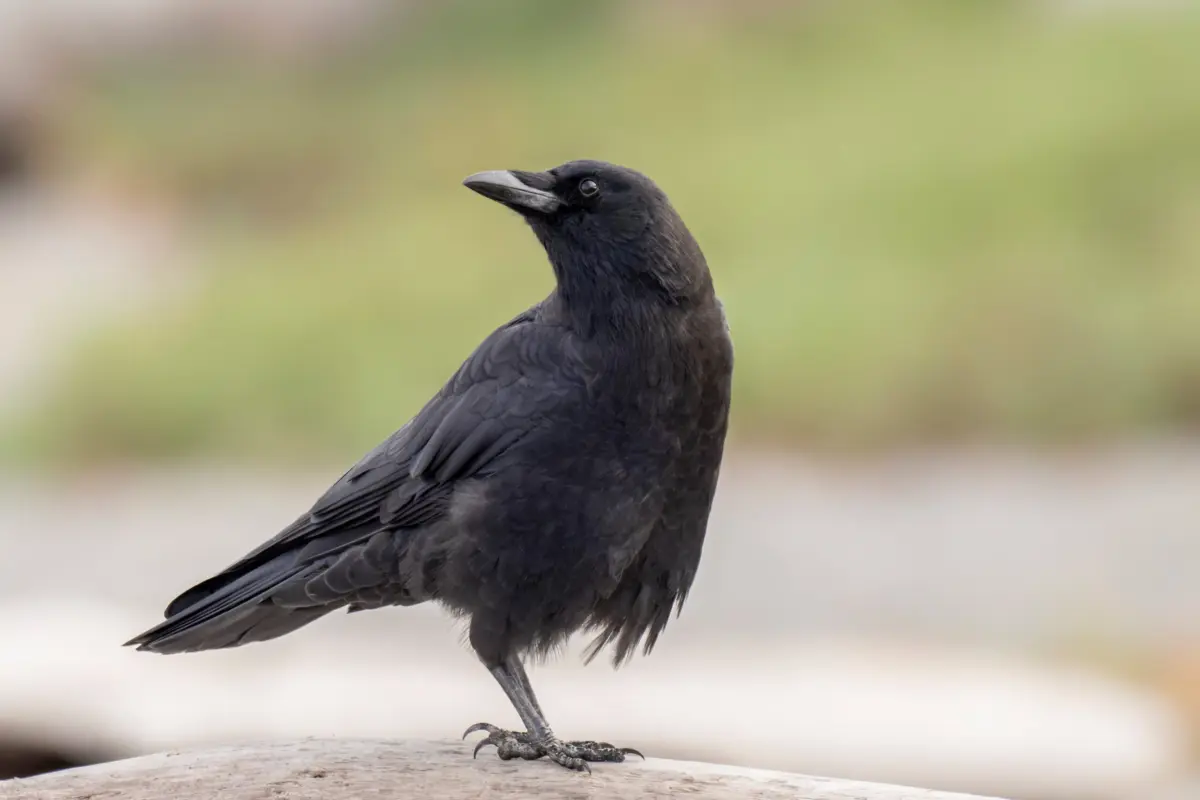
For generations, humanity has marveled at the cognitive prowess of select avian species. Corvids—crows, ravens, jays, and magpies—alongside various parrots, have long been crowned the undisputed geniuses of the bird world. Popular media and scientific literature alike are saturated with breathtaking accounts of crows crafting hooked tools, counting aloud with the proficiency of human toddlers, and solving complex, multi-step mechanical puzzles. Parrots, meanwhile, routinely captivate audiences with their capacity for deductive reasoning, symbolic communication, and mimicry.
Yet, a groundbreaking comprehensive review of modern scientific literature reveals an astonishing reality: our understanding of avian intelligence is built on a remarkably narrow foundation. According to a sweeping new analysis of 937 experimental studies spanning the past 25 years, 98 percent of all known bird species have never had their cognitive abilities formally tested. Out of more than 11,000 distinct bird species inhabiting the globe, a mere 194 have ever stepped into the behavioral psychology laboratory or been subjected to standardized problem-solving assessments.
This profound imbalance exposes a pervasive confirmation bias within the scientific community and popular culture alike. Driven by historical convenience, laboratory standardization, and human observation biases, researchers have repeatedly returned to the same handful of animal families. As a result, claims of "corvid supremacy" or undisputed parrot brilliance may say more about human testing habits than about the true distribution of intellect across the avian class.
As a new wave of behavioral ecologists leverages advanced field technology, microchip tracking, and automated feeders, the scientific paradigm is finally shifting. Researchers are venturing out of controlled indoor environments and into backyards and wilderness areas. Their mission is not merely to crown a new "feeder genius," but to decode the hidden mental landscapes of ordinary, everyday birds—and in doing so, unlock critical insights for global conservation in an era of unprecedented anthropogenic change.
Detailed Chronology: From Lab Bench Pioneers to Field-Level Epiphanies
To understand how avian cognitive science arrived at its current blind spot, one must trace the historical evolution of comparative psychology across the 20th and 21st centuries.
The Early 20th Century: The Rise of the Laboratory Staple
When the field of comparative psychology first began formalizing avian intelligence studies in the early 1900s, researchers were rarely motivated by an overarching curiosity about bird psychology for its own sake. Instead, they studied animals as generalized models to understand intelligence, learning, and conditioning in a broader biological context.
Pigeons and quails quickly emerged as the ultimate laboratory workhorses. From the perspective of early experimental psychologists, these species offered irresistible logistical advantages:
- Economic Viability: They were inexpensive to acquire, maintain, and breed in captivity.
- Dietary Simplicity: Their nutritional needs were straightforward and easy to manage at scale.
- Tolerance of Confinement: Unlike wild, highly mobile raptors or sensitive songbirds, pigeons and quails adapted remarkably well to controlled laboratory cages, tolerating repetitive trials without excessive stress or mortality.
This historical momentum created an entrenched methodological pipeline. Once standardized testing equipment, operant conditioning chambers (such as Skinner boxes), and behavioral metrics were established for pigeons, it became far easier for successive generations of researchers to continue using them rather than bearing the steep learning curve of developing protocols for unfamiliar species.
The 21st Century: The Corvids Take Center Stage
As the decades progressed, anecdotal reports of wild corvid ingenuity accumulated rapidly. Farmers, birdwatchers, and naturalists shared astonishing accounts of crows dropping hard-shelled nuts onto high-traffic roadways to let automobiles crack them open, or remembering the faces of individual humans who had wronged them years prior.
This groundswell of field observations catalyzed a massive surge in corvid-focused laboratory experiments throughout the early 2000s. Researchers rushed to test the limits of corvid problem-solving, tool manufacturing, and spatial memory. The family Corvidae rapidly ascended to the throne of avian intelligence. Because these experiments consistently yielded groundbreaking results, funding agencies, academic journals, and media outlets amplified the narrative, cementing corvids and parrots as the gold standards of smart birds.
The Turning Point: The Ph.D. Puzzle Box Epiphany
The catalyst for the recent critical reassessment of avian cognition research began with Kelsey McCune during her doctoral studies in behavioral ecology at the University of Washington. McCune set out to investigate the classic paradigm of certified smart birds by focusing on corvids.
Constructing an elaborate puzzle box out of a natural log—complete with intricate compartments, sliding doors, and a high-value reward of peanuts—she aimed to evaluate the problem-solving strategies of wild Mexican Jays and California Scrub-Jays. It was a textbook setup designed to confirm the established hierarchy of avian brainpower.
However, nature refused to adhere strictly to the experimental design. "All these other species would come and interact with the puzzle box, too," McCune recalls. To her astonishment, non-corvid visitors—including chickadees, towhees, and Downy Woodpeckers—frequently bypassed the jays entirely, dropping in to inspect the apparatus and sometimes solving the mechanical puzzles faster than the target test subjects.
Later, when McCune expanded her research to study Great-tailed Grackles (members of the blackbird family Icteridae), she observed that they performed equally to, or even outperformed, traditional corvid subjects on comparable cognitive tasks. These encounters forced a profound existential reckoning for the young researcher: How confident could science truly be in its maps of avian intelligence if so few species were ever permitted to sit for the exam?
Supporting Context & Metrics: Unpacking the Avian Cognition Gap
Spurred by these field observations, McCune teamed up with fellow researcher Jeffrey Katz to conduct a comprehensive meta-analysis of the field. Reviewing every experimental avian cognition study published over a 25-year window—encompassing a staggering 937 distinct research papers—they quantified the systemic biases shadowing the discipline.
The resulting metrics paint a humbling picture of the state of animal psychology:
| Metric Category | Statistical Reality | Dominant Context / Details |
|---|---|---|
| Total Global Species Tested | < 2% (194 out of 11,000+) | Fewer than 2 out of every 100 bird species have ever been studied for cognitive performance. |
| Taxonomic Family Coverage | < 33% (Less than one-third) | Researchers have sampled species from a fraction of all known avian biological families. |
| Top Five Most-Studied Families | 64% of all literature | Dominated by Corvidae, Columbidae, Paridae, Phasianidae, and Psittacidae. |
| Pigeon Hyper-Representation | 132 out of 135 studies | Within the family Columbidae (306 species), all but three studies focused exclusively on Rock Pigeons (Columba livia). |
| Direct Cross-Family Comparisons | Only 5 studies in 25 years | Extremely rare to find experimental designs directly pitting corvids against non-corvids under identical conditions. |
Challenging the Myth of Corvidae Supremacy
The myth of absolute corvid supremacy took another significant analytical blow when examining direct comparative studies. Of the mere five studies over a quarter-century that directly contrasted corvids against other bird families under standardized testing conditions, the outcomes were remarkably mixed:
- Corvids emerged as the clear top performers in only two studies.
- Their achievements were equaled by non-corvid competitors in another two studies.
- Most notably, a landmark 2024 study challenged 15 distinct bird species to access concealed food by overcoming a diverse array of physical obstacles, including flipping weighted lids and pulling out blocking sticks. In this rigorous trial, Blue Jays were actively outperformed by five separate songbird species: Black-capped Chickadees, European Starlings, Gray Catbirds, American Robins, and the overall champion problem-solver, the Tufted Titmouse.
To be explicitly clear, neither McCune nor her peers discount the genuine intellectual achievements of corvids and parrots. Decades of peer-reviewed research have conclusively demonstrated that these birds possess cognitive architectures capable of rivaling those of non-human primates and human children. Crows manufacture compound tools, understand sophisticated physical concepts like water displacement, and demonstrate recursive thinking—a foundational pillar of human linguistic grammar. Parrots exhibit advanced deductive reasoning, categorization skills, and abstract numerical competence.
The core issue is not that corvids and parrots are overrated, but that the rest of the avian world has been systematically under-evaluated.
Why Science Re-treads Familiar Ground
The persistence of these testing biases is maintained by powerful feedback loops within the scientific enterprise:
- Methodological Momentum: As established earlier, once testing protocols, housing standards, and baseline data exist for a species, researchers face fewer administrative and technical hurdles securing institutional animal care and use committee (IACUC) approval to proceed with them.
- Regulatory Ease: Common lab species and ubiquitous urban birds do not require complex, restrictive government permits to capture, hold, or observe.
- The Human-Urban Observation Bias: Humans live shoulder-to-shoulder with adaptable urban birds like American Crows, Rock Pigeons, and House Sparrows. Because these birds occupy our immediate field of vision daily, we are uniquely positioned to witness behaviors that humans interpret as clever—such as crows trading shiny trinkets for food or pigeons executing complex aerial navigation over concrete plazas. Similarly, our close domestic exposure to pet parrots and their uncanny speech mimicry reinforces a deeply ingrained human bias: if an animal sounds or acts like us, it must be intelligent.
Once a species acquires a cultural and scientific reputation as a "brainiac," confirmation bias takes over. Researchers naturally gravitate toward studying them to build upon established literature, inadvertently starving other taxonomic branches of scientific inquiry.
Official Statements and Perspectives
The transition from a narrow, laboratory-bound focus to an expansive, community-wide ecology represents a philosophical evolution within behavioral science. Key voices leading this transformation emphasize the urgency of broadening our intellectual horizons.
Reflecting on the psychological feedback loops that dictate research funding and institutional focus, Kelsey McCune notes:
"Once certain species have a brainiac reputation, scientists are more likely to study them. Much of what we think we know about who’s smartest could, in fact, be a case of confirmation bias. These birds are easy to acquire. You don’t need strict permits. The methods for testing questions in these species are well-developed."
Discussing the technological breakthroughs that are finally enabling researchers to break free from traditional laboratory cages and study wild communities in situ, McCune highlights the shift toward integrative field methodologies:
"We know very little about some extremely common species, including many backyard birds like the Carolina Wren, Northern Cardinal, and Downy Woodpecker. The new tech will allow us to measure the same cognitive trait in a community of birds, instead of just one species in isolation."
Looking beyond the academic ambition of establishing accurate intelligence rankings, McCune emphasizes the vital practical stakes of understanding avian cognition:
"There is more at stake than just a smart-bird leaderboard. The more we know about how birds see and navigate the world, the better we can design conservation strategies to help them to deal with the way that we’re changing it."
Future Outlook: Feeder Geniuses and Conservation in a Changing World
As we look toward the future of avian behavioral ecology, the intersection of technological innovation and ecological field research promises to dismantle outdated dogmas.
The Technological Revolution in the Backyard
Modern field researchers are no longer tethered to indoor flight rooms or stationary observation blinds. Microchip passive integrated transponder (PIT) tagging and automated, computerized feeding stations have revolutionized the study of wild cognition.
In ongoing research initiatives, McCune and her colleagues deploy networks of specialized smart-feeders across natural and suburban landscapes. Wild birds fitted with lightweight, harmless microchip tags approach the stations. The automated feeders scan each individual’s unique identifier, logging precise data regarding which species approach, how frequently they visit, and how they attempt to solve mechanical challenges. Crucially, while multiple devices may be visited, only one specific configuration will actively dispense food rewards.
This setup allows researchers to track individual learning curves, persistence, behavioral flexibility, and innovation across entire multi-species communities simultaneously. Backyard visitors once dismissed as ordinary—such as Northern Cardinals, Carolina Wrens, and woodpeckers—are finally getting their day in court, revealing behavioral nuances that traditional laboratory paradigms entirely missed.
Beyond the Leaderboard: Conservation Implications
Ultimately, mapping the cognitive landscape of the avian world is not an exercise in human-style academic vanity. Earth’s ecosystems are undergoing radical, human-driven transformations. Avian populations worldwide face unprecedented pressures, including accelerated habitat destruction, shifting climatic zones, disrupted seasonal migration corridors, and radically altered food webs.
In this high-stakes environment, behavioral flexibility—the ability of an animal to modify its established habits in response to novel environmental stressors—is a primary determinant of survival. Species that can rapidly learn new foraging techniques, adapt to urbanized microclimates, or decipher artificial barriers will thrive. Those locked into rigid, evolutionarily fixed behavioral patterns face steep population declines or extinction.
By systematically evaluating the cognitive and problem-solving capacities of a vast, representative cross-section of the world’s 11,000+ bird species, conservation biologists can construct predictive models of species resilience. Understanding which birds possess the mental adaptability to navigate a rapidly fragmenting planet allows conservationists to target interventions precisely where vulnerability is highest.
Science is finally embracing its own institutional blind spot. By acknowledging what we do not know, researchers have opened the door to a richer, more humbling, and far more accurate appreciation of the avian mind—revealing that true genius in the feathered world may be far more universal than we ever dared to imagine.