
August 11, 2026
Source: Alley Cat Action® 2026 Summer Newsletter
Executive Overview
The landscape of animal welfare across the United States is experiencing a profound, progressive shift. Across multiple states and municipalities, antiquated and lethal approaches to managing outdoor feline populations are steadily being replaced by modern, humane, and scientifically backed policies. This evolution is driven by grassroots advocacy, legal reform, and the tireless collaboration of national animal advocacy organizations working hand-in-hand with local governments and compassionate community members.
In the summer of 2026, several key legislative and policy victories underscored this nationwide movement. From Lakewood, Ohio, to Leetsdale, Pennsylvania, and Hardin, Montana, communities have decisively rejected cruel, counterproductive measures—such as mass impoundment and lethal gas chambers—in favor of progressive strategies like Trap-Neve-Return (TNR). Central to these victories has been the expert intervention and advocacy of Alley Cat Allies, an organization that provided crucial guidance, legal framing, and mobilization support to local leaders.
This report examines these three distinct municipal milestones, detailing how each region navigated the transition from outdated pest-control mindsets to enlightened, life-saving frameworks. By analyzing the legislative mechanics in Lakewood, the proactive mayoral leadership in Leetsdale, and the rapid grassroots mobilization in Hardin, we gain a comprehensive view of how modern animal advocacy successfully protects community cats and validates the dedication of their caregivers.
Detailed Chronology: Municipal Battles and Breakthroughs
The journey toward humane policy reform is rarely linear. It requires vigilance, timely intervention, and relentless educational outreach. The events of the spring and summer of 2026 illustrate how different communities faced distinct challenges regarding outdoor cats—and how strategic intervention turned potential crises into historic victories.
Lakewood, Ohio: Institutionalizing TNR and Protecting Caregivers
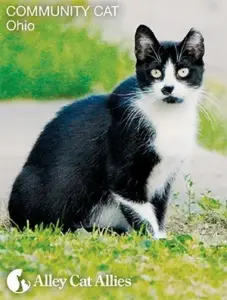
For years, Lakewood, Ohio, operated a successful pilot Trap-Neav-Return (TNR) program. While the pilot demonstrated the undeniable efficacy of TNR in stabilizing community cat populations without the use of lethal shelters, the city’s legal framework had not fully caught up with the programmatic success. Without formal ordinance protections, the program operated in a precarious legal gray area, leaving both cats and their tireless caregivers vulnerable to complaints and enforcement actions.
Recognizing the need for institutional permanence, the city council—bolstered by the expertise and strategic support of Alley Cat Allies—took decisive action this past spring. Lakewood officially enacted a comprehensive, strong TNR ordinance designed to codify protections for community cats, the TNR process, and the citizens who manage colonies.
Crucially, the new legislation addresses one of the most persistent legal hurdles in animal control: caregiver liability. Under traditional, antiquated ordinances, individuals who fed or provided basic medical support for outdoor cats were legally classified as "owners." This absurd designation meant caregivers could be held legally and financially responsible for animals they did not own, domesticate, or confine. The new Lakewood ordinance explicitly rectifies this by establishing that community cat caregivers are not owners, but rather compassionate good Samaritans performing a vital public service.

By integrating this vital distinction into municipal law, Lakewood has ensured that its successful pilot program will endure as a permanent, legally protected pillar of municipal animal management.
[Traditional System] ──> Caregiver Feeds Cat ──> Classified as "Owner" ──> Subject to Fines / Impoundment Risk
[Modern TNR System]  ──> Caregiver Feeds Cat ──> Classified as "Good Samaritan" (Protected) ──> Stabilized Colony
Leetsdale, Pennsylvania: Eliminating Dangerous "At-Large" Definitions
In Leetsdale, Pennsylvania, the path to reform began with an extraordinary act of municipal self-awareness. Recognizing the complexity and sensitivity surrounding outdoor cat management, the Mayor of Leetsdale personally reached out to Alley Cat Allies. Seeking expert guidance on how to navigate community cat populations humanely and effectively, the mayor opened the door to a transformative collaboration.
At the heart of Leetsdale’s challenge was a classic legal trap: the city’s existing municipal code explicitly included cats within its broad definition of "at-large" animals. In legal terms, this meant that outdoor cats—regardless of whether they were sterilized, vaccinated, healthy, or feral—were classified in the same manner as unrestrained livestock or roaming pet dogs. Consequently, community cats were perpetually at risk of being trapped and impounded by animal control simply for existing outdoors.
For community cats, municipal impoundment under an at-large statute is frequently a death sentence, as shelters are rarely equipped to socialize un-socialized outdoor felines.
When Alley Cat Allies reviewed the code, they immediately impressed upon city leaders the urgency of removing this archaic hazard. The response from local leadership was swift and decisive. In June, the Leetsdale city council officially amended the ordinance, formally exempting cats from the at-large law. This simple yet profound regulatory adjustment instantly shielded hundreds of outdoor cats from unnecessary apprehension and validated the community’s informal care networks.
Hardin, Montana: Defeating the Threat of CO₂ Gas Chambers
While the situations in Lakewood and Leetsdale involved upgrading existing frameworks or refining definitions, the crisis in Hardin, Montana, demanded urgent, defensive mobilization.
The conflict began when a disturbing audio recording surfaced from a Hardin City Council discussion. During the session, council members actively debated a proposal to construct and utilize a carbon dioxide ($textCO_2$) gas chamber for the mass extermination of community cats. The revival of lethal gas chambers—a method widely condemned by modern veterinary science and humane organizations as inhumane and agonizing—sent shockwaves through the local community and national animal advocacy networks.
Alley Cat Allies refused to let the proposal advance in the shadows. The organization immediately engaged with the Hardin City Council, issuing firm, uncompromising demands for the immediate cessation of any plans to slaughter cats. Recognizing that institutional pressure alone must be paired with public outrage, Alley Cat Allies launched a massive mobilization effort, rallying Montana residents and animal lovers nationwide to raise their voices against the proposed cruelty.
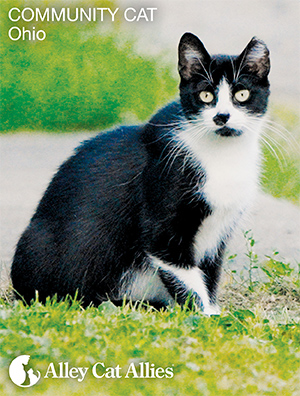
The public response was overwhelming. Confronted by an undeniable wave of local and national opposition, the Hardin City Council buckled under public scrutiny. The council officially removed the cruel and illegal $textCO_2$ eradication scheme from consideration, proving once again that organized, vocal advocacy can halt institutionalized cruelty in its tracks.
Supporting Context & Metrics: The Science and Sociology of TNR
To fully appreciate the magnitude of these legislative victories, one must understand the failure of traditional catch-and-kill policies and the robust data supporting Trap-Neuter-Return (TNR).
For decades, municipal animal control agencies relied almost exclusively on catch-and-remove policies. Under this model, outdoor cats were trapped and brought to local shelters. Because the vast majority of community cats are feral (un-socialized to humans), they are unadoptable in a traditional shelter setting. Consequently, traditional management resulted in extraordinarily high euthanasia rates, consuming vast municipal resources without reducing outdoor cat populations.
This phenomenon is driven by what biologists call the Vacuum Effect. When cats are removed from a specific territory, remaining resources (such as shelter and food) attract new unsterilized cats from surrounding areas. These newcomers quickly reproduce, rapidly returning the local population to its original carrying capacity.
[Traditional Catch-and-Remove]
  Removal of Cats ──> Vacuum Effect Created ──> New Cats Move In ──> Population Rebounds (High Euthanasia Cost)

[Modern Trap-Neuter-Return (TNR)]
  Cats Trapped ──> Sterilized & Vaccinated (Eartipped) ──> Returned to Territory ──> Population Stabilizes & Naturally Declines
In contrast, TNR addresses the root of the population cycle. By humanely trapping, sterilizing, vaccinating, and returning community cats to their outdoor homes, TNR achieves the following measurable outcomes:
- Population Stabilization: Sterilization halts reproduction immediately. Over time, colony sizes naturally and humanely decline as attrition occurs.
- Elimination of Nuisance Behaviors: Spaying and neutering drastically reduce or eliminate behaviors associated with unsterilized cats, such as yowling, roaming, fighting, and urine-spraying.
- Disease Prevention: Mandatory vaccinations (particularly against rabies) protect both the feline population and the surrounding human community.
- Fiscal Responsibility: TNR costs a fraction of continuous municipal catch-and-kill cycles, freeing up local tax dollars for other public services.
The legislative updates in Lakewood, Leetsdale, and Hardin represent a broader cultural alignment with these empirical realities. Municipalities are increasingly recognizing that working with nature through TNR is vastly superior to fighting a losing battle with lethal methods.
Official Statements and Advocacy Perspectives
The successes achieved in Ohio, Pennsylvania, and Montana highlight the vital synergy between national advocacy organizations and local change-makers.
In statements released regarding the Lakewood ordinance, representatives from Alley Cat Allies emphasized the collaborative nature of the victory:

"Alley Cat Allies is proud to have provided our expertise and support to help shape this new legislation. Lakewood has demonstrated that forward-thinking cities can embrace programs that protect both public safety and animal well-being. By legally separating caregivers from owners, Lakewood has set a gold standard for municipalities nationwide."
The transformation in Leetsdale underscored the importance of proactive municipal leadership. When the mayor of Leetsdale reached out for guidance, it signaled a departure from adversarial dynamics toward cooperative governance. National advocates praised the borough for its willingness to correct historical oversights:
"When a city leader proactively seeks out humane solutions, it opens the door to rapid, permanent progress. By removing cats from the archaic ‘at-large’ definition, Leetsdale has ensured that compassion is no longer penalized by local statute."
Regarding the intense battle in Hardin, Montana, advocates stressed that vigilance remains essential. The defeat of the $textCO_2$ gas chamber proposal was celebrated as a triumph of collective citizen action:
"When we heard a disturbing recording of a Hardin City Council discussion about creating a CO₂ gas chamber to kill community cats, we refused to stay silent. Because of our action together, the council removed the cruel and illegal CO₂ scheme from consideration. This victory proves that the voice of the people remains the most powerful shield these animals have."
Future Outlook: The Road Ahead for Humane Communities
While the milestones achieved in Lakewood, Leetsdale, and Hardin represent monumental victories, animal advocates emphasize that the work is far from finished. Thousands of municipalities across the United States still operate under outdated ordinances that criminalize community cats, penalize compassionate caregivers, or leave the door open for cruel, ineffective eradication schemes.
The momentum generated in the summer of 2026 provides a strategic blueprint for future advocacy:
- Proactive Legal Reform: Municipalities must be encouraged to audit their existing animal control codes to explicitly exempt community cats from at-large provisions and protect caregivers from liability.
- Education over Eradication: Continuous public education campaigns are necessary to dispel lingering myths regarding feral cats and demonstrate the proven cost-effectiveness and humanity of TNR.
- Grassroots Preparedness: As demonstrated in Hardin, swift public mobilization remains the ultimate safeguard against the return of inhumane practices like lethal gas chambers.
As more cities follow the courageous paths blazed by Lakewood, Leetsdale, and Hardin, a nationwide standard of humane, science-based animal care is coming into view. The events of 2026 serve as a powerful reminder that when communities, lawmakers, and dedicated advocates unite behind compassion and reason, lasting, life-saving change is not only possible—it is inevitable.