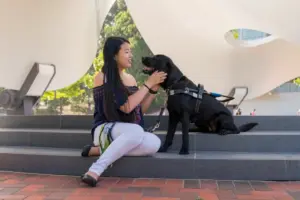
Raising a future service dog is frequently romanticized as a heartwarming endeavor defined by puppy cuddles, social outings, and the feel-good satisfaction of community service. While it is undeniably a noble pursuit, the reality behind the scenes is far more demanding than many prospective volunteers realize. It requires unwavering structure, military-grade patience, and a daily commitment to executing the minutiae of obedience and socialization flawlessly.
Volunteer puppy raisers play an irreplaceable foundational role in the service dog pipeline. They shoulder the responsibility of taking an eight-week-old puppy and guiding it through its critical developmental windows—instilling house manners, basic obedience, and environmental confidence. However, this journey is not for the faint of heart. Behind every fully trained, life-changing guide or assistance dog is a household that has undergone months of intense lifestyle adjustments, continuous behavioral management, public scrutiny, and, ultimately, the bittersweet emotional hurdle of letting go.
This comprehensive investigative look examines the true challenges of raising a future working dog, the robust support systems that keep volunteers afloat, and why—despite the profound hurdles—thousands of individuals and families across the country continue to answer the call.
Detailed Chronology: The Lifecycle of a Puppy Raiser
Understanding the challenge requires examining the distinct chronological phases a volunteer navigates from the moment a puppy enters their home to the day it departs for advanced professional training.
Phase 1: Integration and the Foundation (Weeks 8 to 16)
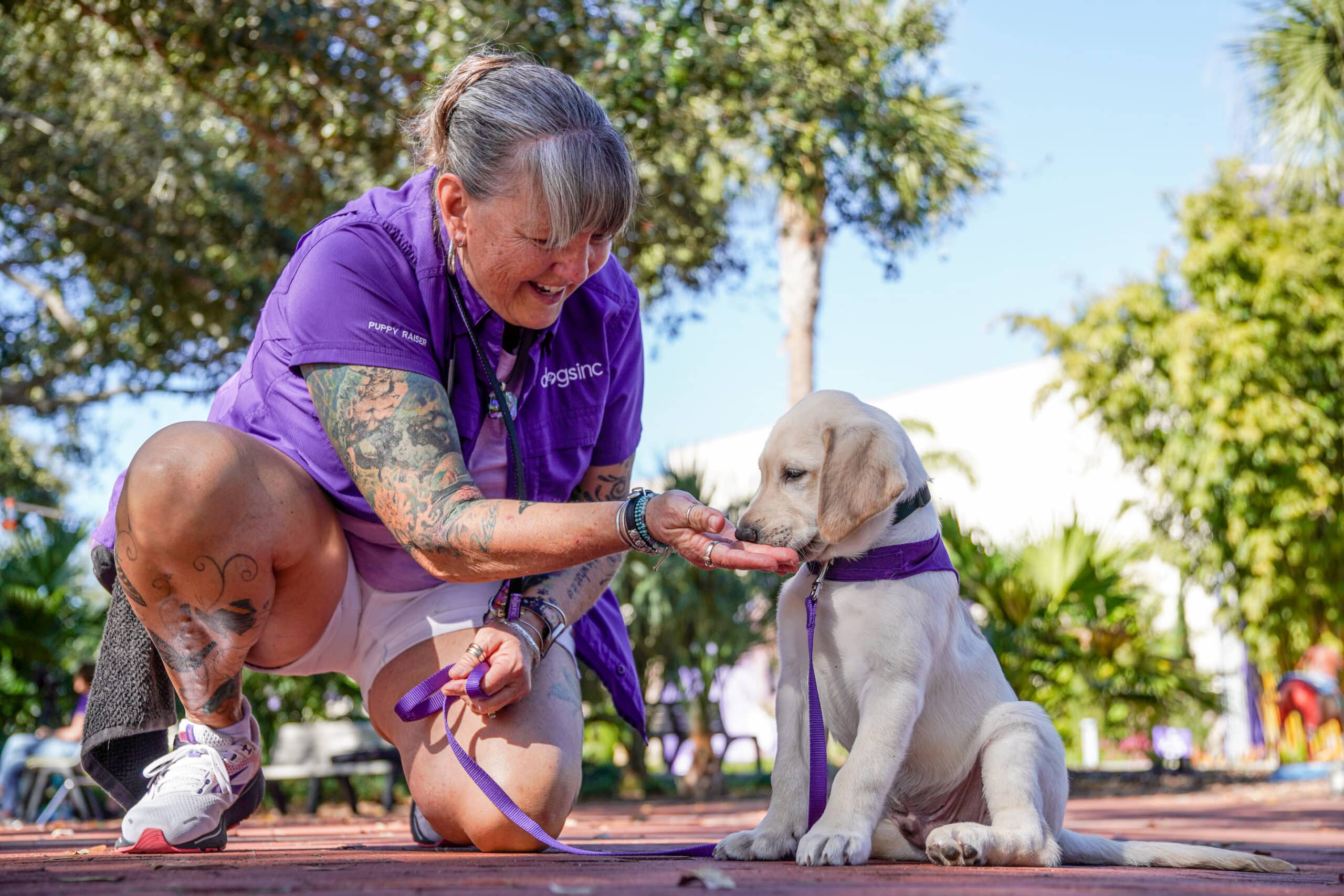
At approximately eight weeks of age, a carefully bred puppy (often breeds like Labrador Retrievers, Golden Retrievers, or German Shepherds) leaves its litter and arrives at the volunteer’s home. This period is defined by establishing a domestic routine. Raisers focus heavily on housebreaking, crate training, and introducing core mechanical cues such as "sit," "down," "stay," and loose-leash walking.
Simultaneously, early socialization begins. This is not merely about introducing the puppy to new people, but ensuring the animal remains neutral and calm in the face of novel sights, sounds, and textures. Every household noise, slippery floor, and encounter with neighborhood pets serves as a miniature training lesson.
Phase 2: Real-World Expansion (Months 4 to 12)
As the puppy matures, the training theater expands far beyond the residential perimeter. Volunteers are tasked with bringing their dogs-in-training into high-distraction public environments: grocery stores, shopping malls, public transit, and bustling restaurants.
This phase tests the puppy’s ability to maintain focus amidst sensory overload. It also tests the raiser’s diplomacy and resilience, as they must constantly manage well-meaning members of the public who want to distract, pet, or feed the working puppy—actions that strictly violate working dog protocols.
Phase 3: Adolescence and Behavioral Fine-Tuning (Months 12 to 18)
Just like human teenagers, adolescent service dog puppies experience hormonal shifts, brain re-wiring, and temporary regressions in their training. Behaviors that seemed locked-in at six months may suddenly unravel as the dog tests boundaries. During this critical window, consistency is paramount. Raisers must meticulously redirect unwanted behaviors, reinforce calm responses, and prevent the formation of bad habits that could disqualify the dog from professional work later on.
Phase 4: Graduation and Transition (Around 18 Months)
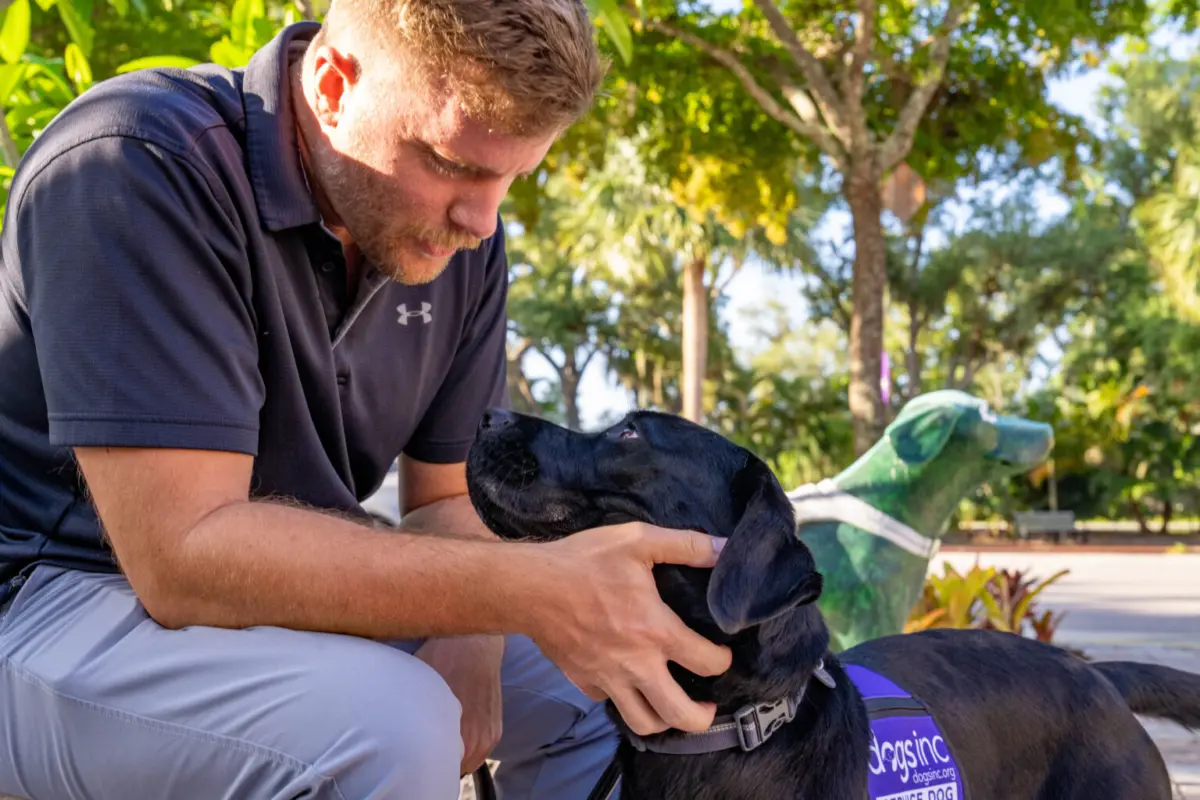
The culmination of the puppy-raising journey is arrival at the threshold of advanced formal training. The dog is recalled by organizations like Dogs Inc to enter professional training, where certified instructors teach task-specific skills tailored to assist individuals with visual impairments, mobility challenges, or other specialized needs. For the raiser, this marks the end of an intensive chapter and the emotional climax of saying goodbye.
The Six Core Challenges of Puppy Raising
1. Consistency Every Single Day
Consistency is the bedrock of animal learning theory, but maintaining it 24/7 is an immense psychological and logistical challenge. Basic cues must be reinforced during every interaction—whether walking to the mailbox, cooking dinner, or relaxing on the couch.
Furthermore, this consistency cannot exist in a vacuum. Every human resident within the household—spouses, children, roommates—must employ the exact same commands, release words, boundaries, and reward schedules. If one family member allows the puppy on the furniture while another strictly forbids it, the dog becomes confused, slowing its progression. When life throws curveballs—such as illness, professional stress, or family emergencies—the puppy’s training schedule cannot simply be paused.
Exposing a puppy to the public eye sounds pleasant in theory, but executing it smoothly is an athletic and mental feat. The public sphere is rife with chaotic variables: blaring sirens, dropped food, scurrying wildlife, erratic crowd movements, and other pet dogs (some of which may not be well-behaved or leashed).
Raisers must constantly scan the horizon to anticipate triggers before their puppy does. They must simultaneously manage the puppy’s physical positioning, monitor its emotional state, and politely yet firmly educate inquisitive strangers about why they cannot pet the dog wearing a "Do Not Disturb" vest.
3. Managing Distractions and Non-Linear Progress
Puppy training graphs do not trend upward in a straight line. A raiser might experience a week where their puppy behaves like an absolute angel, followed by a week where the dog forgets every rule it was ever taught.
Young dogs easily succumb to impulse. Training requires infinite patience to repeatedly intercept a dog lunging toward a scent, reacting to a loud noise, or breaking a stay. The raiser is not merely teaching physical compliance; they are rewiring the puppy’s emotional responses, teaching it how to self-regulate and navigate a stimulating world with quiet confidence.
4. The Relentless Time and Lifestyle Commitment
Puppy raising is a lifestyle metamorphosis. Every single routine—from sleeping patterns and exercise regimens to social outings and career obligations—must be adapted to accommodate the puppy.
The daily checklist is extensive: structured training sessions, physical exercise, mental enrichment, meal management, grooming, monitoring for medical issues, and administering preventative care like flea and tick treatments. Even though professional organizations often absorb veterinary expenses, the capital investment of time is entirely non-refundable. Raisers must reorganize their lives for well over a year to ensure a living, breathing working dog gets the comprehensive development it requires.
5. The Emotional Toll: Letting Go
Without question, the most poignant hurdle of puppy raising is the emotional parting of ways. Over the course of 12 to 18 months, an intense, reciprocal bond forms. The puppy sleeps at the foot of the bed, greets the raiser with unbounded joy every morning, and becomes an integral thread in the fabric of daily family life.
When the time arrives to return the dog for advanced training, the emotional cost is high. However, experienced raisers learn to reframe the narrative: the heartbreak of goodbye is the direct catalyst for another human being’s newfound independence, freedom, and dignity. The love invested in the puppy is not lost; it is transferred to the ultimate recipient who desperately needs that four-legged partner to navigate the world safely.
6. Turning the Home into a 24/7 Training Facility
When a volunteer takes on a future service dog, their private residence ceases to be a casual sanctuary and officially transforms into an active training facility. There is very little "off" time. Raisers must perpetually monitor their environment—keeping counters clear of dropped items, managing doorways to prevent bolting, utilizing crates to enforce healthy rest cycles, and consciously guiding every single interaction the puppy has within the four walls of the home.
Supporting Context & Metrics: The Broader Ecosystem
To contextualize the gravity of volunteer puppy raising, one must look at the macro-level impact on the assistance dog industry.
Attrition Rates: Industry-wide, only a percentage of dogs that start puppy raising ultimately graduate as fully certified service dogs. Factors range from minor orthopedic disqualifications to subtle temperament traits (such as excessive environmental sensitivity or low drive) that make a dog unsuited for public working life. This makes the foundational work of raisers even more vital—maximizing every puppy’s potential while accepting that biology and temperament ultimately dictate the final outcome.
Economic Value: The financial investment required to breed, vet, feed, and professionally train a single service dog often exceeds tens of thousands of dollars. Volunteer puppy raisers donate hundreds of hours of labor, free room and board, and intensive socialization, representing a multi-billion-dollar grassroots contribution to the disability community globally.
Demographics of Volunteers: Organizations report that modern puppy raisers span a remarkably diverse cross-section of society. From retired empty-nesters with flexible schedules to college students learning animal husbandry, and multi-generational families teaching children the value of civic contribution, the profile of a successful raiser is defined less by lifestyle and more by dedication, coachability, and empathy.
Official Perspectives and Support Systems
Organizations that spearhead service dog training recognize that burning out their volunteer base is the single greatest threat to their mission. Consequently, robust support ecosystems have been engineered to shepherd raisers through the inevitable turbulence of the developmental timeline.
According to leadership across major assistance dog training networks, the relationship between the organization and the volunteer is symbiotic:
"A puppy raiser is never expected to navigate this journey alone. We provide structured curricula, certified instructors, and dedicated area coordinators who act as coaches, troubleshooters, and emotional anchors. The community of fellow raisers forms a powerful safety net of shared wisdom, empathy, and practical help—including specialized programs for temporary puppy-sitting when personal emergencies or vacations arise."
These networks ensure that while the physical work happens inside a single home, an entire community stands behind every leash. Regional support groups meet regularly for group walks, obedience workshops, and peer-to-peer encouragement, transforming what could be an isolating burden into a shared cultural movement.
Future Outlook: The Enduring Legacy of a Volunteer’s Labor
As societal awareness regarding accessibility, mental health, and physical inclusion expands, the demand for qualified service dogs, guide dogs, and facility dogs vastly outstrips the current supply. The future of the assistance dog industry relies entirely on recruiting, training, and retaining passionate volunteer puppy raisers.
Innovations in behavioral tracking, online education portals for raisers, and data-driven puppy matching algorithms are modernizing how organizations support their volunteers. Yet, at its core, the practice remains fundamentally human. It relies on the willingness of ordinary people to open their hearts, disrupt their routines, and dedicate months of tireless labor to an invisible stranger’s future independence.
The challenges—ranging from public distractions and relentless scheduling to the inevitable tears shed on graduation day—are profound. But so is the ripple effect. Every dog that successfully transitions from a volunteer’s living room to a working harness represents a triumph of community, compassion, and commitment.
For those considering taking the plunge into the world of service dog puppy raising, organizations like Dogs Inc invite prospective volunteers to look past the vest, weigh the rigorous demands, and take the initial steps toward shaping a future defined by hope, freedom, and boundless capability.