Executive Overview
In an era defined by compounding global ecological emergencies, the intersection of art, activism, and investigative journalism has never been more vital. Enter Michael Zelniker—a lifelong environmentalist, award-winning actor, and filmmaker whose career spans more than three decades across film, television, and international theater stages. Following a profound pivot toward full-time climate advocacy, including a two-and-a-half-year tenure as Co-Chair of the Los Angeles chapter of the Climate Reality Project’s Leadership Corps, Zelniker has trained his creative lens on one of the planet’s most critical yet overlooked ecosystems: Canada’s Boreal Forest.
His latest masterwork, the critically acclaimed feature documentary “The Issue with Tissue — A Boreal Love Story,” alongside an expansive, newly released six-part documentary series of the same name, offers an immersive deep dive into an ethereal northern landscape. More importantly, it sounds an urgent alarm regarding the industrial exploitation threatening its survival. Written, produced, and directed by Zelniker, the project uncovers a jarring paradox: ancient, irreplaceable old-growth forests are routinely clear-cut and pulverized to manufacture everyday single-use paper products, most notably household toilet paper.
To bring this sweeping narrative to light, Zelniker embarked on an arduous 42-day, 12,000-mile cross-country expedition, collaborating closely with Indigenous leaders, frontline scientists, and environmental organizations—most notably the National Audubon Society. In the following exclusive dialogue, Dr. Jeff Wells, Audubon’s Vice President of Boreal Conservation, sits down with Zelniker to discuss the genesis of the project, the profound ecological stakes of Boreal preservation, the revelations uncovered during production, and the awakening of a filmmaker’s inner birder.
Detailed Chronology: From Montreal Summers to a Continental Quest
Roots in the Southern Boreal
Michael Zelniker’s journey as an environmental storyteller did not begin in a Hollywood boardroom; it was forged in the crisp air of his childhood. Born and raised in Montreal, Quebec, Zelniker spent his formative summers approximately 100 miles north of the city. Little did he know at the time, these retreats were situated along the rugged southern fringe of the immense Canadian Boreal Forest. These formative encounters instilled in him a deep, visceral bond with the coniferous woodlands, pristine lakes, and sprawling wilderness of his native Canada.
For decades, Zelniker pursued a successful international career in the performing arts. Yet, as the global climate crisis escalated, his lifelong environmental ethos demanded a more direct intervention. Stepping away from the traditional confines of commercial entertainment, he committed himself fully to climate action. By 2018, he had completed the Climate Reality Project’s rigorous training, eventually taking on a leadership role that positioned him at the vanguard of grassroots environmental organizing in Southern California.
The Spark of an Investigation
The transition from climate activist to environmental filmmaker crystallized when Zelniker stumbled upon a chilling industrial reality: massive tracts of Canada’s irreplaceable Boreal Forest were—and still are—being clear-cut, chipped down, and chemically processed into consumer tissue products. For Zelniker, the realization was staggering.
"Having grown up in Montreal, spending summers about 100 miles north of the city in what I now know is the southern edge of the Boreal, I felt deeply bonded to these forests," Zelniker reflects. "So, when I learned that the Boreal was being cut down for the manufacture of toilet paper and other tissue products, I could hardly think of a more obscene example for what’s gone wrong. And I wanted to make people aware of what was happening."
Driven by a mix of moral urgency and investigative curiosity, Zelniker began scouring conservation websites for authoritative voices on the biome. His research led him to the Boreal Songbird Initiative and subsequently to Dr. Jeff Wells, Audubon’s Vice President of Boreal Conservation. What began as a cold outreach blossomed into an invaluable mentorship and partnership. Wells provided Zelniker with comprehensive scientific context, introduced him to critical Indigenous land defenders, and connected him with the scientific networks tracking the industrial degradation of the north.
The 12,000-Mile Odyssey
Armed with institutional knowledge and a profound sense of purpose, Zelniker launched into the production phase of his grand vision. Flying from his home base in Los Angeles to Vancouver, he embarked on a grueling 42-day, 12,000-mile transcontinental expedition. Traveling from coast to coast across the vast expanse of the Boreal, he conducted in-depth interviews with more than 50 First Nations Elders and leaders, prominent field scientists, and frontline activists.
Rather than relying on sterile data points, Zelniker prioritized human narratives, allowing his subjects to articulate the ecological and cultural stakes with unflinching candor and intimacy. This monumental undertaking resulted in two distinct masterworks: a celebrated feature-length documentary film that toured film festivals, universities, and theaters across North America and Europe to critical acclaim, and a comprehensive, newly minted six-part documentary series.
Supporting Context & Metrics: Why the Boreal Forest Matters
To fully grasp the magnitude of Zelniker’s project, one must understand the ecological weight of the Boreal Forest. Often described by casual observers simply as a dense carpet of trees, the Boreal is, in reality, a planetary life-support system of staggering proportions.
The Lungs of the Planet and Carbon Vault
During his research, Zelniker underwent a profound shift in perspective regarding his homeland’s greatest natural asset. As he openly admits: "It wasn’t until I began working on this project that I learned just how vitally important an ecosystem the Boreal is—and I grew up in Canada!"
Echoing this sentiment in the documentary, Elder Dave Porter of the Kaska First Nation offers a defining metaphor: "The Boreal Forest is the lungs of the planet."
Scientifically speaking, this description is entirely accurate. The Boreal biome stores monumental quantities of carbon—significantly more per acre than tropical rainforests—locking it safely away within its mature trees, peatlands, bogs, and underlying permafrost. When industrial loggers clear-cut these old-growth stands for pulp and paper, vast amounts of sequestered carbon are released back into the atmosphere, accelerating global climate change at the exact moment humanity needs natural carbon sinks to remain intact.
America’s Ultimate Bird Nursery
Beyond its role as a premier global carbon vault, the Canadian Boreal functions as an irreplaceable sanctuary for wildlife. It serves as the primary habitat for iconic northern species, including woodland caribou, wolverines, wolves, and grizzly bears.
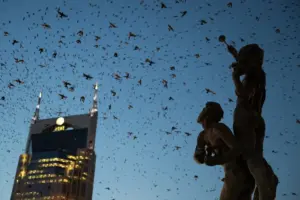
Most notably, the Boreal is internationally celebrated as "America’s bird nursery." Approximately two billion birds—representing hundreds of distinct species—migrate north every spring to breed and nest within the absolute safety of the undisturbed Boreal wilderness. In the autumn, an astounding five billion birds journey southward along major flyways across North and South America. Without the continuous expanse of the Boreal forest, populations of songbirds, waterfowl, and raptors face catastrophic declines.
An Ancient Indigenous Homeland
Perhaps the most critical dimension of the Boreal Forest—and one that “The Issue with Tissue” addresses with profound reverence—is its status as an ancestral homeland. The biome is intertwined with the history, culture, and sovereignty of more than 600 First Nations communities, many of whom have inhabited, managed, and protected these lands for thousands of years. The health of the forest is inextricably linked to the cultural survival, dietary sovereignty, and self-determination of these Indigenous peoples.
Official Statements & Dialogue
Jeff Wells: Where did the idea of creating a documentary on the Boreal Forest come from? What motivated you to make it?
Michael Zelniker: Having grown up in Montreal, spending summers about 100 miles north of the city in what I now know is the southern edge of the Boreal, I felt deeply bonded to these forests. So, when I learned that the Boreal was being cut down for the manufacture of toilet paper and other tissue products, I could hardly think of a more obscene example for what’s gone wrong. And I wanted to make people aware of what was happening.
Jeff Wells: Why do you think the Boreal is worth protecting? Why should people care about what happens there?
Michael Zelniker: It wasn’t until I began working on this project that I learned just how vitally important an ecosystem the Boreal is—and I grew up in Canada! As Elder Dave Porter, Kaska First Nation, says in the film: "The Boreal Forest is the lungs of the planet." It stores more carbon than any other terrestrial landscape, it is home to iconic species like caribou, wolverines and bears. It is the America’s bird nursery, as approximately 2 billion birds nest in the Boreal every year, as many as 5 billion migrate south in the fall. Perhaps most importantly, it is home to more than 600 First Nations communities, a place they’ve called home for many thousands of years.
Jeff Wells: Can you share a little about the experience you had while making the documentary?
Michael Zelniker: Flying from my home in Los Angeles to Vancouver, I embarked on a 42-day, 12,000-mile journey from coast to coast across the Boreal, meeting with more than 50 First Nations Elders and leaders, scientists and activists, all who opened their hearts and shared their stories with stunning candor and intimacy. The result is a 6-part, 5-hour documentary series that is now available to stream on various platforms.
Jeff Wells: There was also a documentary film, correct?
Michael Zelniker: Yes. The acclaimed feature-length version just completed a run across North America and Europe screening in theaters, at film festivals and universities, garnering Best Documentary Feature nominations along with a treasure trove of great reviews.
Jeff Wells: Any final words you want to share with Audubon members and supporters?
Michael Zelniker: I hope you will watch our series. Among the many themes The Issue with Tissue explores, is a delightful segment on birds. At every step of the filmmaking process, Audubon and especially you, Jeff, have been an indispensable supporter and partner, for which I will forever be grateful. But I’m also grateful to you and Audubon because you were responsible for unleashing my inner birder. I’m now the proud owner of a great pair of binoculars and birding has become an important part of my life.
Future Outlook: The Path Forward for Boreal Conservation
As the global conversation surrounding sustainable consumption intensifies, Michael Zelniker’s multi-platform documentary project arrives as a timely wake-up call. The widespread availability of “The Issue with Tissue — A Boreal Love Story” across major streaming networks marks a crucial turning point in bringing northern conservation issues into mainstream living rooms.
Shifting Consumer Consciousness
The central thesis of Zelniker’s work challenges the complacency of modern consumers. By tracing the direct line from supermarket shelves stocked with ultra-soft facial and bathroom tissue back to the clear-cutting of ancient Canadian old-growth forests, the film disrupts the disconnect between everyday convenience and ecological destruction. Environmental analysts hope that increased public awareness will spur sweeping corporate supply-chain reforms, compelling major pulp and paper conglomerates to transition toward recycled fibers and truly sustainable forestry practices.
Strengthening Indigenous-Led Conservation
A cornerstone of the movement to protect the Boreal is the recognition of Indigenous-led conservation initiatives. Across Canada, First Nations are stepping forward to establish Indigenous Protected and Conserved Areas (IPCAs), reclaiming stewardship over their traditional territories. Projects like Zelniker’s amplify these voices, ensuring that global audiences understand that true conservation cannot occur without the leadership, consent, and active participation of the Indigenous peoples who have guarded these ecosystems for millennia.
An Invitation to Action
Ultimately, “The Issue with Tissue” transcends the traditional bounds of environmental exposé; it is an invitation to fall in love with the natural world and take personal responsibility for its defense. Whether through adopting sustainable paper alternatives, supporting Indigenous land rights, or—like Michael Zelniker—picking up a pair of binoculars to witness the miraculous avian biodiversity sustained by the north, every individual possesses the agency to effect change.
The Boreal Forest stands at a critical crossroads. Through the dedication of visionary artists, rigorous scientists, and steadfast grassroots organizations, the narrative surrounding this irreplaceable landscape is shifting from one of quiet exploitation to one of fierce, collective protection.
Stream the Series Today
You can watch the documentary series "The Issue with Tissue — A Boreal Love Story" now on these premier digital platforms: