
Executive Overview
In a celebration that marries artistic vision with environmental advocacy, the National Audubon Society has officially unveiled the victors of the prestigious 2026 Audubon Photography Awards. Now in its seventeenth consecutive year, this globally recognized competition serves as a vital cultural and scientific touchstone, capturing the breathtaking beauty, delicate behaviors, and unyielding resilience of bird life across the Western Hemisphere. Beyond showcasing elite artistic merit, the winning imagery and videos play an indispensable role in articulating the broader, urgent narrative of hemispheric bird conservation—reminding the public of the fragile ecosystems that sustain avian populations from the sub-Arctic tundras down to the southernmost tips of Patagonia.
Marking its second year of an expanded international framework, the competition once again evaluated entries not only from the United States and Canada, but also from residents of Chile and Colombia. This deliberate geographic expansion underscores a fundamental ecological truth: birds do not recognize human borders. They connect diverse human communities across vast distances, shared flyways, and interconnected ecosystems.
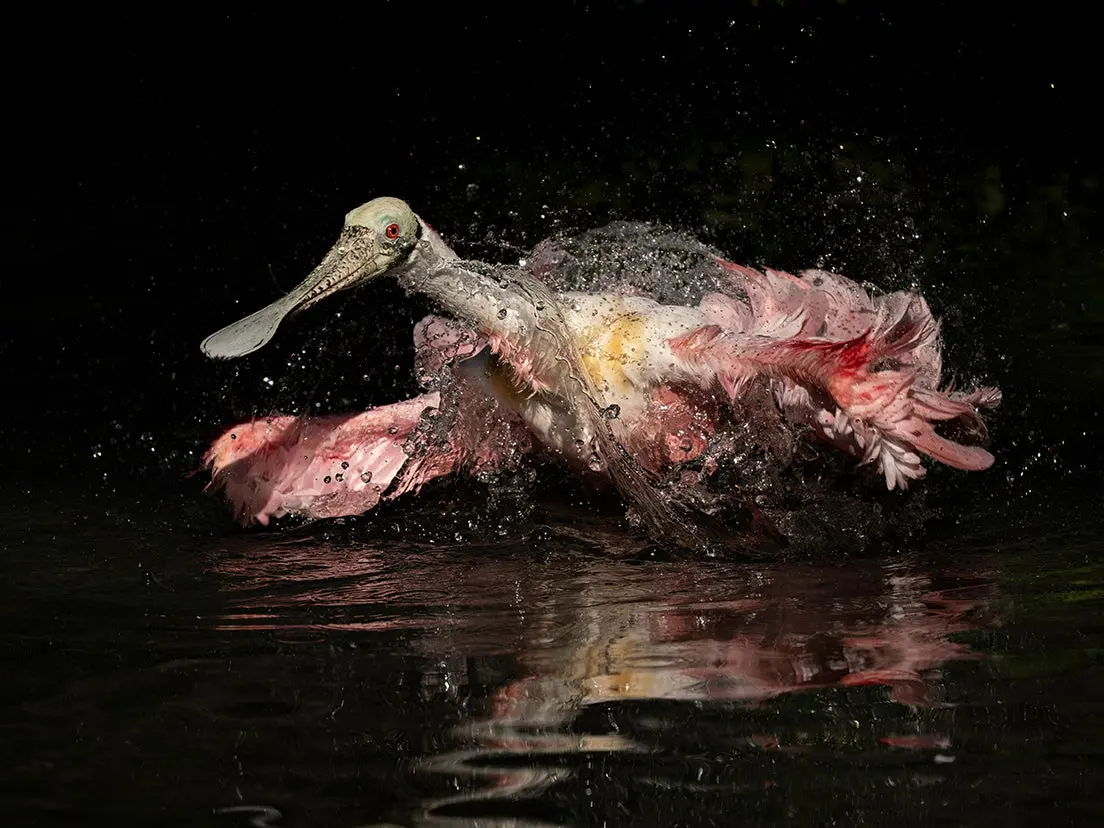
At the pinnacle of this year’s U.S. and Canada contest sits a mesmerizing, grand prize-winning portrait of a strikingly pink Roseate Spoonbill, captured against the verdant backdrop of the St. Augustine Alligator Farm Zoological Park in St. Augustine, Florida. Photographed by Jacqueline Burke, the image encapsulates both the vibrant allure of the species and the complex realities of wildlife conservation in the American Southeast.
Burke’s top-tier win is complemented by a rich roster of regional talent. Fellow Floridian Peter Brannon earned an Honorable Mention in the Female Bird category for his evocative capture of a Common Nighthawk in Tampa, while Gainesville resident Xiao Hu secured an Honorable Mention for a hauntingly crisp video of a Barred Owl recorded in the woodlands of Virginia.
As these stunning visual testaments go to print in the Fall 2026 issue of Audubon magazine, they arrive paired with a profound historical legacy. The celebration of the Roseate Spoonbill this year serves as a poignant reminder of the National Audubon Society’s deep-rooted commitment to avian research—a tradition dating back to 1939, when pioneering researchers first traded lethal collection methods for patient, field-based ecological observation in the remote mangrove thickets of the Florida Keys. Today, as climate change, habitat fragmentation, and shifting hydrological flows threaten the delicate balance of the Everglades, these photographic masterpieces do more than simply delight the eye; they serve as a clarion call for the ongoing defense of our natural world.
Detailed Chronology
To fully understand the weight and cultural resonance of the 2026 Audubon Photography Awards, one must trace the convergence of modern digital wildlife storytelling and nearly a century of rigorous ecological science. The timeline of this year’s accolades, paired with the historical evolution of spoonbill research, illustrates a continuous, evolving relationship between humans and birds.
[1939] Establishment of Audubon Everglades Research Station; Robert Porter Allen begins tent-based spoonbill studies.
  │
  ▼
[2026 (Jan)] Opening and subsequent closing of submissions for the 17th Annual Audubon Photography Awards.
  │
  ▼
[2026 (Today)] National Audubon Society officially announces the 2026 winners across international divisions.
  │
  ▼
[2026 (Sep 23)] Scheduled announcement of the annual Top 100 photographs globally.
  │
  ▼
[2026 (Fall)] Publication of Grand Prize and category winners in the print issue of Audubon magazine.
  │
  ▼
[2027 (Jan 13)] Official opening of submissions for the 2027 Audubon Photography Awards.
From Historical Specimen Collection to Non-Invasive Observation
The narrative thread connecting today’s digital shutterbugs to historical conservation pioneers begins decades before the invention of high-speed telephoto lenses. In 1939, the National Audubon Society—under the leadership of its first director of research, Robert Porter Allen—established the Audubon Everglades Research Station (ERS) deep within the labyrinthine islands of the Florida Keys.
At that historical juncture, avian science was dominated by a fatal methodology. Ornithologists seeking to understand avian diet, physiology, and taxonomy routinely collected specimens by shooting them, subsequently dissecting their stomach contents in laboratories. However, when Allen turned his scientific gaze toward the Roseate Spoonbill, he encountered a population pushed to the precipice of extinction by the plume trade and habitat loss. The birds were simply too scarce to sustain any lethal collection practices.
Driven by necessity, Allen pioneered a revolutionary non-invasive approach. He packed a tent, a field notebook, and sparse provisions, setting up camp directly among the spoonbills. For weeks at a time, he lived among the wading birds, documenting their courtship dances, chick-rearing behaviors, nesting site selections, and day-to-day survival strategies without firing a single shot. Allen’s field-based methodology transformed how scientists studied birds globally, laying the groundwork for modern behavioral ecology. More importantly, his endurance established a continuous, unbroken legacy of data spanning more than 85 years—a priceless scientific archive tracking the population dynamics of the Roseate Spoonbill and the shifting health of its fragile coastal habitats.
The Evolution of the Photography Awards
Fast-forwarding through the decades, the rapid democratization of high-resolution digital cameras and telephoto optics birthed a new era of non-invasive wildlife documentation. Recognizing the immense power of imagery to mobilize public sentiment for conservation, the National Audubon Society launched its annual photography competition seventeen years ago.
Over the years, the contest has grown from a modest domestic showcase into an international phenomenon. By expanding the eligibility criteria in recent years to include residents of South American biodiversity hotspots like Chile and Colombia, the awards have mirrored the transnational migration paths of neotropical migratory birds.
The 2026 cycle followed a rigorous multi-month judging process, evaluating thousands of entries from amateur naturalists, youth photographers, and seasoned professionals alike. Evaluated on technical proficiency, originality, and the emotional resonance of the subject matter, the final pool of winners demonstrates how modern visual storytelling continues the mission that Robert Porter Allen began in a canvas tent in the Florida Keys nearly a century ago: making the invisible visible, and making the vulnerable impossible to ignore.
Supporting Context & Metrics
The triumph of Jacqueline Burke’s grand-prize-winning Roseate Spoonbill photo is more than a win for artistic composition; it is an entry point into complex ecological metrics concerning water management, avian geography, and environmental persistence.
The Metrics of Conservation: ERS and Everglades Hydrology
Today, researchers stationed at the Audubon Everglades Research Station (ERS) operate at the intersection of avian biology and massive civil engineering. The primary metrics tracked by modern ERS scientists include:
- Nesting Success Rates: Monitoring the number of fledglings successfully raised per breeding pair each season, serving as a key bio-indicator of local prey availability (primarily small fish like killifish and topminnows).
- Colony Shifting: Tracking the abandonment or formation of traditional spoonbill rookeries in Florida Bay, which react sensitively to hyper-salinity spikes caused by water retention and diversion upstream.
- Freshwater Flow Dynamics: Measuring the volume, timing, and purity of freshwater entering the mangrove estuaries from the central Everglades agricultural basins.
For decades, the artificial redirection of freshwater for agricultural and urban development starved Florida Bay of the delicate brackish conditions required to maintain dense forage-fish populations. When freshwater flows fail, spoonbills experience nesting failures, forcing scientists and conservationists to lobby government agencies for restored sheet-flow across the River of Grass.
Prize Packages and Global Reach
The scale of the Audubon Photography Awards is reflected not only in its ecological impact, but also in the material support provided to its victors.
┌─────────────────────────────────────────────────────────────┐
│                 2026 PRIZE STRUCTURE BREAKDOWN              │
├──────────────────────────┬──────────────────────────────────┤
│ Category / Award         │ Prize / Recognition              │
├──────────────────────────┼──────────────────────────────────┤
│ U.S. / Canada Grand Prize│ $5,000 USD + Antarctic Voyage    │
│                          │ (Provided by HX Expeditions)     │
├──────────────────────────┼──────────────────────────────────┤
│ Honorable Mentions       │ Featured in Digital Galleries &  │
│                          │ Print Magazine Fall 2026 Issue   │
├──────────────────────────┼──────────────────────────────────┤
│ Top 100 Global Photos    │ Curated Digital & Print Showcase │
│                          │ (Announced Sept 23, 2026)        │
└──────────────────────────┴──────────────────────────────────┘
By partnering with organizations like HX Expeditions to offer an immersive voyage to Antarctica for the Grand Prize winner, the awards incentivize photographers to push their artistic boundaries while connecting them directly to the most remote and awe-inspiring ecosystems on the planet.
Official Statements
The announcement of the 2026 winners brought forth impassioned commentary from leadership across the conservation community, highlighting the cultural significance of the awards and the iconic nature of the species involved.
Julie Wraithmell, Executive Director of Audubon Florida, shared her enthusiasm regarding the statewide representation in this year’s winner circle:
"Audubon Florida is thrilled to see such an iconic Florida bird, the Roseate Spoonbill, featured in a grand prize-winning photo. Congratulations to Jacqueline Burke for winning the grand prize in the U.S. and Canada, and also to Florida residents Peter Brannon and Xiao Hu for their honorable mentions in this year’s Audubon Photography Awards."
Wraithmell’s remarks emphasize the unique pride Floridian conservationists take in the Roseate Spoonbill—a bird whose bubblegum-pink plumage, comical spatulate bill, and sweeping foraging motions make it an ambassador for the fragile wetlands of the American subtropics.
While official statements from individual international winners, such as Chilean and Colombian participants, continue to trickle in through regional Audubon channels, the collective sentiment of the judges echoes a singular theme: imagery is the vanguard of empathy. By capturing fleeting moments of avian life—whether it is a spoonbill preening in the warm light of a St. Augustine sanctuary, a Common Nighthawk blending seamlessly into urban timber in Tampa, or a Barred Owl silently hunting in a Virginian forest—these photographers grant the public a profound window into a wild world that urgently requires our stewardship.
Future Outlook
As the dust settles on the announcement of the 2026 victors, the National Audubon Society is already casting its gaze toward the horizon, ensuring that the momentum of this year’s competition flows seamlessly into future initiatives.
Upcoming Milestones for the 2026 Cycle
The journey of the 2026 Audubon Photography Awards is far from over. Key dates on the immediate calendar include:
- September 23, 2026: The official public release of the annual Top 100 photographs, a curated online gallery showcasing the absolute finest works submitted from across the globe.
- Fall 2026: The physical distribution of the Fall print issue of Audubon magazine, bringing the grand prize and category-winning imagery into the homes, classrooms, and libraries of hundreds of thousands of members and subscribers.
Looking Ahead to the 2027 Competition
For aspiring photographers, naturalists, and conservationists looking to follow in the footsteps of Jacqueline Burke, Peter Brannon, and Xiao Hu, the timeline for the next iteration is already locked in.
The 2027 Audubon Photography Awards will officially open for submissions on January 13, 2027. The competition will once again welcome entries across distinct regional frameworks, including dedicated portals for the U.S. and Canada contest, as well as the specialized Chile and Colombia tracks designed to foster deeper pan-American conservation dialogues.
Interested participants are encouraged to consult Audubon’s official web portals for comprehensive submission guidelines, technical specifications, ethical wildlife photography standards (which prioritize the welfare of birds above obtaining a shot), and entry deadlines.
As climate pressures mount and habitats face unprecedented anthropogenic threats, programs like the Audubon Photography Awards will remain indispensable. They prove that art and science are not mutually exclusive pursuits, but rather twin pillars supporting a shared mission: ensuring that future generations can still witness, hear, and marvel at the breathtaking flight of birds across a connected hemisphere.