
Executive Overview
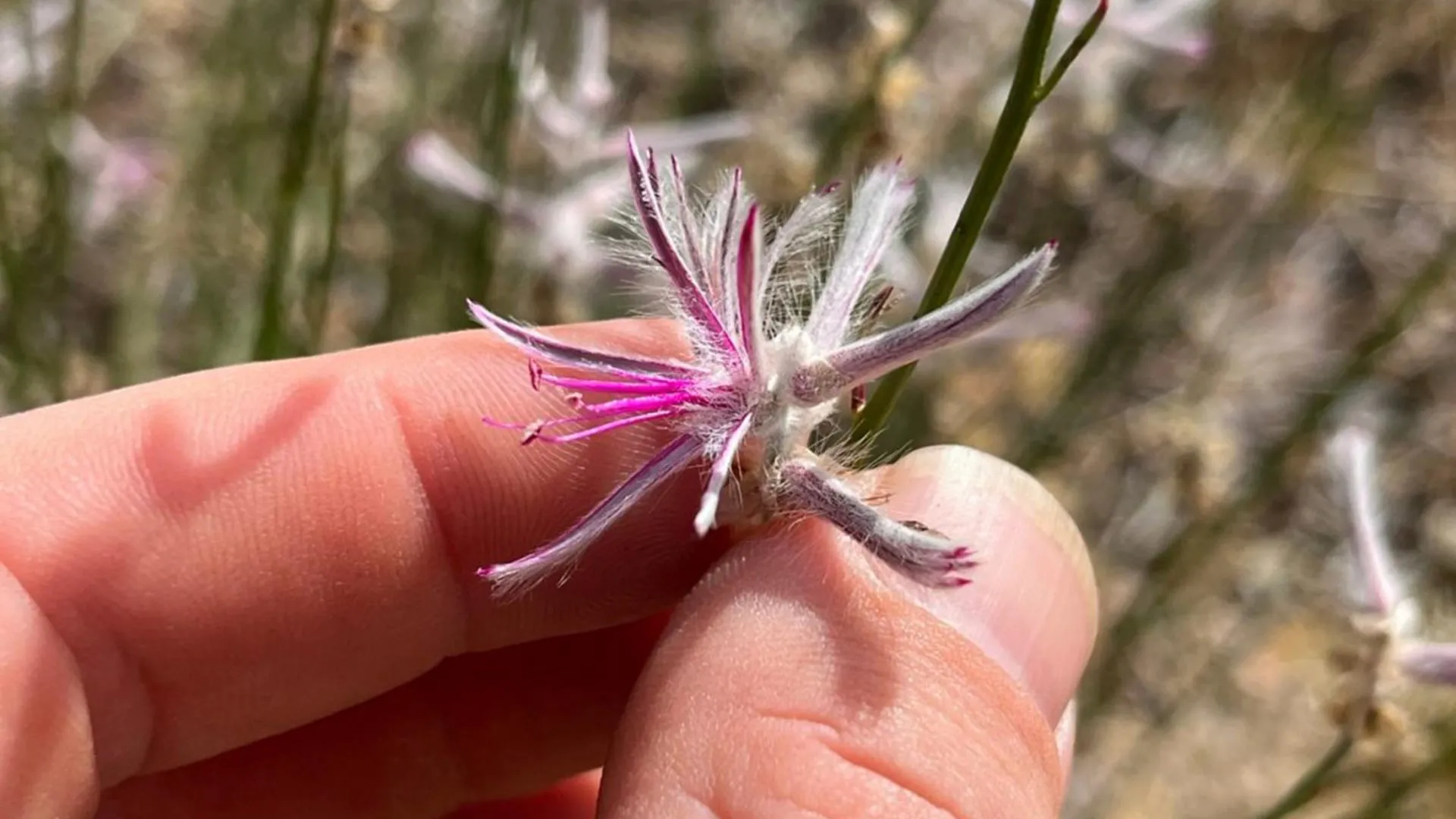
In the vast, sun-baked expanse of Australia’s remote north, the margins between extinction and survival are often measured by a matter of meters and a stroke of profound fortune. For nearly six decades, Ptilotus senarius—a delicate, remote-dwelling shrub featuring striking purple-pink blossoms that mimic the flash of miniature feathered fireworks—existed only as pressed, brittle specimens in institutional herbariums and as a fading memory in the minds of the botanists who first cataloged it. Unseen since 1967, the plant was widely presumed to have joined the grim global tally of roughly 900 plant species driven to absolute extinction since the 1750s.
Yet, in a testament to the modern convergence of digital technology, amateur observation, and rigorous taxonomic science, Ptilotus senarius is alive.
The Lazarus-like rediscovery of the shrub began not with a heavily funded, multi-year government expedition into the rugged terrain near the Gulf of Carpentaria, but with the casual tap of a smartphone screen. Aaron Bean, a professional horticulturalist assisting with avian field research on a sprawling outback pastoral lease in Queensland, noticed an unusual botanical specimen interrupting the harsh landscape. He captured a few photographs with his phone and, upon returning to an area with cellular service, uploaded the imagery to iNaturalist, a globally utilized citizen-science platform.
That routine upload cascaded into an extraordinary scientific chain reaction. Among the millions of data points crowding the platform’s servers, the images caught the eye of Anthony Bean, a senior botanist at the Queensland Herbarium—who happened to be the very scientist who originally described the species a decade prior to its disappearance. Working in tandem with the local property owner, researchers secured physical verification, officially dragging Ptilotus senarius back from the precipice of extinction and reclassifying it as critically endangered.
This watershed moment underscores a fundamental paradigm shift in contemporary biodiversity research. As professional scientists face severe funding constraints, vast geographical expanses, and restricted access to private terrain, everyday citizens are stepping into the breach. Armed with digital cameras and GPS-enabled devices, amateur naturalists are transforming the front lines of conservation, proving that groundbreaking ecological discoveries are no longer the exclusive purview of academic institutions—they are waiting in the backyard of anyone willing to look closely.
Detailed Chronology: Anatomy of a Modern Botanical Discovery
To understand how a species lost for nearly sixty years was pulled from the shadows of history, one must retrace the improbable series of events that bridged the gap between an outback Queensland property and the peer-reviewed pages of the Australian Journal of Botany.
Phase 1: The Outpost Encounter
The narrative unfurls on a sprawling, privately owned pastoral property situated within the unforgiving, rugged terrain near the Gulf of Carpentaria in northern Australia. Aaron Bean, an avid user of the iNaturalist platform and a professional horticulturalist by trade, was on-site assisting researchers with banding wild birds. Amidst the demanding field labor, his trained horticultural eye snagged on an unfamiliar plant structure.
Unlike the scrubby, hyper-adapted flora common to the region, this specimen featured captivating, vibrant purple-pink inflorescences reminiscent of microscopic, feathered fireworks. Recognizing that the plant looked distinct from the regional baseline, Bean exercised a habit common among modern field naturalists: he pulled out his mobile device, framed the plant against its natural backdrop, and recorded its geographic coordinates via the phone’s internal GPS.
Phase 2: The Digital Relay
Outback Australia is famously untamed, characterized by sprawling horizons and notorious dead zones in telecommunications infrastructure. For days, Bean’s observations remained sequestered on his device, waiting for a connection. Once his duties brought him back within the reach of a mobile network signal, Bean opened the iNaturalist application and uploaded the digital files to the global database.
This seemingly mundane act of data synchronization cast the observation into a vast, decentralized ocean of global biodiversity data, where thousands of artificial intelligence algorithms, amateur enthusiasts, and professional taxonomists trawl daily for anomalies.
Phase 3: The Serendipitous Match
Within the ecosystem of iNaturalist, photographs are subjected to community identification and expert review. By statistical probability, Bean’s upload could have languished for months, misidentified or overlooked among the millions of submissions flooding the platform weekly. Instead, the images migrated across the digital ether until they landed squarely in the digital lap of Anthony Bean, a veteran botanist at the Queensland Herbarium.
The encounter was dripping with irony and professional destiny. Anthony Bean was not merely a random taxonomist browsing the feed; he was the primary scientific authority on the genus, having formally described and named Ptilotus senarius decades prior, long before digital platforms existed. Looking at the high-resolution images on his screen, the botanist experienced immediate recognition. The delicate floral structure, the leaf morphology, and the subtle growth habits matched the type specimen locked away in the herbarium archives—a specimen collected and studied when Lyndon B. Johnson was in the White House and the Beatles were topping the charts.
Phase 4: Verification and Reclassification
An online photograph, no matter how clear, is rarely enough to rewrite taxonomic history. To satisfy the rigorous standards of modern science, physical evidence is required. Recognizing the gravity of the potential find, the scientific machinery swung into action.
Researchers coordinated with the owner of the private property where the original photographs were taken. With the landowner’s explicit permission and active cooperation, a physical botanical specimen was legally and carefully harvested from the population. This voucher specimen was transported to the Queensland Herbarium, where Anthony Bean and his colleagues subjected it to exhaustive morphological and taxonomic analyses.
The physical examination confirmed what the digital image suggested: Ptilotus senarius was extant. The formal documentation of the rediscovery was subsequently authored by Thomas Mesaglio of the UNSW School of Biological, Earth and Environmental Sciences, and published in the Australian Journal of Botany, officially retiring the "extinct in the wild" status and shifting the species into the critically endangered tier.
Supporting Context & Metrics: The Scale of the Crisis and the Digital Cure
The resurrection of Ptilotus senarius is not merely an isolated heartwarming anecdote; it is a vital data point in a much larger narrative concerning the health of global biodiversity and the evolution of conservation science.
The Global Extinction Ledger
To grasp the magnitude of finding a "lost" plant, one must contextualize the baseline trajectory of modern flora. According to international botanical assessments, roughly 900 plant species have vanished entirely from the wild across the globe since the 1750s. This silent, sweeping botanical attrition often occurs entirely unheralded, overshadowed by the high-profile losses of charismatic mammalian megafauna. Plants form the foundational trophic layers of terrestrial ecosystems; when a single plant species blinks out of existence, it frequently takes down an entire micro-web of dependent insects, fungi, and avian life.
When a species goes unrecorded for decades—in this case, nearly 60 years—it crosses an invisible threshold where conservationists prepare administrative obituaries. Ptilotus senarius was drifting rapidly toward that permanent ledger. Its miraculous recovery proves that extinction pronouncements are occasionally premature, kept at bay only by the sheer, unmapped expanse of wilderness that humans have yet to adequately survey.
The Tyranny of Distance: Why Australia Needs Citizen Science
Australia presents a unique logistical nightmare for traditional, institutional field biology. The continent-nation spans a massive landmass characterized by extreme climatic conditions, sparse human populations in regional sectors, and vast tracts of absolute wilderness. It is financially and physically impossible for government departments or university departments to maintain the personnel required to comprehensively survey every hectare of the continent.
Compounding this geographical barrier is the issue of land tenure. Approximately one-third of the entire Australian continent consists of privately owned land—comprising massive pastoral leases, family-owned agricultural holdings, and private estates. Academic researchers cannot simply walk onto these properties to conduct ecological sweeps without complex legal permissions, trespassing clearances, and the explicit buy-in of local landowners.
This is precisely where citizen science alters the equation. As Thomas Mesaglio noted during his commentary on the discovery, platforms like iNaturalist decentralize the boots-on-the-ground labor.
- Unlocking Private Lands: When a landowner, a farm manager, or a localized professional like Aaron Bean walks their property, they hold privileged access to geographies that academic scientists may never see in a lifetime.
- Multiplication of Effort: Instead of funding a dozen botanists for a multi-million-dollar expedition into the Gulf of Carpentaria, modern technology harnesses the passive observations of thousands of individuals who are already embedded in these remote landscapes for work or recreation.
The Rise of iNaturalist in Global Research
The platform responsible for this discovery—iNaturalist, a joint initiative of the California Academy of Sciences and the National Geographic Society—has evolved from a humble hobbyist tool into a heavyweight repository for global scientific data.
Recent scientometric analyses reveal that iNaturalist records are no longer confined to the periphery of amateur forums. Data extracted from the platform has been formally cited in peer-reviewed scientific literature spanning 128 countries, influencing thousands of distinct species assessments, ecological distribution models, and conservation policy frameworks. By converting casual snapshots into geotagged, time-stamped, community-vetted voucher data, platforms like iNaturalist are bridging the historic chasm between amateur naturalism and professional academia.
Official Statements & Expert Insights
The intersection of citizen science and institutional taxonomy has generated profound discussions within the biological community regarding the future management of fragile ecosystems.
Thomas Mesaglio on Serendipity and Access
Thomas Mesaglio, a leading voice in biodiversity informatics at the UNSW School of Biological, Earth and Environmental Sciences, emphasized the complex choreography required to pull off such a discovery.
"It was very serendipitous," Mesaglio remarked when detailing the chain of events to the Australian Journal of Botany. "Aaron Bean is an avid iNaturalist user who opportunistically took some photos of a few plants that were interesting on the property."
Mesaglio stressed that the success of the endeavor relied on a precise alignment of variables: an observant worker, an available smartphone, cellular coverage, a global database, and the exact taxonomic expert logging onto the system at the right time. However, he was quick to point out that reliance on pure luck can be systematically improved by opening institutional pipelines to private landholders.
"If you are the property owner or you’re someone who has permission from the owner to be there, then suddenly it opens up this whole new world," Mesaglio explained, highlighting the immense ecological value locked behind private gates and pastoral lease boundaries.
The Human Element in Conservation
Beyond the raw data acquisition, Mesaglio champions citizen science as a powerful psychological and sociological tool for environmental protection. Engaging ordinary citizens and rural landowners directly in the process of scientific discovery transforms their relationship with the land they manage.
"Engaging landholders themselves with science and the natural world and getting them more passionate about diversity makes them far more likely to be interested and invested in protecting that diversity," Mesaglio observed.
When a farmer or pastoralist realizes that their back paddock harbors a living fossil—a species thought extinct for half a century—their stewardship of that landscape shifts from passive land management to active, fiercely protective conservation.
Future Outlook: Bridging the Gap Between Public Enthusiasm and Scientific Rigor
The rediscovery of Ptilotus senarius serves as a clarion call for institutional science to systematically harness the surging wave of public environmental enthusiasm. Researchers and policy architects are no longer waiting for lightning to strike; they are building lightning rods.
Institutional Initiatives: The Land Libraries Project
Forward-thinking government bodies are actively institutionalizing this grassroots energy. A prime example is the Land Libraries project, spearheaded by the Biodiversity Conservation Trust within the New South Wales government.
This innovative program provides targeted training, methodological resources, and specialized field equipment to private landowners. By empowering these citizens to systematically document the flora and fauna inhabiting their properties, the program converts private estates into active biological observatories. The resulting data is funneled directly into public citizen-science platforms, enriching state-level biodiversity databases and giving conservation planners unprecedented visibility into privately held ecosystems.
Experts like Mesaglio advocate for the aggressive national expansion of such frameworks. By dismantling the historical silos that separated academic researchers from rural landholders, Australia can create a formidable, crowdsourced early-warning system against species loss.
Best Practices for High-Value Citizen Science
As platforms like iNaturalist scale to millions of observations, the scientific utility of individual uploads depends entirely on data quality. Not all photographs are created equal, and the difference between a discarded digital snapshot and a paradigm-shifting biological record often lies in the completeness of the submission.
To maximize the long-term impact of citizen science observations, researchers recommend adherence to rigorous field documentation protocols:
- Multi-Angle Visuals: A single close-up of an intriguing flower is frequently insufficient for taxonomic identification, especially within diverse genera where closely related species exhibit convergent floral traits. Observers should capture comprehensive visual records, including distinct photos of leaves, bark, branching stems, root structures, and the overall habit of the plant in its environmental context.
- Contextual Environmental Data: Digital cameras capture light, but they miss ecology. Observers are strongly encouraged to log accompanying environmental metadata that cannot be derived from a photograph. This includes soil composition (e.g., sandy loam, rocky outcrop, laterite), prevailing moisture conditions, associated canopy or understory vegetation, and the presence of any observed pollinators or herbivores.
- Sensory Details: Certain phenotypic identifiers vanish in translation to a two-dimensional image. Notes regarding distinct aromatic profiles (such as crushed-leaf scents), sap colors, or tactile textures can provide critical diagnostic keys for botanists attempting to separate morphologically similar taxa.
- Precision Geotagging: Ensuring that device GPS settings are active during capture ensures that the spatial distribution models generated from these observations remain scientifically defensible.
As Mesaglio summarized: "The more information you can provide and the more context you can provide, the more potential uses that record will have in the future."
Conclusion: A Blueprint for Global Biodiversity
The tale of Ptilotus senarius—transitioning from a forgotten ghost in a 1960s herbarium ledger to a vibrant, critically endangered population protected by a vigilant outback horticulturalist and a digital network—is a harbinger of modern conservation.
It demonstrates that the battle to catalog and protect the Earth’s imperiled biodiversity cannot be won by professional scientists working in isolation. By marrying the deep taxonomic expertise of institutional herbariums with the boundless geographic reach and digital connectivity of everyday citizens, science is illuminating the darkest corners of the natural world. With millions of observations continuously coursing through the digital arteries of platforms like iNaturalist, the rediscovery of Ptilotus senarius will almost certainly not be the last Lazarus act we witness; it is merely the opening chapter of a new era in participatory planetary stewardship.